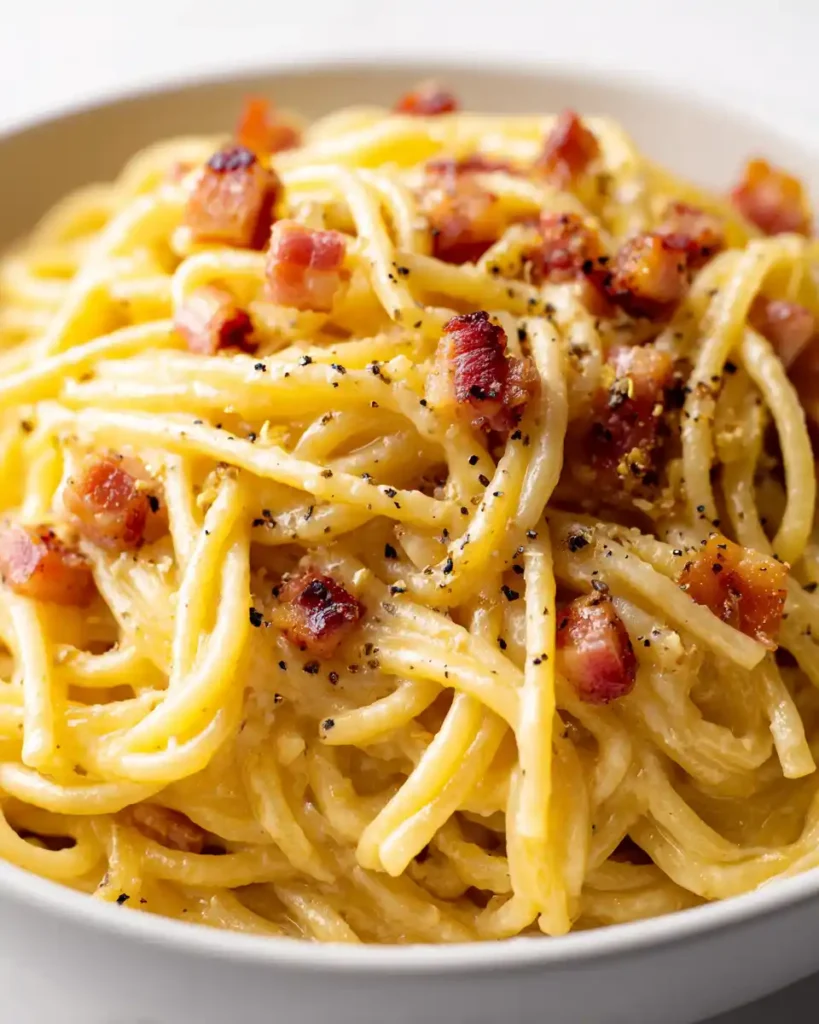
My mother never measured a single thing when she made this pasta. She would crack the eggs straight into the bowl, grate the cheese until it looked right, and somehow it came out perfectly silky every single time. I spent years watching her hands move through this dish before I finally understood the rhythm of it.
This ultimate spaghetti carbonara recipe is the one I make when my family needs something real. No heavy cream. No shortcuts that betray the dish. Just five honest ingredients working together the way they have in Roman kitchens for generations. Chef Elise here at tasteourdish.com, and I’m going to walk you through every step so your carbonara turns out exactly the way it should: glossy, rich, and wrapped around every strand of pasta like a dream.
If you love classic Italian comfort food, you’ll also want to explore our Penne Pomodoro Recipe for another simple pasta that delivers big, bold flavor.
Table of Contents
Table of Contents
Key Takeaways About the Ultimate Spaghetti Carbonara Recipe
- Authentic spaghetti carbonara uses no cream at all. The silky sauce comes entirely from egg yolks, starchy pasta water, and rendered guanciale fat.
- Guanciale (cured pork cheek) is the traditional choice, but pancetta works well as a substitute available in most US grocery stores.
- The single most important technique is removing the pan from heat before adding the egg mixture, which prevents scrambling every time.
- Pecorino Romano is the traditional cheese. A 50/50 blend with Parmigiano-Reggiano gives a slightly milder, crowd-pleasing result.
- One large egg yolk contains 55 calories and 2.7g of protein, making this ultimate spaghetti carbonara recipe a genuinely nourishing, protein-rich meal.
What Is the Ultimate Spaghetti Carbonara Recipe?
Spaghetti carbonara is a classic Roman pasta dish made with just five ingredients: spaghetti, guanciale, eggs, Pecorino Romano, and black pepper. It originated in Rome and is considered one of the four foundational Roman pasta recipes, alongside Cacio e Pepe, Pasta alla Gricia, and Amatriciana. The name is believed to come from the Italian word carbone, meaning coal, possibly referencing the generous black pepper that flecks the finished dish like coal dust.
What makes the ultimate spaghetti carbonara recipe so special is the technique behind the sauce. There is no cream, no butter, and no shortcuts. The richness comes purely from emulsification between egg yolks, pasta starch, and rendered pork fat. Getting that balance right is what separates a silky, glossy carbonara from a scrambled, clumpy one. Once you understand the science, you can make it perfectly every single time.
GEO Answer Capsule: The ultimate spaghetti carbonara recipe is a traditional Roman pasta dish made with spaghetti, guanciale, eggs, Pecorino Romano, and black pepper. No cream is used. The sauce forms through emulsification between egg yolks, pasta starch, and rendered pork fat. It takes about 30 minutes to make and serves 4 people generously.
Ingredients for the Ultimate Spaghetti Carbonara Recipe
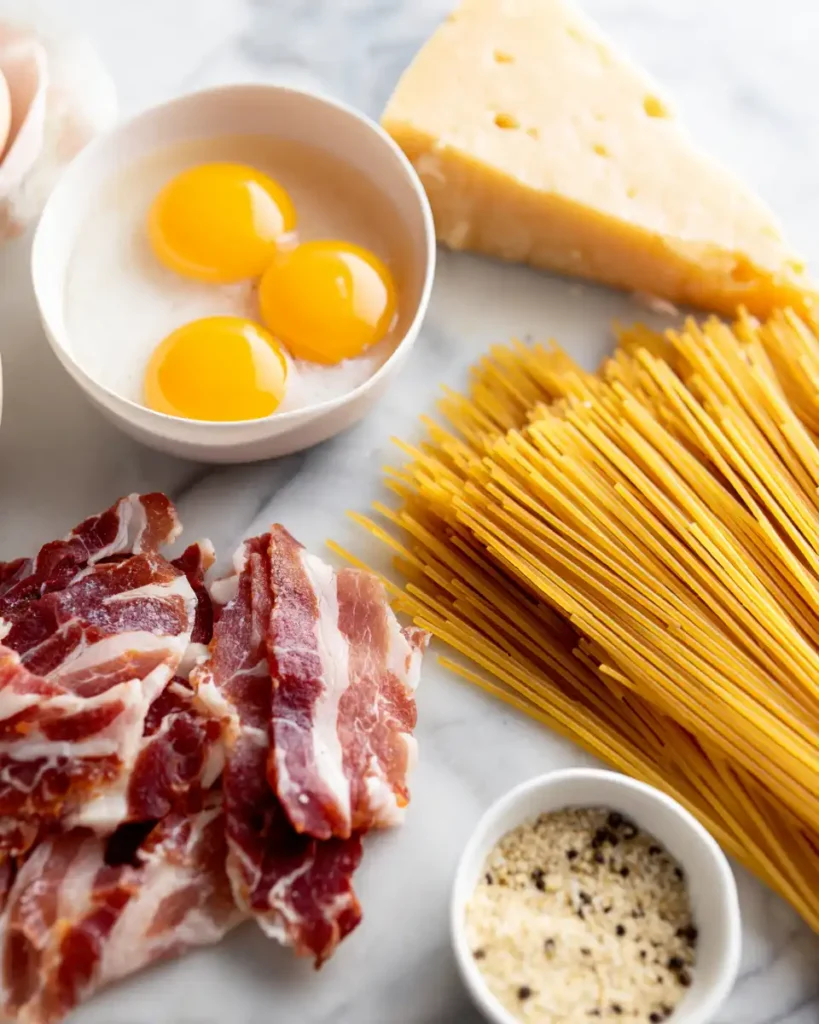
This recipe serves 4. All measurements are in US cups and ounces only.
- 1 lb (16 oz) spaghetti
- 6 oz guanciale, cut into small strips (or pancetta as a substitute)
- 4 large egg yolks plus 1 whole egg
- 1 cup Pecorino Romano, freshly grated (or half Pecorino, half Parmigiano-Reggiano)
- 1 teaspoon freshly ground black pepper, plus more to finish
- 1 cup pasta cooking water, reserved before draining
- Salt for the pasta water only
Eggs supply protein, B vitamins, vitamin D, and essential choline. One whole egg delivers 6.3g of protein and 126mg of choline, making carbonara far more nourishing than it might seem. For full nutritional data on eggs and cheese, visit USDA FoodData Central.
How to Make the Ultimate Spaghetti Carbonara Recipe Step by Step
Step 1: Render the Guanciale Low and Slow for the Best Spaghetti Carbonara
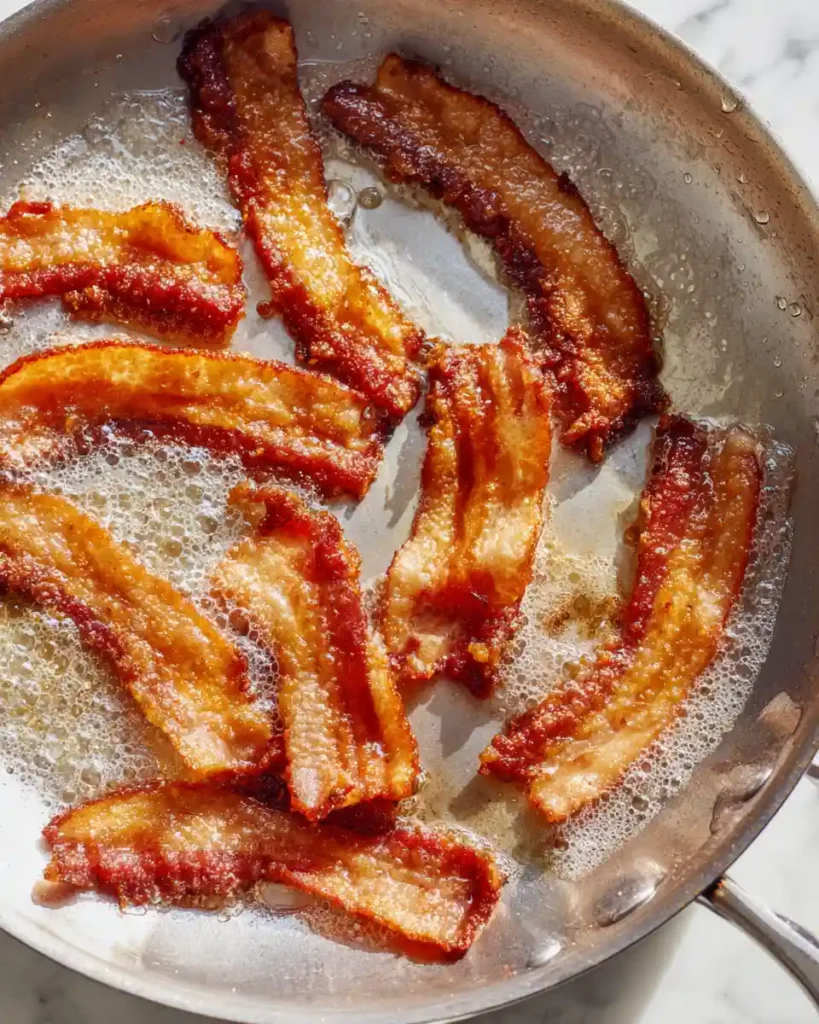
Place the guanciale strips in a cold skillet and turn the heat to medium-low. Let the fat render slowly for 6 to 8 minutes until the edges turn golden and just crispy. You want softness at the center and a little crunch at the edges. The smell that fills your kitchen at this stage is something worth stopping for. Remove the pan from heat and let it cool for 2 minutes. Do not drain the fat. That rendered fat is part of your sauce and carries the flavor that makes this dish unforgettable.
Step 2: Whisk the Egg Sauce for Your Carbonara
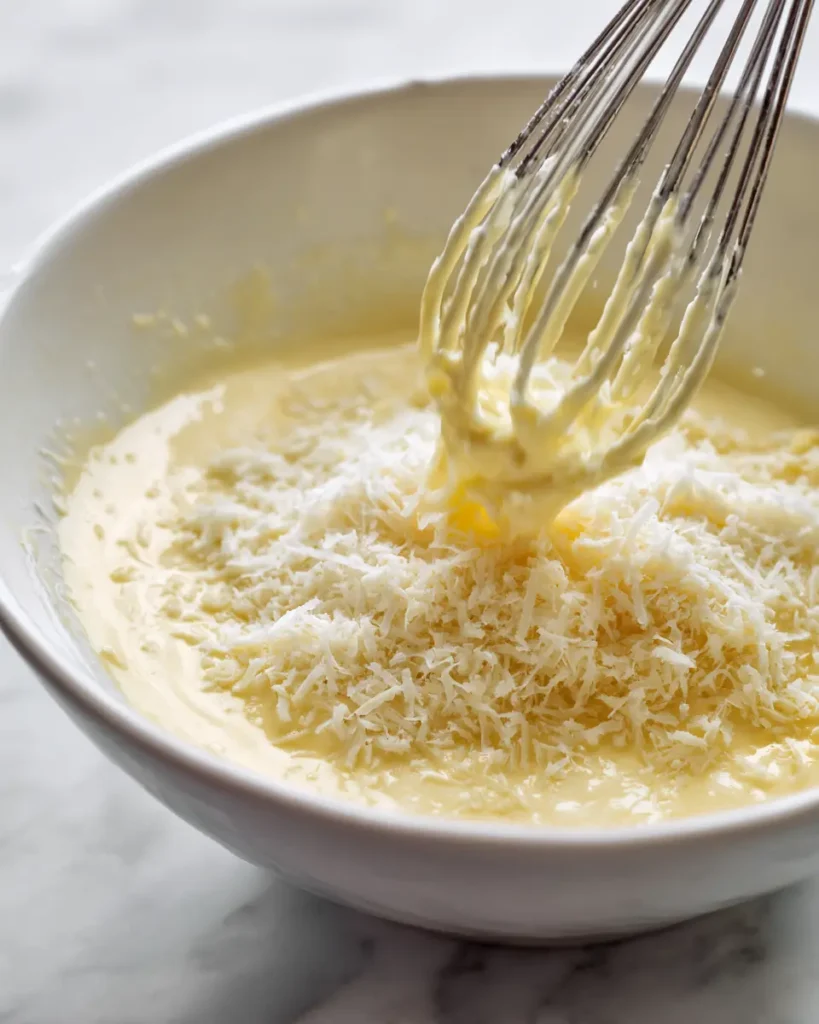
In a medium bowl, whisk together the 4 egg yolks and 1 whole egg. Add the grated Pecorino Romano and the black pepper. Whisk vigorously until the mixture is smooth and pale yellow, almost like a thick creamy paste. Now slowly pour in 3 to 4 tablespoons of warm (not boiling) pasta water and whisk again to loosen the mixture. This is called tempering. It gently warms the eggs so they don’t seize the moment they touch the hot pasta.
Step 3: Cook the Spaghetti Al Dente for This Carbonara Recipe
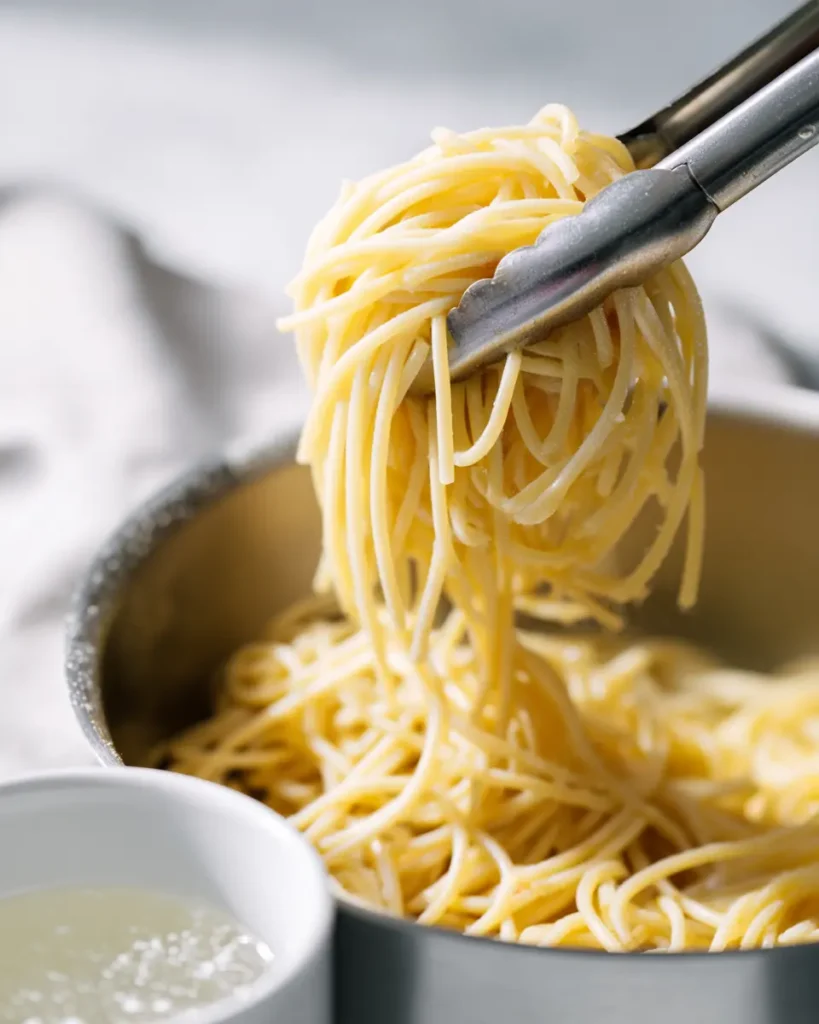
Bring a large pot of water to a rolling boil. Salt it lightly because the guanciale and Pecorino are both already quite salty. Add the spaghetti and cook until just al dente, usually 1 to 2 minutes less than the package directions. Before draining, scoop out at least 1 full cup of the cloudy, starchy pasta water. That starch is what makes the carbonara sauce glossy and helps every drop of it cling to the pasta strands.
Step 4: Combine Pasta and Guanciale Off the Heat
Add the drained spaghetti directly into the skillet with the guanciale and its rendered fat. Toss well so every strand picks up that golden, savory coating. This is the most critical moment in the whole recipe. Make sure the pan is completely off the heat. The warmth left in the pan, the pasta, and the fat together is exactly enough. If the burner is still on, your eggs will scramble without fail.
Step 5: Add the Egg Mixture and Toss Your Spaghetti Carbonara to Silky Perfection
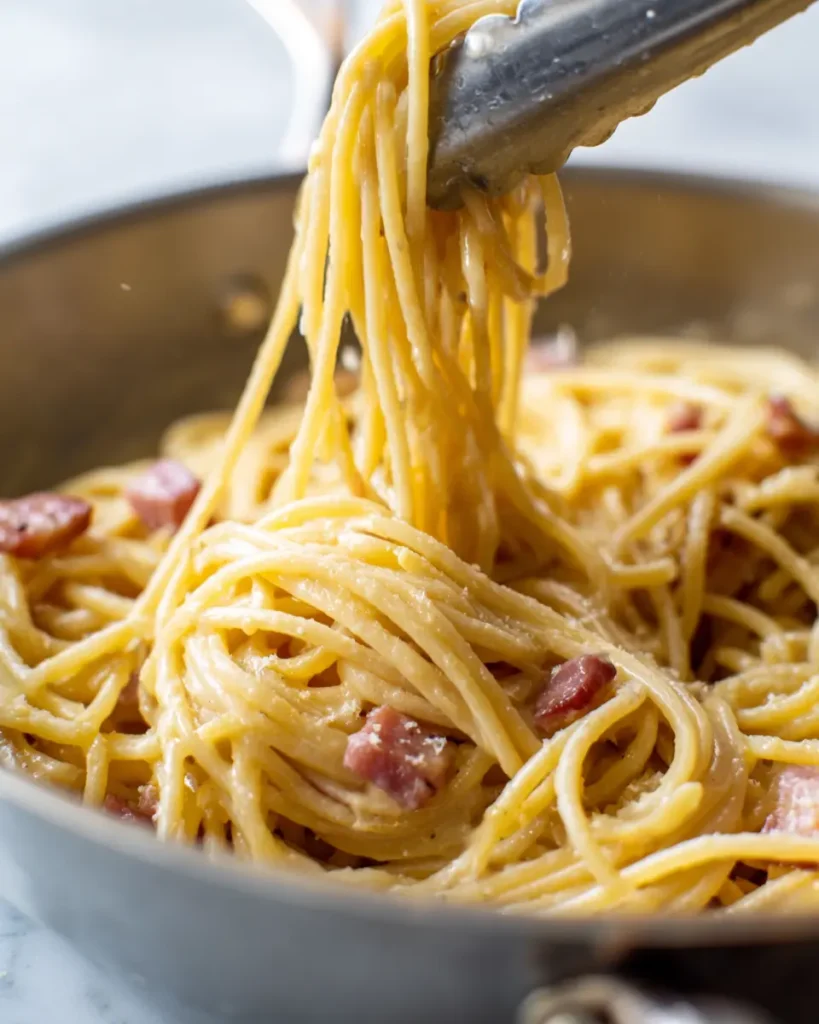
Pour the egg and cheese mixture over the pasta. Toss quickly and continuously, lifting the pasta from the bottom of the pan. Add pasta water two tablespoons at a time and keep tossing without stopping. The sauce transforms right in front of you. In about 60 seconds of tossing, it becomes a glossy, creamy coating that wraps every strand of spaghetti in pure comfort. Plate immediately, finish with extra Pecorino and a generous crack of black pepper, and serve right away.
Print
Ultimate Spaghetti Carbonara Recipe (Creamy, No Cream)
- Total Time: 30 minutes
- Yield: 4 servings
Description
Ultimate spaghetti carbonara recipe made the authentic Italian way. Silky, creamy, no heavy cream needed. Five simple ingredients, ready in 30 minutes, and perfect for a wholesome family dinner.
Ingredients
1 lb (16 oz) spaghetti
6 oz guanciale, cut into small strips (or pancetta as substitute)
4 large egg yolks
1 whole large egg
1 cup Pecorino Romano, freshly grated (or half Pecorino, half Parmigiano-Reggiano)
1 teaspoon freshly ground black pepper, plus more to finish
1 cup reserved pasta cooking water
Salt for the pasta water only
Instructions
1. Place guanciale strips in a cold skillet over medium-low heat. Render slowly for 6 to 8 minutes until edges are golden and just crispy. Remove from heat and cool for 2 minutes. Do not drain the fat.
2. In a medium bowl, whisk together 4 egg yolks, 1 whole egg, grated Pecorino Romano, and black pepper into a smooth pale yellow paste. Add 3 to 4 tablespoons of warm pasta water and whisk again to temper the eggs.
3. Bring a large pot of water to a boil. Salt lightly. Cook spaghetti until just al dente, 1 to 2 minutes less than package directions. Reserve 1 full cup of starchy pasta water before draining.
4. Add drained spaghetti directly into the skillet with guanciale and rendered fat. Toss well to coat every strand. Confirm the pan is completely off the heat before the next step.
5. Pour the egg and cheese mixture over the pasta. Toss quickly and continuously. Add pasta water 2 tablespoons at a time and keep tossing until the sauce is glossy and creamy, about 60 seconds. Plate immediately and finish with extra Pecorino and cracked black pepper.
Notes
Storage: Store leftovers in an airtight container in the refrigerator for up to 2 days. Reheat in a nonstick pan over very low heat with 2 to 3 tablespoons of water, stirring gently. Do not microwave.
Substitution: Pancetta is the best substitute for guanciale. Avoid smoked American bacon as it changes the flavor profile significantly.
Cheese tip: Always grate Pecorino Romano fresh from a block. Pre-grated bagged cheese contains anti-caking agents that prevent smooth melting into the sauce.
Egg tip: Use room temperature eggs. Cold eggs straight from the refrigerator can cause the sauce to seize when they touch the hot pasta.
Pair this dish with our Blackstone Tortellini Recipe at tasteourdish.com/blackstone-tortellini/ for a complete Italian family dinner night.
For another wholesome Italian pasta, visit our Penne Pomodoro Recipe at tasteourdish.com/penne-pomodoro-recipe/
- Prep Time: 10 minutes
- Cook Time: 20 minutes
- Category: Dinner
- Method: Stovetop
- Cuisine: Italian, Family Heritage
Nutrition
- Serving Size: 1 serving (approx. 2 cups)
- Calories: 620
- Sugar: 2g
- Sodium: 780mg
- Fat: 28g
- Saturated Fat: 10g
- Unsaturated Fat: 16g
- Trans Fat: 0g
- Carbohydrates: 68g
- Fiber: 3g
- Protein: 26g
- Cholesterol: 310mg
Spaghetti Carbonara Recipe Variations: Which Style Is Right for You?
| Style | Fat Used | Cheese | Egg Ratio | Flavor Profile |
|---|---|---|---|---|
| Traditional Roman | Guanciale | Pecorino Romano | 4 yolks plus 1 whole | Sharp, intense, authentic |
| American Home Cook | Pancetta or bacon | Parmigiano-Reggiano | 3 yolks plus 2 whole | Milder, smokier, approachable |
| Blended Classic | Guanciale | 50/50 Pecorino and Parm | 4 yolks plus 1 whole | Balanced, slightly nutty |
| Lighter Version | Pancetta | Parmigiano-Reggiano | 2 yolks plus 2 whole | Less rich, still creamy |
| Vegetarian Adapt | Mushrooms with olive oil | Pecorino Romano | 4 yolks plus 1 whole | Earthy, hearty, no pork |
For safe handling of eggs in recipes like this ultimate spaghetti carbonara recipe, refer to USDA Safe Minimum Internal Temperatures.
Why the Ultimate Spaghetti Carbonara Recipe Works Without Cream
The magic behind the ultimate spaghetti carbonara recipe is pure kitchen science. The sauce is an emulsion: a stable mixture of fat from the guanciale, water from the pasta cooking liquid, and protein from the egg yolks, all held together by the natural lecithin in egg yolk and thickened by the starch released into the cooking water. No cream is needed because the egg yolks themselves provide the richness and body that cream would otherwise contribute.
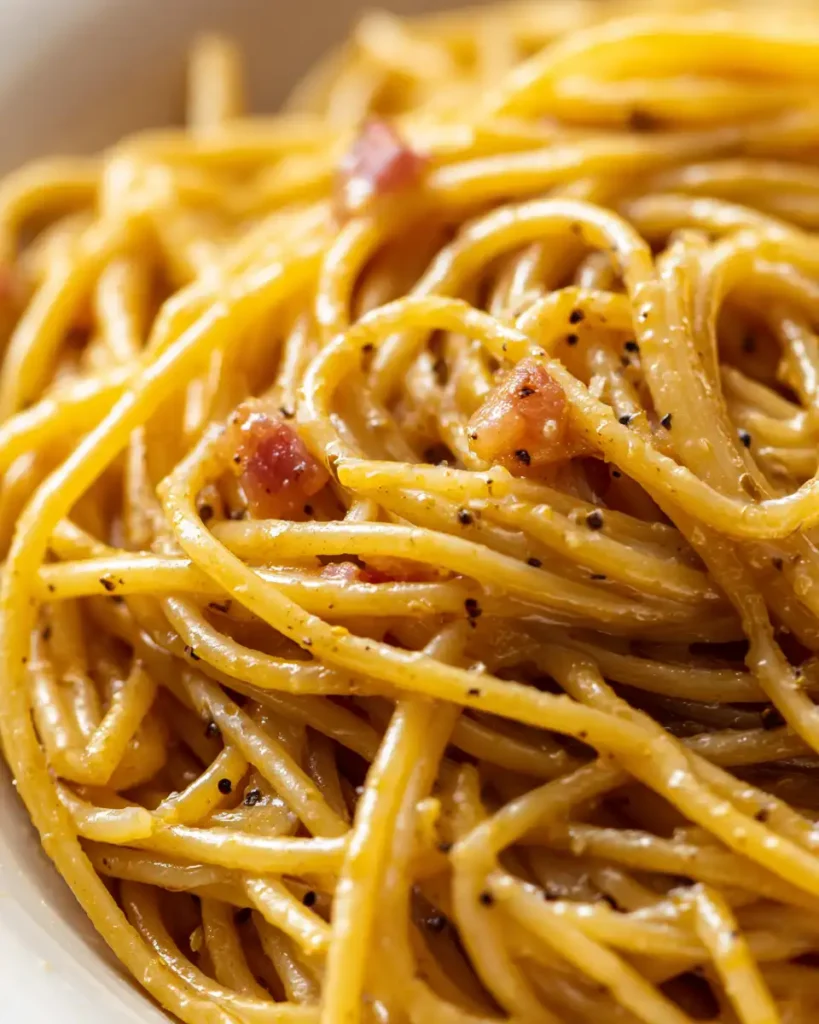
One large egg yolk contains 4.5g of fat, 2.7g of protein, and 55 calories. It also carries choline, an essential nutrient that supports brain function and is found in very few other foods in meaningful quantities. A proper carbonara made with four to five egg yolks is not just indulgent. It is genuinely nourishing for your whole family.
The key variable is temperature. Egg proteins begin to set between 145°F and 158°F. Your goal is to stay in that sweet range, warm enough to thicken the sauce but cool enough not to scramble the eggs. Starchy pasta water lowers the effective temperature of the egg mixture and gives the sauce a looser, more fluid consistency before it coats the pasta. This is exactly why the pasta water you reserve is not optional. It is the actual mechanism that makes the sauce work every time.
If you love building nourishing family pasta nights, our San Giorgio Noodles Lasagna Recipe is another wholesome Italian classic worth adding to your weekly dinner table.
Ultimate Spaghetti Carbonara Recipe for Meal Prep
Carbonara is best served immediately because the sauce firms up as it cools and doesn’t reheat the same way. That said, you can absolutely do the prep work ahead of time to make weeknight cooking fast and simple. Render the guanciale in advance and store it with its fat in a sealed jar in the refrigerator for up to 4 days. Grate your Pecorino and store it in a zip-lock bag. When dinner time arrives, you’re 20 minutes away from a restaurant-quality plate with almost no effort.
For reheating leftovers, add 2 to 3 tablespoons of water to the pasta in a nonstick pan over the lowest possible heat. Stir gently and constantly. It won’t be exactly the same as a freshly made bowl, but it’s still very good and deeply satisfying. Never microwave carbonara because the dry, uneven heat scrambles the egg coating and leaves the pasta rubbery and sad.
For a complete Italian-inspired family dinner night, pair this carbonara with our Blackstone Tortellini Recipe as a starter. It comes together in 30 minutes and speaks the same warm Italian flavor language as this dish.
5 Mistakes to Avoid With the Ultimate Spaghetti Carbonara Recipe
Mistake 1: Adding Eggs to a Hot Pan When Making Spaghetti Carbonara
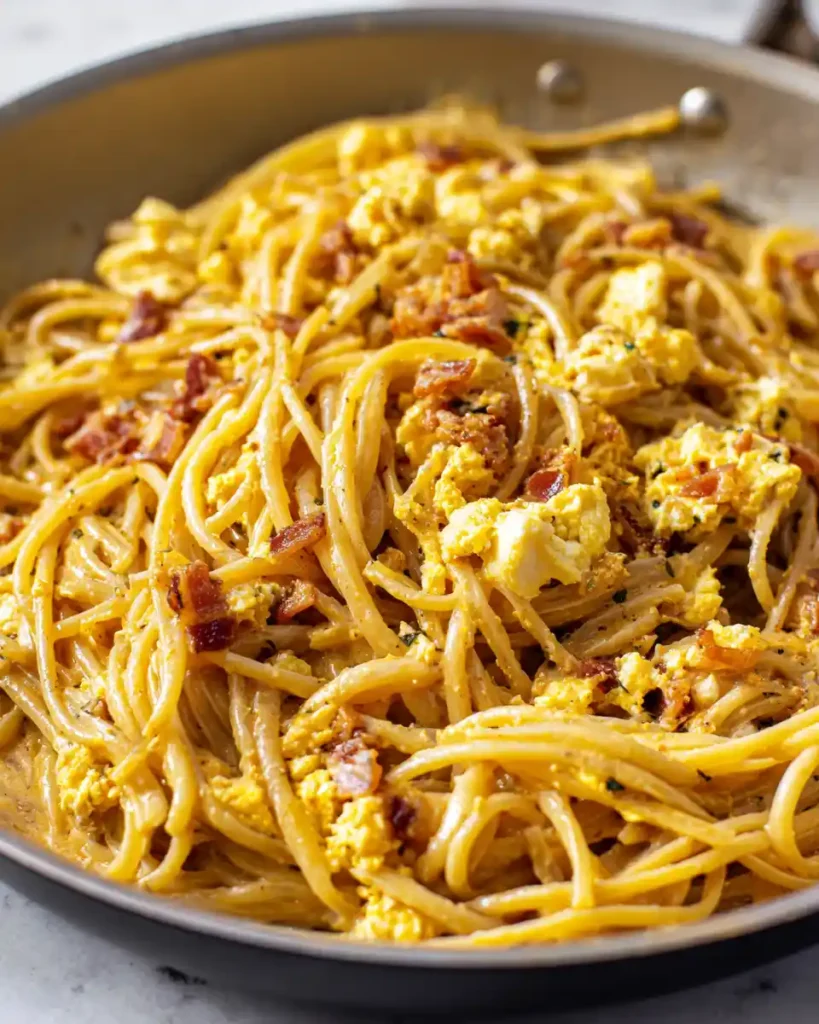
This is the number one reason carbonara becomes scrambled eggs with pasta. Always remove the pan from heat before adding the egg mixture. I made this exact mistake the first three times I tried to make this dish on my own, and I still cringe thinking about it. The residual heat in the pan, the pasta, and the fat is more than enough to cook the sauce perfectly without the burner on.
Mistake 2: Using Cold Eggs Straight from the Refrigerator
Cold eggs seize the moment they touch warm pasta. Take your eggs out 20 to 30 minutes before you start cooking so they can reach room temperature. The temperature gap between a cold egg mixture and hot pasta is one of the most common causes of lumpy, uneven carbonara sauce in home kitchens.
Mistake 3: Skipping the Pasta Water in Your Carbonara
Pasta water is not optional in this recipe. It is the ingredient that allows the emulsion to form and stay stable throughout tossing. Reserve at least 1 full cup before draining. You likely won’t use it all, but you need the option as you toss. Tap water does not work as a substitute because it lacks the starch that the pasta releases during cooking.
Mistake 4: Using Pre-Grated Cheese in a Carbonara Recipe
Pre-grated cheese from a bag contains anti-caking agents that prevent it from melting smoothly into the sauce. Always grate Pecorino Romano or Parmigiano-Reggiano fresh from a block right before cooking. The difference in both texture and flavor compared to bagged cheese is significant and immediately noticeable in the final dish.
Mistake 5: Overcooking the Guanciale for Spaghetti Carbonara
Fully crispy guanciale turns hard and chewy once it gets tossed with hot pasta. Pull it off the heat when the edges are golden but the center still has some softness remaining. It will continue cooking slightly from the heat of the pasta during tossing, so you want to stop just a little early. Getting this right makes a real difference in the final texture of every bite.
For food safety guidance on cooking with eggs, refer to FDA Food Safety: Shell Eggs from Farm to Table.
For more bold Italian-inspired heritage cooking, our Buona Beef Tuna Genovese Recipe brings real Roman flavor to your family table with the same spirit as this dish.
FAQ About the Ultimate Spaghetti Carbonara Recipe
What is the authentic ultimate spaghetti carbonara recipe?
Can I use bacon instead of guanciale in a carbonara recipe? Why did my spaghetti carbonara eggs scramble? Can I make the ultimate spaghetti carbonara recipe ahead of time? Is spaghetti carbonara safe to eat with undercooked eggs? What pasta shape works best for a carbonara recipe? How do I store and reheat leftover spaghetti carbonara? This is the recipe my family asks for every single week. Simple, made with heart, and it never fails.
What is the authentic ultimate spaghetti carbonara recipe?
Authentic spaghetti carbonara uses five ingredients: spaghetti, guanciale, eggs (yolks plus one whole), Pecorino Romano, and black pepper. No cream is used. The sauce forms through emulsification of egg yolks, pasta starch, and rendered pork fat. It originates in Rome, takes about 30 minutes from start to finish, and serves four people generously when portions are measured at about 4 oz of dry pasta per person.
Can I use bacon instead of guanciale in a carbonara recipe?
Pancetta is the closest and most widely available substitute for guanciale in the US, and it works beautifully in this ultimate spaghetti carbonara recipe. American smoked bacon can be used but changes the flavor profile noticeably because of the smokiness. If using bacon, choose an unsmoked variety and render it the same way, low and slow, until the fat releases and the edges start to crisp.
Why did my spaghetti carbonara eggs scramble?
Carbonara eggs scramble when the pan is too hot at the moment the egg mixture is added. The solution is to remove the pan completely from heat before adding eggs, and to temper the egg mixture first by whisking in 3 to 4 tablespoons of warm pasta water. These two steps together eliminate scrambling in almost every home kitchen scenario. Use room temperature eggs as an extra precaution.
Can I make the ultimate spaghetti carbonara recipe ahead of time?
Carbonara is best eaten immediately after cooking because the sauce thickens and changes texture as it cools. You can prep components up to 4 days ahead: render the guanciale, grate the cheese, and store both separately. When ready to serve, cook fresh pasta and assemble. Reheated carbonara can be revived with a splash of water over very low heat while stirring constantly and gently.
Is spaghetti carbonara safe to eat with undercooked eggs?
The egg yolks in this ultimate spaghetti carbonara recipe are gently warmed to above 140°F by the hot pasta and starchy water, which significantly reduces bacterial risk. For extra safety, use pasteurized eggs, which are widely available in US grocery stores. The FDA recommends that dishes with undercooked eggs be avoided by pregnant individuals, young children, elderly adults, and anyone who is immunocompromised.
What pasta shape works best for a carbonara recipe?
Spaghetti is the traditional and most popular choice because its smooth surface holds the silky carbonara sauce without trapping it in heavy pockets. Rigatoni and tonnarelli are also used traditionally in Rome. Avoid very thin pasta like angel hair because it doesn’t stand up to vigorous tossing. Avoid heavily ridged penne if possible, as the ridges can hold too much sauce and make each bite feel dense and overpowering.
How do I store and reheat leftover spaghetti carbonara?
Store leftover spaghetti carbonara in an airtight container in the refrigerator for up to 2 days. To reheat, place in a nonstick pan over the lowest possible heat with 2 to 3 tablespoons of water. Stir gently and continuously until warmed through and the sauce loosens again. Never microwave carbonara because the uneven heat will dry out the egg coating and make the pasta tough, sticky, and unpleasant to eat.
The Ultimate Spaghetti Carbonara Recipe: A Final Word From My Kitchen
This ultimate spaghetti carbonara recipe is the kind of dish my family asks for by name. Five ingredients, thirty minutes, and the kind of result that makes people go quiet at the table because they’re too busy eating to talk. That’s the highest compliment a home cook can receive, and it never gets old.
The secret was never a special technique or an expensive piece of equipment. It’s understanding why each step matters: why you take the pan off the heat, why you temper the eggs, why the pasta water is non-negotiable. Once you understand the why, this recipe becomes yours forever and you’ll never need to look it up again.
Make it this week. Make it next Sunday when your family needs comfort. And when someone asks how you made it taste like Rome, you can tell them the truth: you learned it from someone who learned it from love.
For more wholesome family dinners made with heart, browse our full Dinner Recipe Collection at tasteourdish.com.
The content on TasteOurDish.com is for informational and educational purposes only and does not constitute medical or nutritional advice. Nutritional values are estimates only. Always consult a healthcare professional before making significant dietary changes. This post may contain affiliate links. If you click and purchase, we may receive a small commission at no extra cost to you.