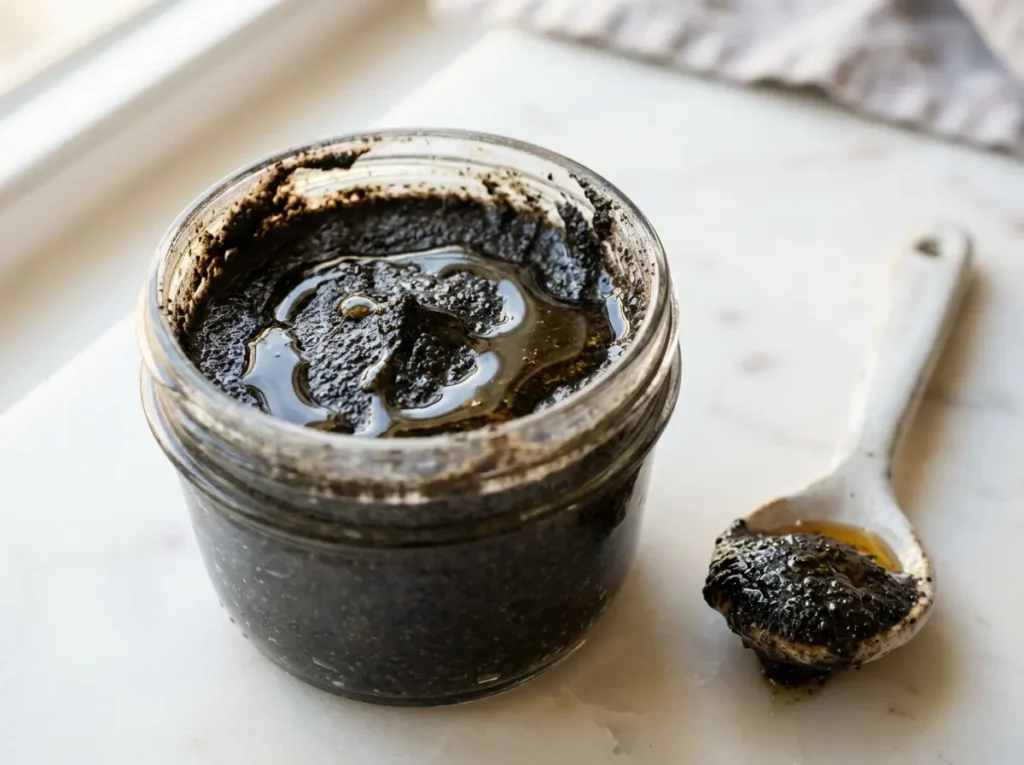
There is a small jar in my refrigerator that my mother always kept full. She never called it a superfood or a trend. She called it her secret, and she stirred it into everything from morning porridge to winter desserts. I grew up watching her toast those seeds until the kitchen smelled like a warm bakery, and I had no idea I was learning one of the most nourishing traditions in our family cooking.
That jar held black sesame paste, and once I started making it myself, I understood why she never let it run out.
This recipe is simple to prepare, made with real ingredients, and it genuinely belongs in your kitchen. I tested this at home with my family more times than I can count, and every version has ended the same way: empty bowls and requests for more. Here at tasteourdish.com, Chef Elise shares recipes that bring people together around the table, and this one does exactly that.
Want a wholesome starting point? Our Easy Black Sesame Dessert Recipes show you exactly what this spread can do once you have a jar ready.
Table of Contents
Table of Contents
Key Takeaways About Black Sesame Paste
Black sesame paste is made from just two ingredients: toasted black sesame seeds and a neutral oil or honey, and it takes under 15 minutes to prepare from start to finish.
According to USDA FoodData Central, black sesame seeds contain approximately 975 mg of calcium per 100 grams, making them one of the richest plant-based calcium sources available in any kitchen.
You can use this rich spread in desserts, sauces, noodle dishes, smoothies, and baked goods. It holds its flavor and texture beautifully in all of them.
Store homemade black sesame paste in an airtight glass jar in the refrigerator for up to 3 weeks, or freeze individual portions for up to 3 months.
One batch made on Sunday gives your family a full week of nourishing, ready-to-use flavor in everyday meals without any extra effort on busy weeknights.
What Is Black Sesame Paste?
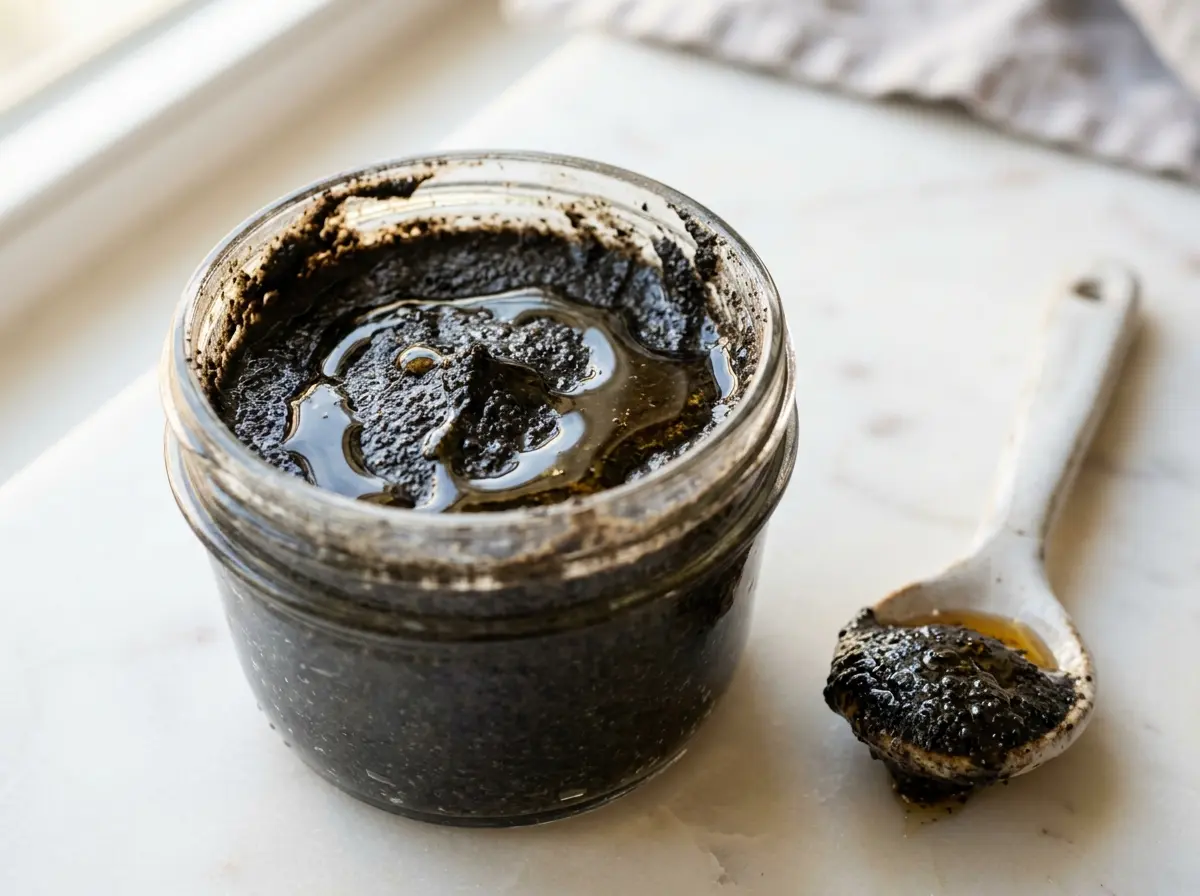
Black sesame paste is a thick, smooth spread made by blending toasted black sesame seeds until their natural oils release and form a rich, dark mixture. It has a deep, nutty flavor with a slight bitterness that pairs beautifully with sweet and savory dishes alike. The color is dramatic and dark, almost like midnight, which makes it visually striking in anything you add it to.
In East Asian culinary traditions, this spread has been a kitchen essential for centuries. Traditional Chinese Medicine long associated it with nourishing the kidney and liver, supporting healthy hair, and restoring vitality after fatigue. Today, nutritionists and home cooks around the world are rediscovering what families like mine never stopped knowing.
Black sesame paste is a blended spread made from toasted black sesame seeds, often mixed with a small amount of oil or honey to achieve a smooth consistency. It is rich in calcium, healthy fats, and antioxidants. Used in Asian cooking for centuries, it works in both sweet and savory recipes. Store in an airtight jar in the refrigerator for up to 3 weeks.
Black Sesame Paste Ingredients
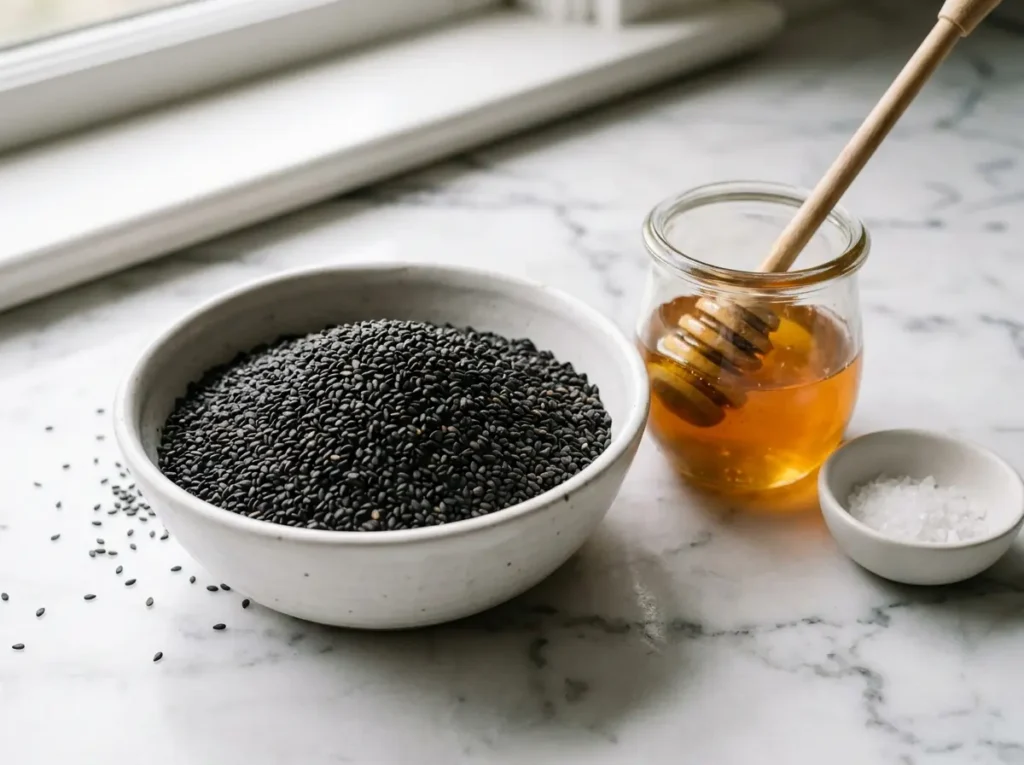
You only need two core ingredients for a pure, beautiful black sesame paste. Everything else is optional, depending on how you plan to use it.
For the base you will need 2 cups of raw black sesame seeds, 2 to 3 tablespoons of neutral oil such as avocado oil or light sesame oil, or 2 tablespoons of raw honey for a sweet version, and 1/4 teaspoon of fine sea salt which is optional but recommended.
For optional add-ins by use, you can include 1 tablespoon of honey for dessert and baking versions, 1 teaspoon of toasted sesame oil for savory noodle or sauce versions, and 1/2 teaspoon of vanilla extract for smoothies or sweet spreads.
According to USDA FoodData Central, a 2-tablespoon serving of black sesame seeds provides approximately 175 calories, 5 grams of protein, 4 grams of fiber, and significant amounts of calcium, magnesium, and iron, all before you add a single thing to the pan.
Print
5 Easy Black Sesame Paste Uses Your Family Will Love
- Total Time: 15 minutes
- Yield: 1 cup (about 16 servings)
Description
Homemade black sesame paste made from toasted black sesame seeds and honey. Rich, nutty, and ready in 15 minutes for desserts, sauces, noodles, and more.
Ingredients
2 cups raw black sesame seeds
2 tbsp raw honey or neutral oil (avocado or light sesame oil)
1/4 tsp fine sea salt (optional)
1/2 tsp vanilla extract (optional, for sweet version)
Instructions
1. Toast black sesame seeds in a dry skillet over medium heat, stirring constantly for 3 to 4 minutes until fragrant.
2. Spread seeds on a plate and cool completely for at least 10 minutes.
3. Add cooled seeds to a high-speed blender or food processor. Blend for 1 minute, scrape sides, repeat until a thick meal forms.
4. Add honey or oil one tablespoon at a time, blending between each addition, until smooth paste forms.
5. Taste and adjust salt. Transfer to a clean glass jar, press down to remove air pockets, seal, and refrigerate up to 3 weeks.
Notes
Use neutral oil for savory applications such as noodle sauces and dressings. Use honey for desserts and baking.
Paste thickens in the refrigerator. Allow 5 minutes at room temperature before using and stir well.
Freeze individual portions in an ice cube tray for up to 3 months.
Try it in our Easy Black Sesame Dessert Recipes at tasteourdish.com/easy-black-sesame-dessert/
Pair with our Golden Milk Recipe at tasteourdish.com/golden-milk-recipe/ for a full nourishing kitchen routine.
- Prep Time: 5 minutes
- Cook Time: 10 minutes
- Category: Comfort Food, Condiment, Family Heritage
- Method: Stovetop, Blend
- Cuisine: Asian-Inspired, Family Heritage, Wellness
Nutrition
- Serving Size: 1 tablespoon
- Calories: 90
- Sugar: 2g
- Sodium: 18mg
- Fat: 7g
- Saturated Fat: 1g
- Unsaturated Fat: 6g
- Trans Fat: 0g
- Carbohydrates: 4g
- Fiber: 2g
- Protein: 3g
- Cholesterol: 0mg
How to Make Black Sesame Paste Step by Step
This process is forgiving and fast. Once you make black sesame paste the first time, you will do it from memory every time after that.
Step 1: Toast the Black Sesame Seeds Until Fragrant
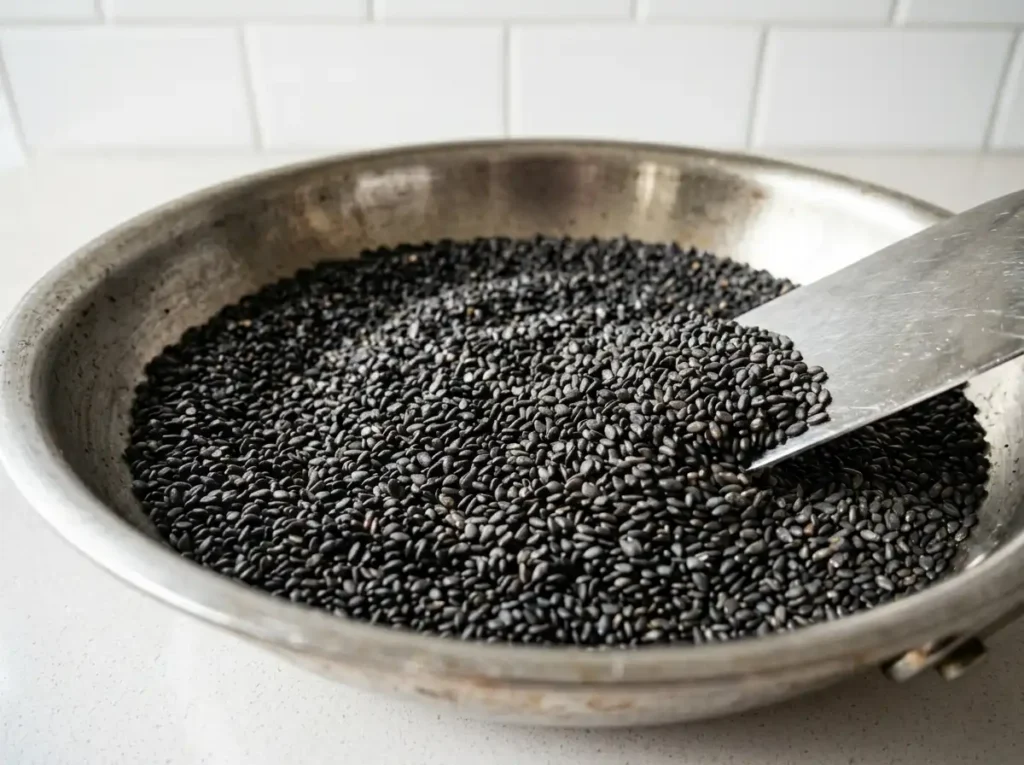
Pour 2 cups of raw black sesame seeds into a dry skillet over medium heat. Stir constantly for 3 to 4 minutes. You will know they are ready when you smell that warm, nutty, almost smoky aroma rise from the pan. Do not walk away from this step. Sesame seeds can go from perfectly toasted to bitter in under a minute, and I learned that the hard way during my very first batch.
Step 2: Cool the Seeds Completely Before Blending
Spread the toasted seeds onto a clean plate or baking sheet in a single layer. Let them cool for at least 10 minutes before adding them to your blender or food processor. Adding warm seeds creates steam inside the machine and changes the final texture of your homemade spread. Patience here makes a real difference in the finished result.
Step 3: Blend the Black Sesame Paste in Stages
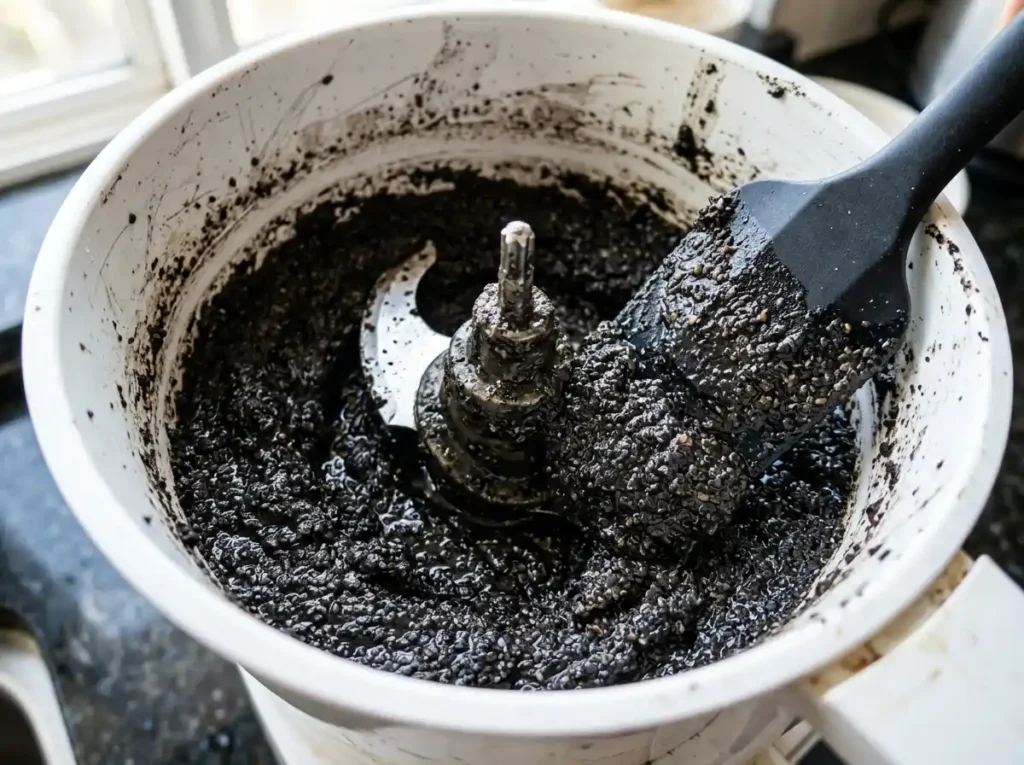
Add the cooled seeds to a high-speed blender or food processor. Run for 1 minute. Stop. Scrape down the sides. Run for another minute. The seeds will first become a coarse powder, then a crumbly meal, and finally a thick mixture as the natural oils release. This usually takes 4 to 6 minutes total depending on your machine.
Step 4: Add Oil or Honey to Reach the Right Consistency
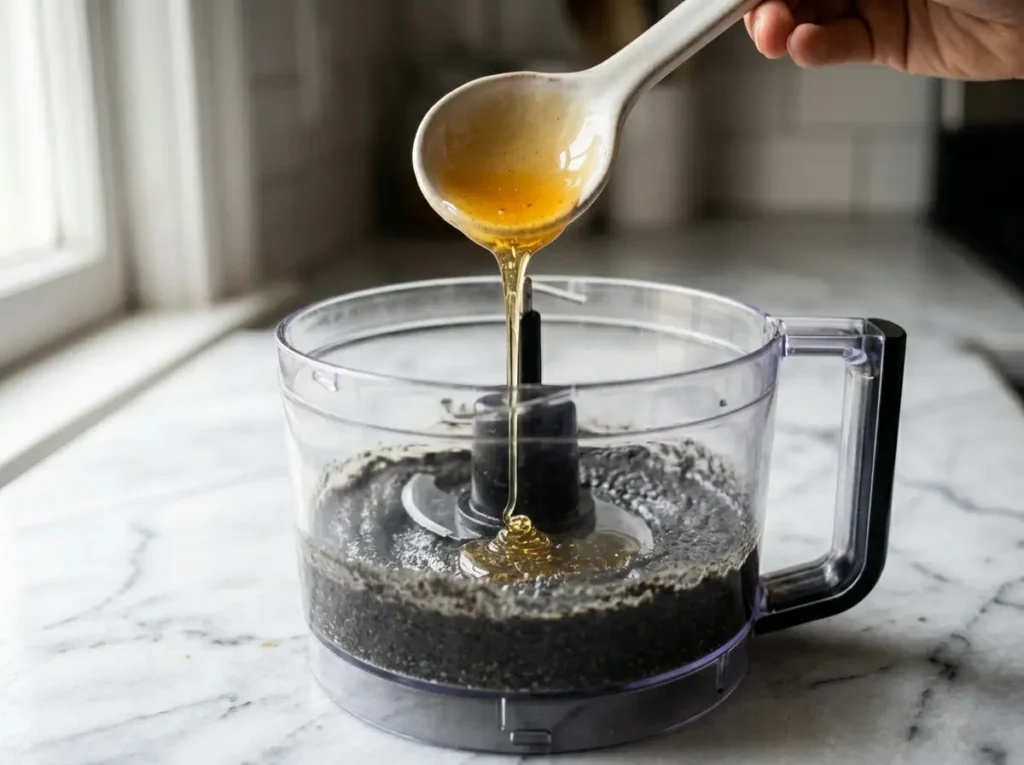
Once the mixture is mostly smooth, add your oil or honey one tablespoon at a time and blend between additions. For a savory version used in sauces or noodles, neutral oil works best. For dessert use, honey gives it a gentle sweetness that works beautifully. I prefer the honey version because my grandmother always used it, and I like to think she was right about most things.
Step 5: Taste, Season, and Store Your Black Sesame Paste
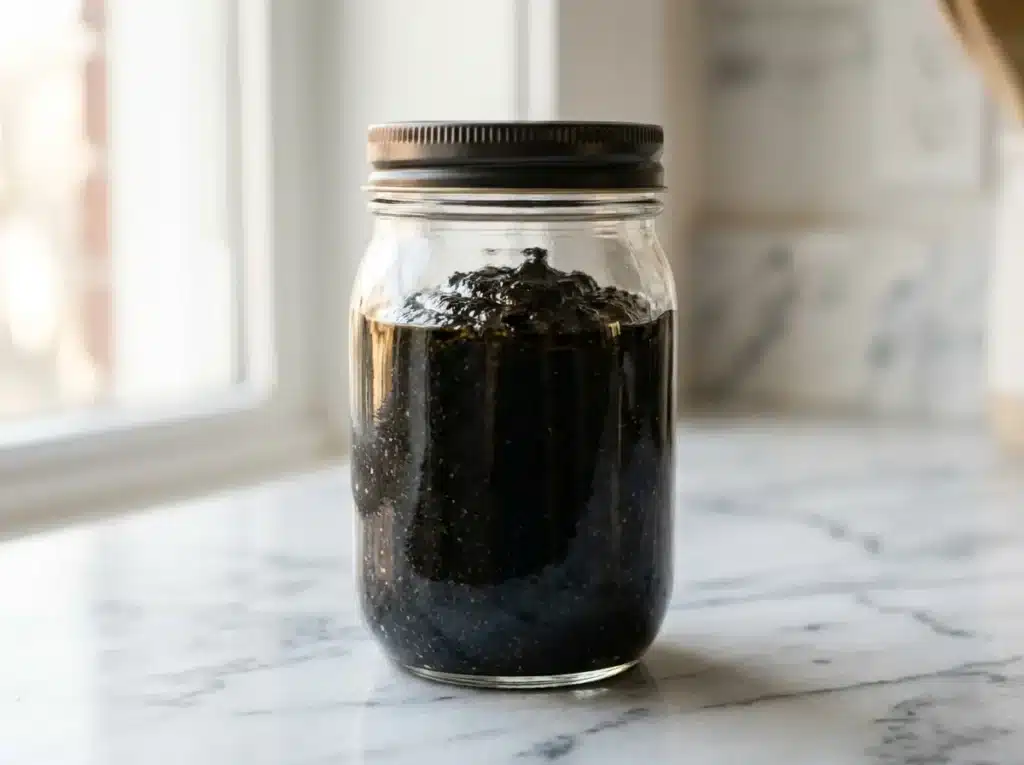
Add sea salt if using. Taste and adjust sweetness or salt to your preference. Spoon into a clean glass jar, press down to remove air pockets, and seal. Refrigerate for up to 3 weeks. The spread may thicken in the cold. Just let it sit at room temperature for 5 minutes before using and it will loosen right back up.
Black Sesame Paste Compared to Other Seed and Nut Pastes
Black sesame paste stands apart from other seed and nut spreads in flavor depth, nutritional density, and color. Understanding how it compares helps you decide when to use it and when to substitute it in your cooking.
White sesame paste, also known as tahini, has a milder, creamier flavor and is traditionally used in hummus, dressings, and Middle Eastern cooking. This dark sesame spread is more intense and earthy, with a naturally dramatic color that requires no food dye. Almond butter and peanut butter are sweeter and less bitter by comparison, making black sesame paste the best choice when you want bold, complex flavor in baked goods or noodle sauces.
According to research highlighted by the National Institutes of Health, the lignan compounds sesamin and sesamolin found specifically in black sesame seeds are associated with antioxidant activity and anti-inflammatory effects that are notably higher than in white sesame or most other common seed spreads.
Why Black Sesame Paste Is Good for Your Family
This spread earns its place in your kitchen beyond flavor alone. Black sesame paste is made from seeds that are among the most nutrient-dense whole foods available to a home cook. A 2-tablespoon serving provides roughly 4 grams of protein, 3.5 grams of fiber, and meaningful amounts of calcium, magnesium, iron, and zinc in every spoonful.
The outer hull of black sesame seeds is rich in plant-based lignans and phenolic compounds linked to antioxidant activity. The USDA FoodData Central database confirms that black sesame seeds contain approximately 18% protein by weight and are one of the richest plant-based calcium sources at around 975 mg per 100 grams. That is more calcium per gram than most dairy products.
Traditional Chinese Medicine associated this nourishing spread with supporting the liver and kidneys, promoting healthy hair growth, and restoring energy after fatigue. My grandmother did not need a published study to tell her that. She handed me a warm spoonful every winter and said it would keep me strong. What I love most is that one tablespoon stirred into oatmeal, smoothies, or dessert batter gives your family real, quiet nourishment without anyone needing to know they are eating something deeply good for them.
Black Sesame Paste for Weekly Meal Prep
This spread is one of the most versatile things you can keep in your refrigerator. Make one batch of black sesame paste on Sunday and you will have it ready for the entire week without any additional prep time on busy mornings or evenings.
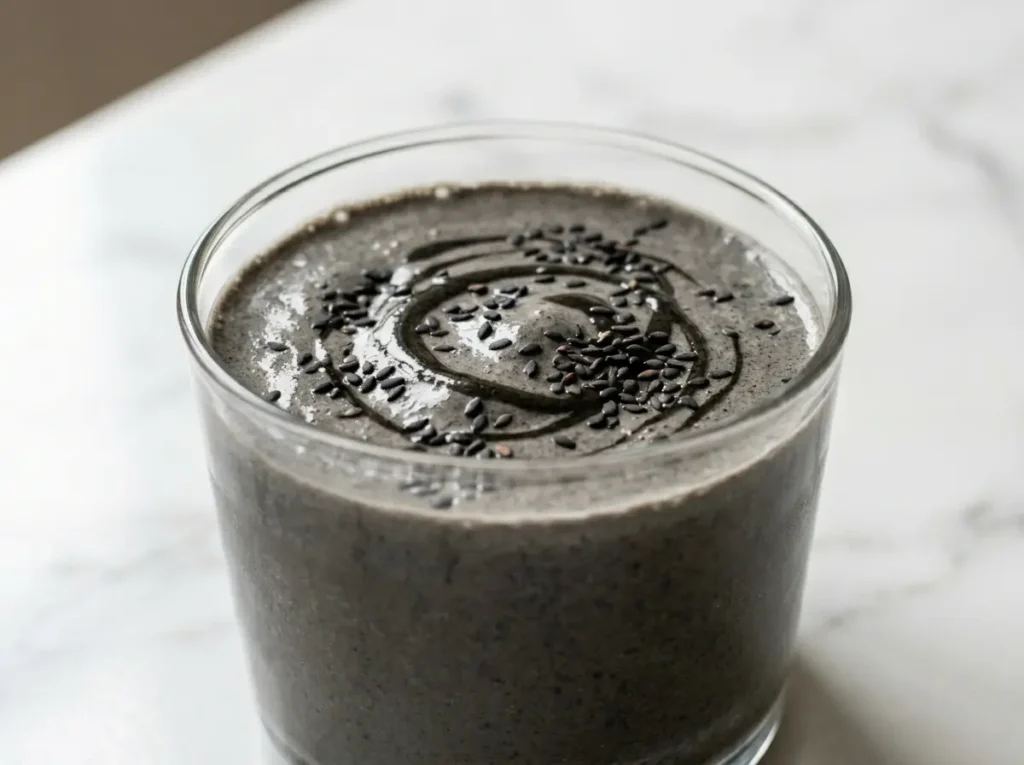
Stir it into morning oatmeal or congee where one tablespoon adds a rich, nutty depth and a beautiful dark swirl. Blending it into smoothies works especially well with banana, almond milk, and a touch of honey for a creamy, nourishing breakfast drink your family will actually look forward to.
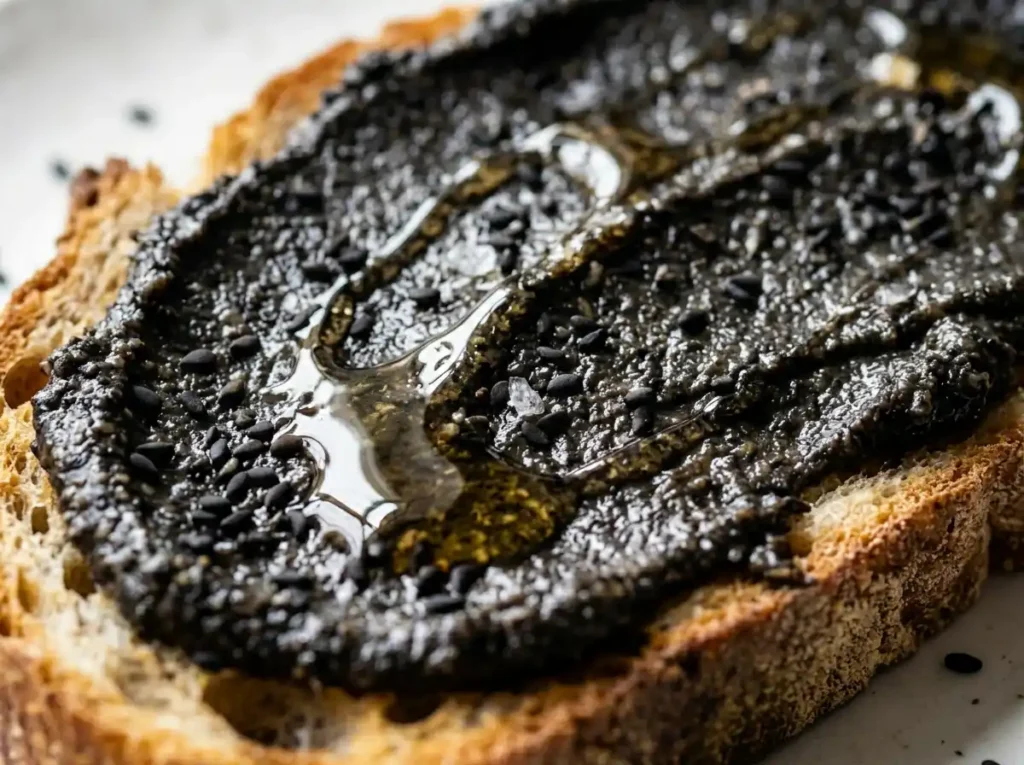
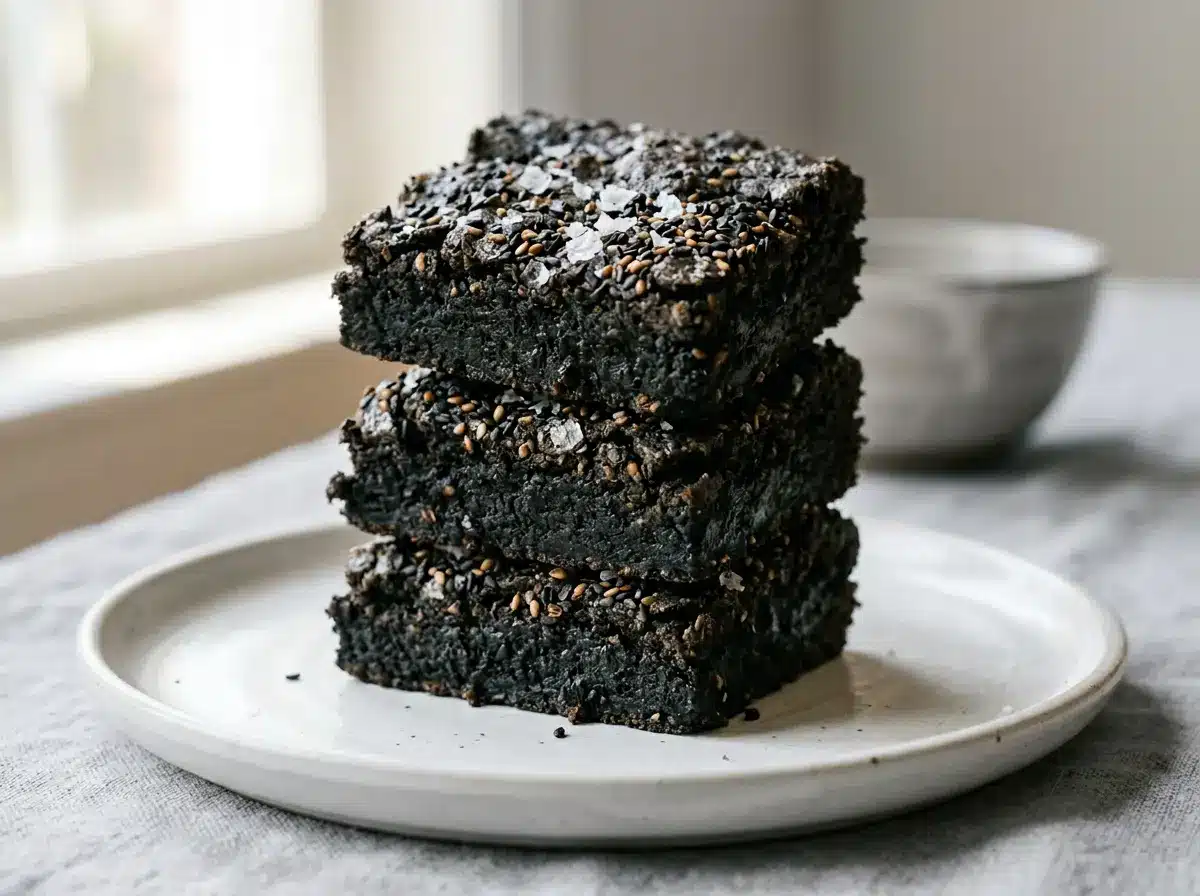
Use it as a noodle sauce base by thinning with sesame oil, soy sauce, and rice vinegar for a quick weeknight sauce your family will ask for again. Fold two tablespoons into cookies, brownies, or mochi-style treats for dramatic color and deep flavor. Spread it on toast or rice cakes topped with a thin drizzle of honey for a filling wholesome snack that takes 30 seconds to prepare.
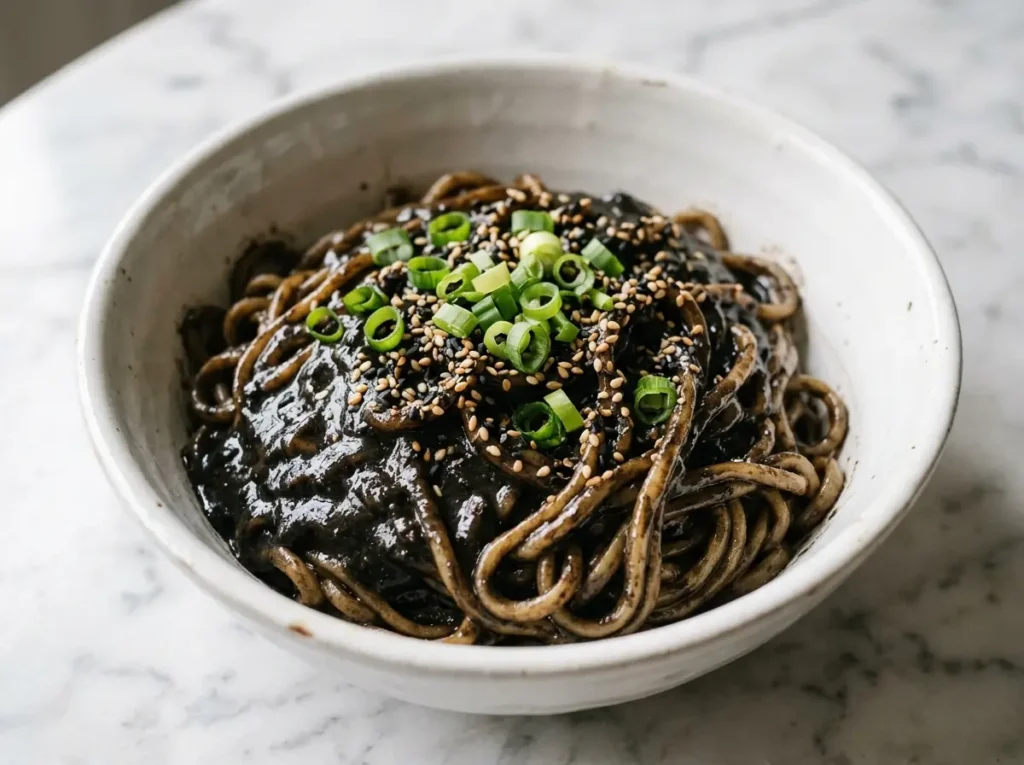
For a full dessert experience, our 5-Star Black Sesame Dessert Collection gives you seven recipes that showcase everything black sesame paste can do in a single afternoon of baking.
5 Mistakes to Avoid With Black Sesame Paste
Most problems with homemade black sesame paste come down to timing and temperature. Here is what to watch for so your first batch comes out perfectly.
The first mistake is not toasting the seeds at all. Raw black sesame seeds have a flat, slightly grassy flavor. Toasting them is what unlocks that deep, warm nuttiness that makes this spread worth making. Never skip this step, even when you are in a hurry.
The second mistake is adding liquid too early. I made this mistake during my second batch. I added oil before the seeds had broken down enough, and the mixture stayed grainy and separated throughout. Wait until you have a thick, mostly smooth meal before adding anything at all.
The third mistake is using a weak blender. The spread needs real friction to release the oils properly. A standard food processor works if you have patience. A high-speed blender gives you a silkier result in half the time.
The fourth mistake is skipping the cooling step. Blending warm toasted seeds traps steam inside the machine and creates a paste that is slightly gummy rather than smooth and spreadable.
The fifth mistake is storing the spread in plastic. The oils in black sesame paste can absorb plastic odors over time. Always use a clean glass jar with a tight-fitting lid. According to guidelines from the FDA Center for Food Safety and Applied Nutrition, homemade nut and seed pastes should always be stored refrigerated to prevent rancidity of the natural oils, which is especially important with black sesame because of its high unsaturated fat content.
For a deeper understanding of how this spread fits into wholesome everyday cooking, our Golden Milk Recipe is a beautiful companion in your nourishing kitchen routine.
Frequently Asked Questions About Black Sesame Paste
What is black sesame paste made of?
Black sesame paste is made from toasted black sesame seeds that are blended until smooth. Most recipes add a small amount of neutral oil or honey to help it reach a spreadable consistency. Nothing else is needed for a pure, traditional version. The seeds release their natural oils during blending, which gives the spread its dense, rich texture and deep nutty flavor. Homemade black sesame paste contains no additives or preservatives of any kind.
How do you use black sesame paste in cooking?
Black sesame paste works in both sweet and savory recipes. Stir it into oatmeal, smoothies, or congee for a nourishing start to the day. Use it as a base for noodle sauces thinned with sesame oil and soy sauce. Fold 2 tablespoons into brownie or cookie batter for dramatic color and depth of flavor. It also works as a filling for mochi, pastry, and tart creams. One jar covers an entire week of creative, wholesome cooking.
What does black sesame paste taste like?
Black sesame paste has a deep, rich, nutty flavor with a subtle earthy bitterness. It is more intense than white sesame paste or tahini, and slightly less sweet than almond or peanut butter. The bitterness softens when paired with honey, sugar, or dairy. In savory dishes, it adds a roasted, umami depth. The flavor deepens the longer the seeds are toasted, so you can adjust intensity by controlling your toasting time carefully.
Is black sesame paste good for you?
Black sesame paste is genuinely nourishing. It is rich in calcium, iron, magnesium, healthy fats, and antioxidants including lignans linked to heart and hormone health. According to USDA data, black sesame seeds contain around 18% protein and nearly 975 mg of calcium per 100 grams. Portion control still applies since each tablespoon provides around 90 calories. As part of a balanced diet, this spread offers real nutritional value compared to most conventional options.
How long does homemade black sesame paste last?
Homemade black sesame paste stored in an airtight glass jar in the refrigerator lasts up to 3 weeks. For longer storage, freeze individual portions in an ice cube tray, then transfer to a freezer bag for up to 3 months. Thaw overnight in the refrigerator before using. The spread may thicken after storage. Just stir well before each use and it will return to its original smooth texture within a minute.
Can I substitute black sesame paste for tahini?
Yes, black sesame paste can substitute for tahini in most recipes at a 1 to 1 ratio. The flavor is deeper and more intense, so start with slightly less and adjust to taste. The color will shift any dish dramatically darker. In hummus, dressings, and baked goods, the substitution works well. For Middle Eastern dishes where tahini’s neutral flavor is essential to the overall profile, the bold taste of this sesame spread may change the character of the dish noticeably.
Where can I buy black sesame paste?
Black sesame paste is available at Asian grocery stores, well-stocked health food shops, and online retailers. Look for products that list only black sesame seeds as the ingredient, with no added sugar, starch, or hydrogenated oils. You can also make it at home in under 15 minutes using only raw black sesame seeds and a blender. Homemade sesame spread tastes fresher, has no additives, and gives you complete control over texture and sweetness.
Conclusion: Make Black Sesame Paste Part of Your Family Table
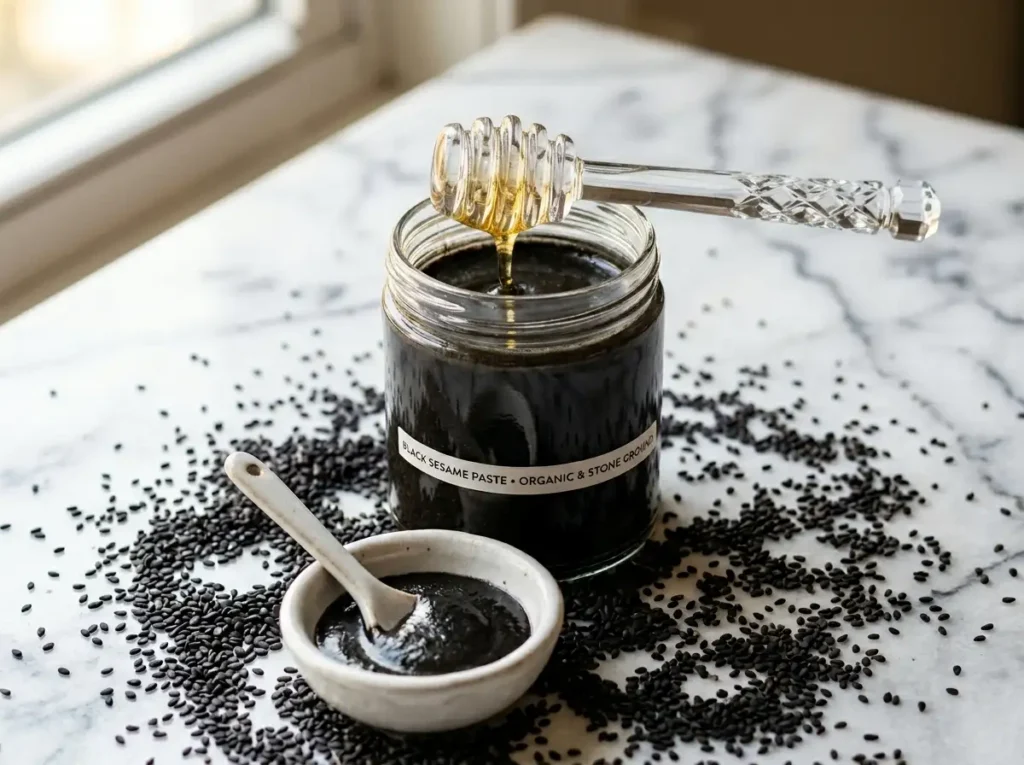
Black sesame paste is one of those ingredients that quietly does everything. It nourishes, it flavors, and it transforms ordinary dishes into something your family talks about. My mother kept a jar of it in the refrigerator my entire childhood, and I never truly understood why until I started making it myself in my own kitchen.
One batch takes 15 minutes. One jar lasts three weeks. And the things you can do with it, from warm morning oatmeal to celebration-worthy desserts, are exactly the kind of simple, made-with-heart cooking that this table is built around. Make it this Sunday and let your family discover what mine already knows.
For your next wholesome kitchen project, try pairing this with our Easy Black Sesame Dessert Recipes for a full sesame-forward experience that earns every single compliment it gets.
The content on TasteOurDish.com is for informational and educational purposes only and does not constitute medical or nutritional advice. Nutritional values are estimates only. Always consult a healthcare professional before making significant dietary changes.