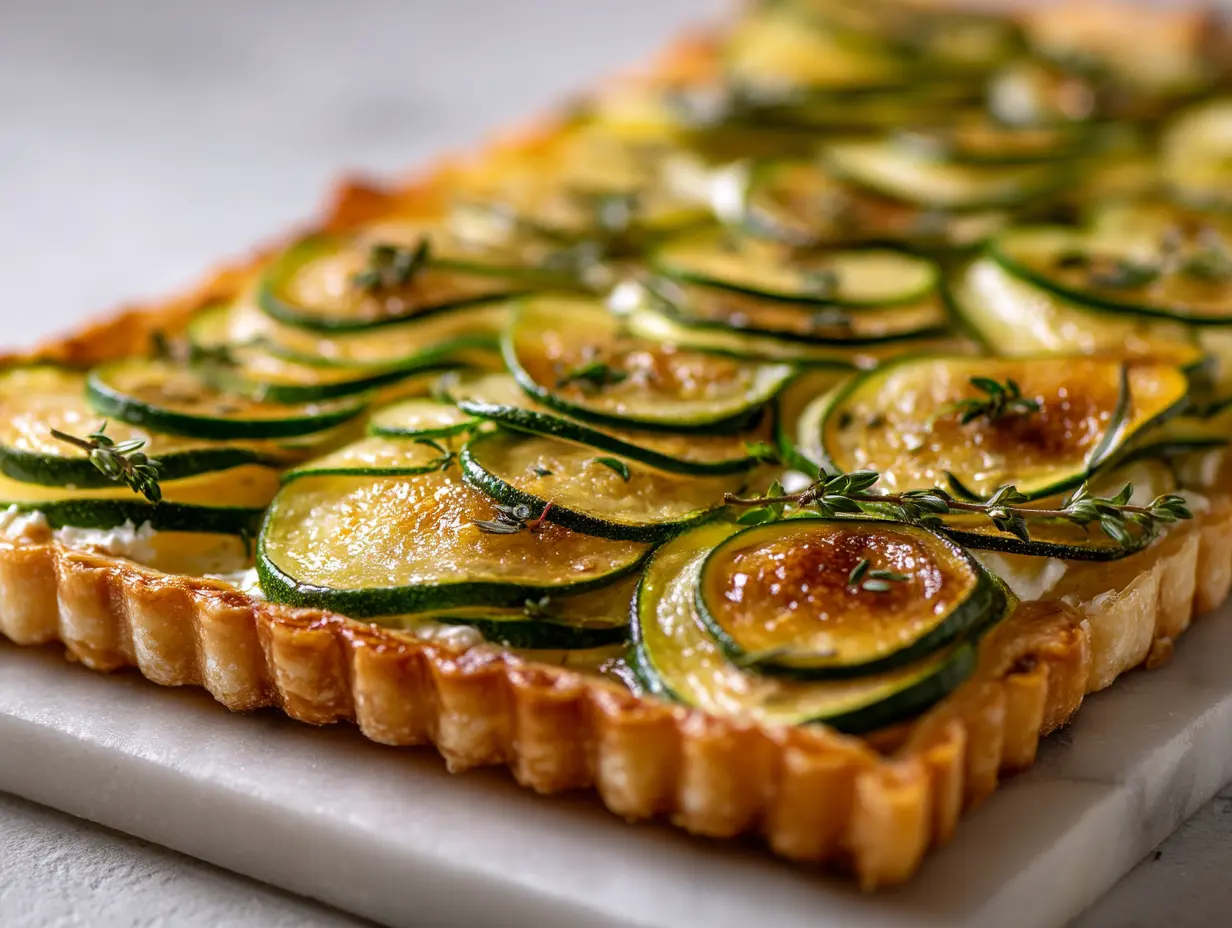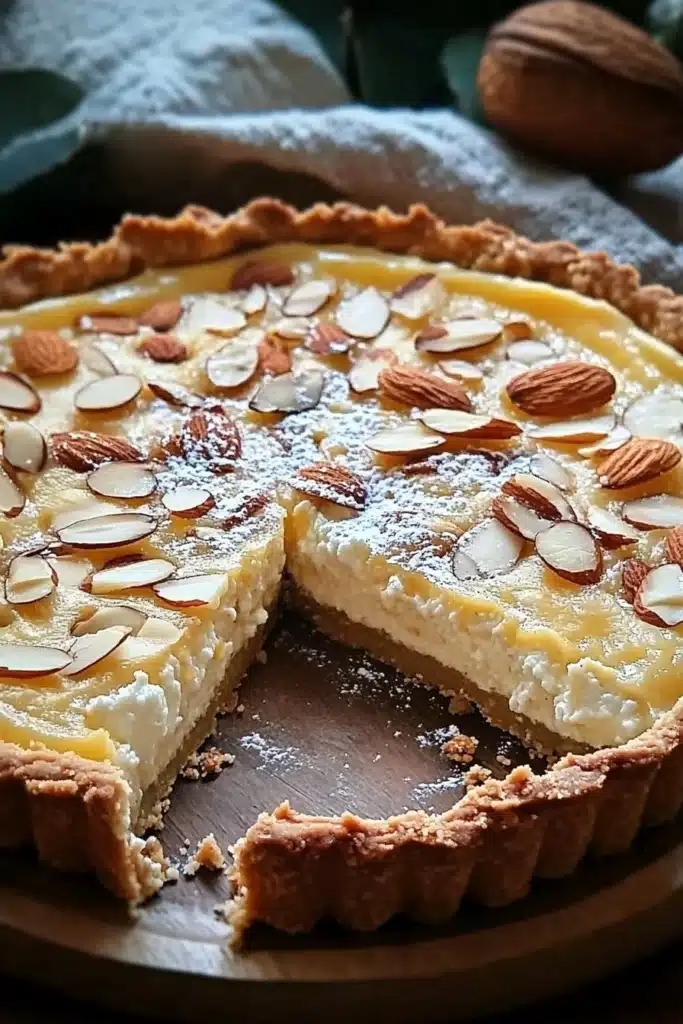
The kitchen smelled like toasted almonds and orange peel, and the light through the window made the flour dust on the counter look like little snowflakes. I remember the first time I baked this Italian Almond & Ricotta Tart, how my children hovered at my knees because the scent felt like a promise, and how slicing into the warm tart revealed a soft, custardy center that seemed to hold all the quiet joy of a Sunday. Sometimes, when I want a little extra brightness at the end of a family meal, I put a small slice beside a brighter tart, like a lemon tart recipe I love, and the contrast makes everyone smile.
Why This Italian Almond & Ricotta Tart Means So Much
This tart lives at the heart of our kitchen for many small reasons. It is not complicated, yet it feels rich and thoughtful. The combination of ricotta and almonds brings a kind of humble elegance, like a comfortable sweater you save for special company. I first learned this recipe from a friend who grew up near the Italian coast, and she told me her mother would make it for birthdays and small gatherings, never for big holidays, because it is the sort of dessert that says, we are here, and we have time for tenderness.
When I make it in the evening, my husband will often come in just to take a deep breath and say, that smells like home. My kids remember the way the tart slices have a delicate grain from the almonds and a creamy, slightly tangy lift from the ricotta. I love how this tart bridges the ordinary and the ritual; it is simple enough for a weekday treat and lovely enough to bring to a friend who needs comfort. It holds memories of kitchen chatter, the clink of measuring spoons, and the gentle hush when someone takes the first bite.
I am always mindful of the textures. The crust should be just flaky enough to support the filling without being heavy. The ricotta filling needs to be smooth and slightly dense, not runny, with an orange perfume that brightens every bite. A scatter of sliced almonds on top adds a toasty crunch that sings next to the pillowy cream. That balance is the secret of this tart, and it is what keeps people asking for one more slice.
The Story Behind Our Favorite Italian Almond & Ricotta Tart
There is a small ritual that goes with this tart in our family. On Saturday mornings my little one and I will pick an orange from the fruit bowl, and she insists on peeling it while I measure the ricotta. We talk about the day we will have, and she tells me what she imagines the tart would say if it could speak. This playful moment makes baking feel less like following directions and more like making a small offering to comfort and connection.
I have carried versions of this tart through seasons of life. When my mother was recovering from an illness, the gentle flavors were the first dessert she asked for. When we had neighbors move in next door, I baked this tart and carried it over with a note, and that small act helped begin a friendship. Food does that. It opens a space for stories. I like to think that when someone takes a bite of this tart they taste more than the ingredients; they taste time and thoughtfulness and the plate of leftovers in the middle of a crowded table.
There are a few places where I let myself play. Some days I fold in a tablespoon of honey for extra warmth, and other times I trade the orange zest for lemon when I want a sharper lift. Yet the simple framework of ricotta, almond, and pastry remains the heart. This is a recipe that welcomes improvisation, and that is part of its charm.
Bringing Italian Almond & Ricotta Tart Together
“Every time I stir this pot, it smells just like Sunday at home.”
The rhythm of making this tart has a gentle pace that I love. First, the crust comes together like a small, private project; you press it into the pan and wait for a hint of golden edges. Meanwhile, the filling is a quiet activity of whisking and smelling, where the brightness of orange and the faint floral note of almond extract tell you the filling is balanced. When the tart goes into the oven, my kitchen fills with a warm, nutty perfume that seems to say, be patient, good things take a little time.
Listen for the soft clink of the bowl as you beat the ricotta with sugar. You will notice the filling going from grainy to smooth, and that is when you know it is ready. Watch the crust edges as they begin to color, and breathe in the warm almond scent as the sliced almonds toast on top. When the tart finishes baking, the surface should wobble a little like a set custard, not like a pudding. That gentle wobble is precisely what you want; it promises a creamy interior with structure.
There is a comforting hush around the oven while the tart bakes. I will often stand by the kitchen table with a mug of tea, letting the minutes pass. If you have a helper, hand them a small bowl and let them sprinkle the almonds, because those small gestures make the tart feel communal. The ritual is part recipe, part memory, and altogether nourishing.
Print
Italian Almond & Ricotta Tart
- Total Time: 70 minutes
- Yield: 8 servings 1x
- Diet: Vegetarian
Description
A simple yet elegant tart combining creamy ricotta and toasted almonds, brightened with orange zest, perfect for family gatherings or quiet evenings.
Ingredients
- 1 1/2 cups all-purpose flour
- 1/4 cup powdered sugar
- 1/2 cup unsalted butter, softened
- 1/4 teaspoon salt
- 1 egg yolk
- 2 cups ricotta cheese
- 1/2 cup granulated sugar
- 2 eggs
- 1 tablespoon orange zest
- 1/4 teaspoon almond extract
- 1/2 cup sliced almonds
- 2 ounces dark chocolate, melted
Instructions
- Preheat your oven to 350°F (175°C).
- In a mixing bowl, combine flour, powdered sugar, and salt. Cut in butter until the mixture resembles coarse crumbs. Stir in the egg yolk and press into a tart pan.
- Bake the crust for about 15-20 minutes until lightly golden.
- In another bowl, mix ricotta, granulated sugar, eggs, orange zest, and almond extract until smooth.
- Pour the filling into the baked crust and sprinkle sliced almonds on top, pressing them in gently.
- Bake for an additional 30-35 minutes or until the filling is set and golden.
- Let cool, then drizzle with melted chocolate before serving.
Notes
Let the tart cool gradually on a wire rack. It keeps well in the refrigerator and flavors improve overnight. For best texture, reheat gently in the oven.
- Prep Time: 20 minutes
- Cook Time: 50 minutes
- Category: Dessert
- Method: Baking
- Cuisine: Italian
Nutrition
- Serving Size: 1 slice
- Calories: 320
- Sugar: 18g
- Sodium: 200mg
- Fat: 15g
- Saturated Fat: 8g
- Unsaturated Fat: 7g
- Trans Fat: 0g
- Carbohydrates: 38g
- Fiber: 1g
- Protein: 6g
- Cholesterol: 50mg
Ingredients You’ll Need
1 1/2 cups all-purpose flour
1/4 cup powdered sugar
1/2 cup unsalted butter, softened
1/4 teaspoon salt
1 egg yolk
2 cups ricotta cheese
1/2 cup granulated sugar
2 eggs
1 tablespoon orange zest
1/4 teaspoon almond extract
1/2 cup sliced almonds
2 ounces dark chocolate, melted
A little side note as you gather your ingredients. Fresh butter gives this its richness, and full-fat ricotta will make the filling more luxurious. If you love a cozy aroma, a little extra vanilla tucked in with the ricotta will be like a hug. Use good quality dark chocolate for the drizzle; it cuts through the sweetness in a way that feels grown-up. If the ricotta seems watery, let it drain in a fine mesh sieve over a bowl for 30 minutes. That small step makes a big difference in texture.
If you are short on sliced almonds, chop whole almonds coarsely and toast them lightly before adding. Toasting brings out a deeper flavor, and the scent that fills the kitchen will have everyone coming to the oven before the timer goes off. For a softer top, press the almonds gently into the filling before baking so they sit snugly rather than merely resting on top.
If you like a slightly more aromatic finish, add a teaspoon of orange liqueur to the filling. It is a small addition that feels indulgent and pairs beautifully with the dark chocolate drizzle. Keep in mind that this tart is forgiving; small changes will not break it, they will simply make it your own.
Step-by-Step Directions
Preheat your oven to 350°F (175°C). In a mixing bowl, combine flour, powdered sugar, and salt. Cut in butter until the mixture resembles coarse crumbs. Stir in the egg yolk and press into a tart pan. Press evenly so the base and edges are smooth, and feel the mixture come together like cool dough under your fingers.
Bake the crust for about 15-20 minutes until lightly golden. Keep an eye on the edges and wait for them to turn golden, not brown. As it bakes your kitchen will smell faintly of butter and toasted flour, and that little scent tells you the crust is almost ready.
In another bowl, mix ricotta, granulated sugar, eggs, orange zest, and almond extract until smooth. Stir until glossy and homogenous, tasting for balance and adding a pinch more sugar if your ricotta is tangy. The filling should be creamy and slightly thick, not runny, with bright flecks of orange zest throughout.
Pour the filling into the baked crust and sprinkle sliced almonds on top. Press the almonds in gently so they are nestled into the filling. The almonds will toast in the oven and give a lovely crunch that contrasts with the soft ricotta.
Bake for an additional 30-35 minutes or until the filling is set and golden. Look for a slight wobble in the center, similar to a set custard. The surface will take on a pale golden tone and the edges will firm up, giving you confidence that it is done.
Let cool, then drizzle with melted chocolate before serving. Once it has cooled to about room temperature, melt the dark chocolate and drizzle in a gentle zigzag, or use a spoon to create a pattern you love. The chocolate will set into glossy ribbons that cut through the cream and almond flavors.
How to Tell When It’s Just Right
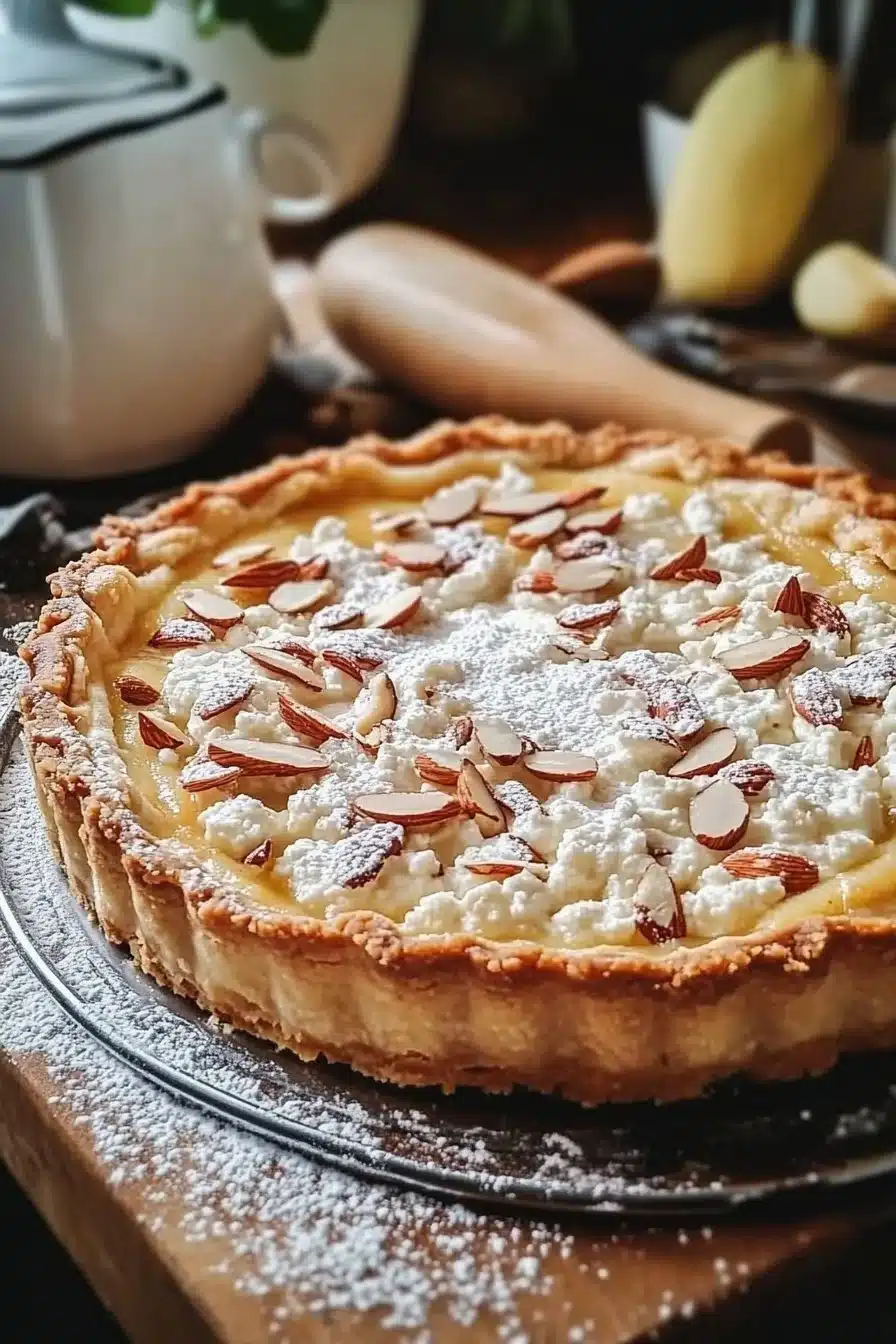
There are a few small tests I use when deciding if the tart is ready. The center should not be jiggly like a liquid; rather, it should wobble slightly and feel set like a soft custard. I also watch the top; it should be evenly golden with almonds that look toasted but not burned. If you tap the tart pan gently, the filling should feel firm and give just a little.
If the edges are becoming brown faster than the center is setting, you can cover the tart loosely with a piece of foil to shield the crust from over-coloring. Let it cool gradually on a wire rack. Cooling is important because the filling continues to set as it cools. A rushed slice from a piping hot tart will be messy, so let patience be part of your baking practice.
Finally, taste a small piece when it is cooled. The ricotta should be creamy and slightly tangy, the orange zest bright, and the almonds toasted. The chocolate drizzle should ground the flavors. If one of those elements feels missing, make a mental note for next time and adjust the sweetness or zest to suit your family.
Serving Italian Almond & Ricotta Tart With Family Warmth
When I bring this tart to the table I like to make a small moment of ceremony out of it. I cut modest wedges and arrange them on a big plate. Sometimes I put a few extra toasted almonds on each slice for prettiness. I will often serve it with a small bowl of whipped cream or a spoonful of mascarpone—nothing overly sweet, just a gentle partner to the ricotta.
For a brunch, place the tart alongside plates of fruit, slices of ham, and a carafe of coffee. The tart sits well with bitter coffee because the chocolate and almonds balance the cup. For an evening dessert, I like to pour a small cup of espresso or make a pot of tea and set the tart in the middle of the table. We eat slowly and talk about the day. The tart invites conversation because it is mild enough to let people savor each other’s company rather than overpowering the palate.
If you are bringing it to a friend, wrap it with a ribbon and a small handwritten note. Tell them a quick story about a kitchen moment, and you will have given more than dessert. The tart travels well and tastes lovely even at room temperature, which makes it a considerate treat for someone new to your life or for a neighbor you want to know better.
Tips for Plating and Pairings
I like to keep plating warm and unpretentious. A simple white plate makes the tart feel bright and homey. A small dusting of powdered sugar over the top adds a touch of festive charm without being fussy. If you serve the tart with a small scoop of vanilla gelato in warmer months, the contrast between cold cream and warm pastry is delightful.
Pair the tart with beverages that match its gentle flavors. A light dessert wine, an herbal tea, or a small cup of espresso are all suitable companions. For family brunch, a citrusy sparkling water or a homemade lemonade complements the orange zest and cuts through the richness. Think of the pairing as another conversation piece, something to bring out the tart’s quiet notes rather than overpower them.
If you are serving a crowd, cut the tart into smaller pieces to encourage sampling. It is a forgiving dessert, so you can offer small plates with a slice and a little spoon of cream. People appreciate the generosity and the chance to taste more than one dessert if you have others.
If you enjoy comparing sweets, a lemon tart brings a bright foil that plays well with this almond and ricotta combination, and it can become a playful theme for a dessert table.
Storing Italian Almond & Ricotta Tart for Tomorrow
Storing this tart is simple and it keeps its charm overnight. Cover it loosely with plastic wrap or keep it in an airtight container in the refrigerator. The flavors mellow and deepen as it rests, which means a slightly sweeter, more integrated tart the next day. I often find leftovers taste better after a night in the fridge because the orange and almond flavors have had a chance to settle.
If you want to serve it warm again, bring slices to room temperature and then warm gently in a 325°F oven for 8 to 10 minutes. This helps the crust regain a little of its original texture without drying out the filling. Do not microwave if you care about texture; the microwave can make the filling rubbery. A gentle oven heat is kinder to the custardy center.
You can freeze the tart whole or in slices. Wrap tightly in plastic and then in foil to protect it from freezer burn. Thaw in the refrigerator overnight before reheating. I find that a frozen and gently reheated tart retains the creaminess of the ricotta surprisingly well if you take care with the thawing process.
How to Save and Use Leftovers
Leftover slices make beautiful breakfast companions. Pop a slice beside a bowl of fresh fruit for a light, comforting morning. You can also crumble a slice over yogurt for a textured parfait that tastes like dessert but reads as breakfast. If you have leftover crust pieces, toast them for a crunchy snack or use them as a base for small dessert bites topped with mascarpone and citrus segments.
For a small celebration, cut the tart into thin slivers and arrange them with other small sweets. The ricotta tart’s subtle profile provides balance when paired with more intense treats like chocolate truffles or a sharp fruit compote. Leftovers also make a thoughtful gift; I will sometimes pack a slice in a small box and leave it on a friend’s porch with a note. The kindness of a homemade bite goes a long way.
Variations to Make It Your Own
There is room to play while keeping the soul of the tart intact. Swap the orange zest for lemon zest if you want a sharper aroma. Stir in a handful of mini chocolate chips into the filling for a subtle surprise. You can fold in a tablespoon of almond flour to the crust for an extra nutty profile. Add a tablespoon of orange marmalade on the top after baking for a gloss that also intensifies the citrus.
If you want a more rustic look, use a loose-bottom tart tin and let the crust be a touch uneven. Add a sprinkle of flaky sea salt to the chocolate drizzle for a complex pop. For a festive twist, stir a teaspoon of finely chopped candied orange peel into the filling, but be cautious with sweetness. These small changes should feel like playful accents rather than major overhauls.
A gluten-free crust made from almond flour and butter can also work, though it will be more fragile. If you try that route, press the crust firmly into the pan and chill it before baking to help it keep its shape. Taste along the way and remember that the essence of the tart lives in the ricotta and the balance of almond and citrus.
Troubleshooting Common Questions
If the filling seems grainy, it may be the ricotta. Choose a creamy, well-drained ricotta. If needed, press it through a sieve for a smoother texture. If the crust becomes soggy, pre-bake it a touch longer or try a thin egg wash before baking to create a seal. If the top browns too quickly, tent with foil to protect it while the center finishes cooking.
If the tart cracks on top, it likely baked too quickly or was overcooked. Reduce the oven temperature slightly next time and watch for the gentle wobble in the center. If the almonds sink, they were probably too heavy or the filling was too loose; press the almonds in before baking to help them anchor. Small imperfections are part of home baking and often become part of the charm.
If you have questions about tart crusts or want a citrus companion idea, this lemon tart recipe offers clear tips and a bright contrast that can help you practice your tart skills.
Making This Tart With Kids
Children love being part of this recipe because it includes sensory-rich steps. Let them zest the orange, but watch closely with teeth, and show them the proper way to rub the zest so the white pith does not come through. They can stir the ricotta and sugar until smooth and help sprinkle the almonds on top. These small jobs help them feel useful and teach them patience.
Create a small station with the ingredients laid out and clear instructions. Use a child-sized apron and give them a small bowl for mixing. If a child wants to use the oven, supervise closely and handle the hot stuff yourself. Make it about the joy of making rather than the perfect end result. Snacks of raw almonds and orange slices while baking make the time waiting more fun.
If you are teaching a younger child, focus on one step they can do well, like pressing the crust or arranging almonds. Praise and curiosity build confidence, and the memories of working together will matter more than a flawless tart.
What I Hope You Take Away
I hope this recipe becomes one of those dishes you return to when you want to feel rooted. It is a dessert that fits into everyday life while holding space for celebration. The textures and aromas connect you to a tradition of simple, honest cooking, and the process invites presence and small acts of care.
Whether you make it for a neighbor, a quiet evening at home, or a busy brunch, let the tart be a way of slowing down. Invite someone to help, share a story as it bakes, and notice the comfort that comes from doing something small and thoughtful. Food is an offering, and this tart is one that carries warmth in its crumb and generosity in its flavor.
If you are playing with dessert themes, pairing this tart with a lemon tart recipe can create a beautiful contrast of flavors at your next gathering, and it is a lovely way to show how simple sweets can feel abundant.
Final Notes and Little Encouragements
Baking is a practice, not a test. There will be tarts that turn out better than others, and that is part of the journey. Keep the essentials close at hand: good butter, fresh ricotta, and a bright orange. Taste as you go, and give yourself permission to make small changes that make the recipe yours.
If you bake this and it brings a smile to someone’s face, that is the success I hope for. Send a note to a friend, share a slice with someone who needs a lift, and savor the quiet pleasure of a kitchen that smells like almonds and orange. The memories you make will be as sweet as the tart.
If you want to explore other tarts, try comparing textures and flavors, and keep what you learn in a little notebook. Soon, you will have a collection of recipes that tell the story of your kitchen and the people you love.
Thank you for bringing this tart into your home. I hope it becomes a small ritual for you, one that makes the ordinary feel a little more like celebration.