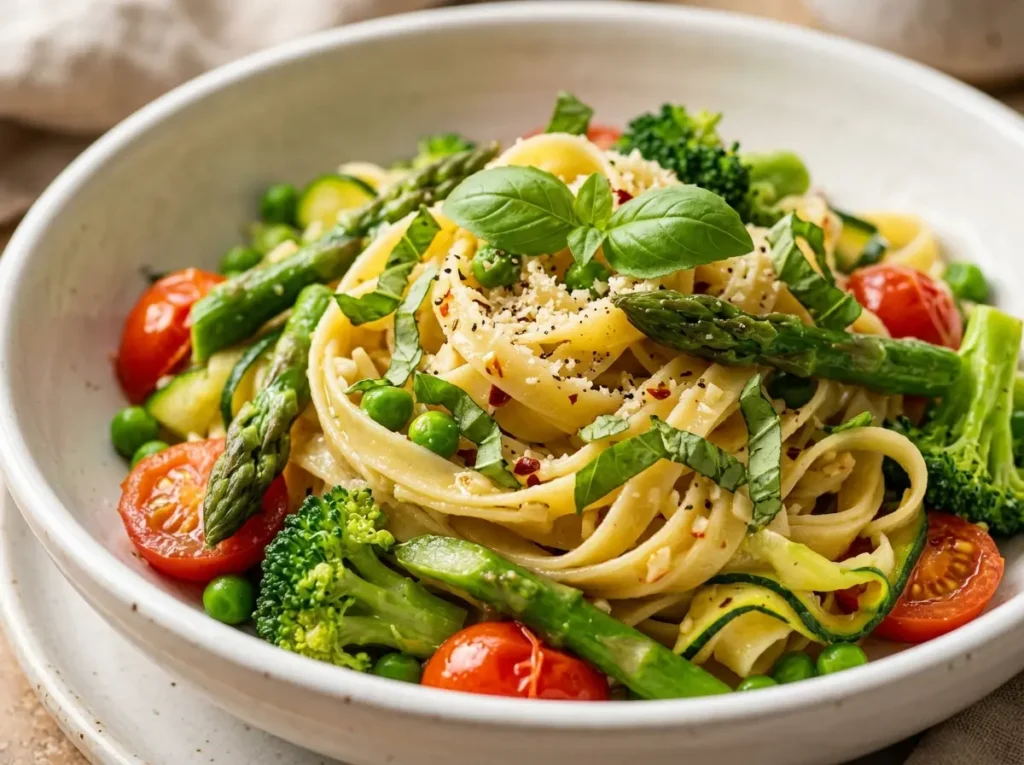
There is a particular kind of dinner that does not announce itself. It simply appears on the table and makes everyone lean in. This vegan pasta primavera recipe is exactly that kind of meal. Bright with color, fragrant with garlic and lemon, full of tender vegetables that still have a little life in them. It is the sort of dish that feels seasonal even in the middle of an ordinary week.
I made my first pasta primavera the spring my youngest decided she was done with meat. I needed something that felt generous rather than reduced, a meal that said abundance rather than compromise. This became one of those recipes I return to again and again without thinking, because it is endlessly forgiving, endlessly colorful, and always ready to absorb whatever vegetables look best at the market that day.
At tasteourdish.com, Chef Elise recipes are built around the idea that food made with care and good ingredients does not need to be complicated. This vegan pasta primavera recipe proves that completely. It is plant-based and proud of it, but it never feels like anything is missing from the bowl.
If you love easy plant-forward comfort meals, you may also enjoy our Creamy Potato Soup for another wholesome one-pot dinner that comes together without fuss.
Table of Contents
Table of Contents
Key Takeaways for This Vegan Pasta Primavera Recipe
This vegan pasta primavera recipe is a 30-minute plant-based pasta tossed with sautéed spring and summer vegetables in a light lemon garlic sauce. It is fully dairy-free, egg-free, and easily made gluten-free with your preferred pasta swap. Research from Healthline’s complete guide to vegan eating confirms that well-planned plant-based meals built around whole ingredients support long-term health and sustained energy.
The sauce is the heart of this dish. A simple combination of olive oil, garlic, vegetable broth, lemon juice, and a touch of coconut milk or cashew cream creates a light but silky coating that lifts rather than weighs down the vegetables.
Primavera means spring in Italian, and the recipe reflects that. It was designed for vegetables at their most vivid and tender, though it works beautifully all year by adapting the produce to whatever is freshest and most available.
This recipe adapts across diets and preferences. You can make it a vegan pasta primavera recipe no cream version with just broth and lemon, go richer with a coconut milk sauce, or add white wine for depth in the Connoisseurus Veg style.
What Is Vegan Pasta Primavera Recipe?
A vegan pasta primavera recipe is a plant-based version of the classic Italian-American pasta dish made with fresh vegetables, pasta, and a light sauce. The original pasta primavera from the 1970s used butter and cream, but vegan adaptations replace those with olive oil, lemon, vegetable broth, and dairy-free cream alternatives without losing any of the brightness or character.
The word primavera translates from Italian as spring, and the recipe carries that spirit in every bowl. Asparagus, zucchini, cherry tomatoes, broccoli, peas, and bell peppers are the most common vegetables used, though the recipe is intentionally flexible. Any tender vegetable that cooks quickly belongs here.
What separates a great vegan pasta primavera recipe from a forgettable one is how the vegetables are handled. They should be sautéed until just tender, still bright in color, with a little bite remaining. According to Harvard T.H. Chan School of Public Health, eating a variety of colorful vegetables every day lowers risk of heart disease, supports healthy blood pressure, and provides a broad range of protective plant compounds. Overcooked vegetables turn this dish from vibrant to grey, and that single detail makes all the difference in the final result.
Vegan Pasta Primavera Recipe Ingredients
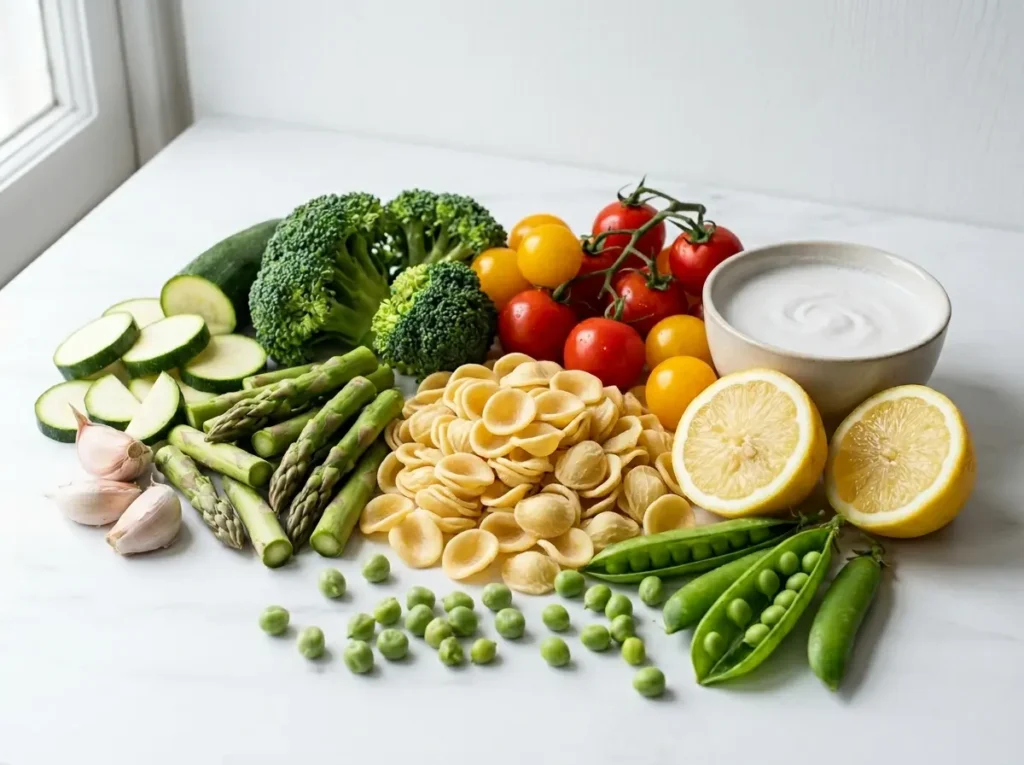
The ingredient list here is flexible by design. Use the vegetables listed below as a starting point, then swap freely based on what looks best, what is in season, or what your family already loves.
For the pasta and vegetables:
12 ounces pasta of your choice, spaghetti, penne, rigatoni, or fettuccine all work well
1 tablespoon olive oil
1 small onion, thinly sliced
4 cloves garlic, finely minced
1 medium zucchini, sliced into half moons
1 cup broccoli florets
1 cup cherry tomatoes, halved
1 cup asparagus, cut into 2-inch pieces
1/2 cup frozen peas
1 medium carrot, thinly sliced
For the lemon garlic sauce:
3/4 cup vegetable broth
1/3 cup full-fat coconut milk or cashew cream
3 tablespoons fresh lemon juice
1 teaspoon lemon zest
1/2 teaspoon kosher salt, plus more to taste
1/2 teaspoon black pepper
Red pepper flakes, optional
Fresh basil and parsley for serving
Vegan Parmesan for serving, optional
Print
7 Best Vegan Pasta Primavera Recipe Tips for a Perfect Plate
- Total Time: 30 minutes
- Yield: 4 servings 1x
Description
This vegan pasta primavera recipe is a bright, colorful 30-minute plant-based dinner made with sautéed spring vegetables, pasta, and a light lemon garlic sauce. Fully dairy-free and easily gluten-free.
Ingredients
- 12 ounces pasta of your choice
- 1 tablespoon olive oil
- 1 small onion, thinly sliced
- 4 cloves garlic, finely minced
- 1 medium zucchini, sliced into half moons
- 1 cup broccoli florets
- 1 cup cherry tomatoes, halved
- 1 cup asparagus, cut into 2-inch pieces
- 1/2 cup frozen peas
- 1 medium carrot, thinly sliced
- 3/4 cup vegetable broth
- 1/3 cup full-fat coconut milk or cashew cream
- 3 tablespoons fresh lemon juice
- 1 teaspoon lemon zest
- 1/2 teaspoon kosher salt, plus more to taste
- 1/2 teaspoon black pepper
- Red pepper flakes, optional
- Fresh basil and parsley for serving
- Vegan Parmesan for serving, optional
Instructions
- Bring a large pot of salted water to a boil. Cook pasta until just al dente. Reserve 1/2 cup pasta water before draining. Toss drained pasta with a drizzle of olive oil.
- Heat olive oil in a large skillet over medium heat. Add onion and carrot and cook for 6 to 8 minutes until softened. Add garlic and cook 1 minute more.
- Add zucchini, broccoli, and asparagus. Sauté 3 to 4 minutes until just tender. Add cherry tomatoes and frozen peas in the last minute.
- Pour in vegetable broth and bring to a simmer. Stir in coconut milk, lemon juice, lemon zest, salt, and pepper. Simmer 2 to 3 minutes.
- Add drained pasta to the skillet and toss to coat. Add reserved pasta water a little at a time until the sauce is silky.
- Remove from heat and stir in basil and parsley. Serve with vegan Parmesan, extra lemon, and black pepper.
Notes
Use reserved pasta water to loosen the sauce and improve cling.
Fresh lemon juice and zest are essential avoid bottled lemon juice.
For a no-cream version, omit coconut milk and use extra broth.
Add white beans or chickpeas for extra protein.
Store leftovers in the fridge for up to 3 days. Reheat with a splash of broth.
- Prep Time: 10 minutes
- Cook Time: 20 minutes
- Category: Dinner, Recipes
- Method: Stovetop, One-Pan
- Cuisine: Italian-American, Vegan
Nutrition
- Serving Size: 1 bowl
- Calories: 385
- Sugar: 7g
- Sodium: 430mg
- Fat: 11g
- Saturated Fat: 4g
- Unsaturated Fat: 6g
- Trans Fat: 0g
- Carbohydrates: 60g
- Fiber: 6g
- Protein: 12g
- Cholesterol: 0mg
How to Make Vegan Pasta Primavera Recipe Step by Step
This recipe has two things happening at once: the pasta cooking in boiling water and the vegetables and sauce coming together in a skillet. Once you start both at the same time, the whole dish is ready in about 30 minutes.
Step 1: Cook the Pasta
Bring a large pot of well-salted water to a boil and cook the pasta according to package directions until just al dente. Before draining, reserve about half a cup of the starchy pasta water. That water is a quiet secret weapon in this recipe. It helps loosen the sauce at the end and makes everything cling to the pasta more smoothly. Drain and set aside, tossing with a drizzle of olive oil to prevent sticking.
Step 2: Sauté the Base Vegetables
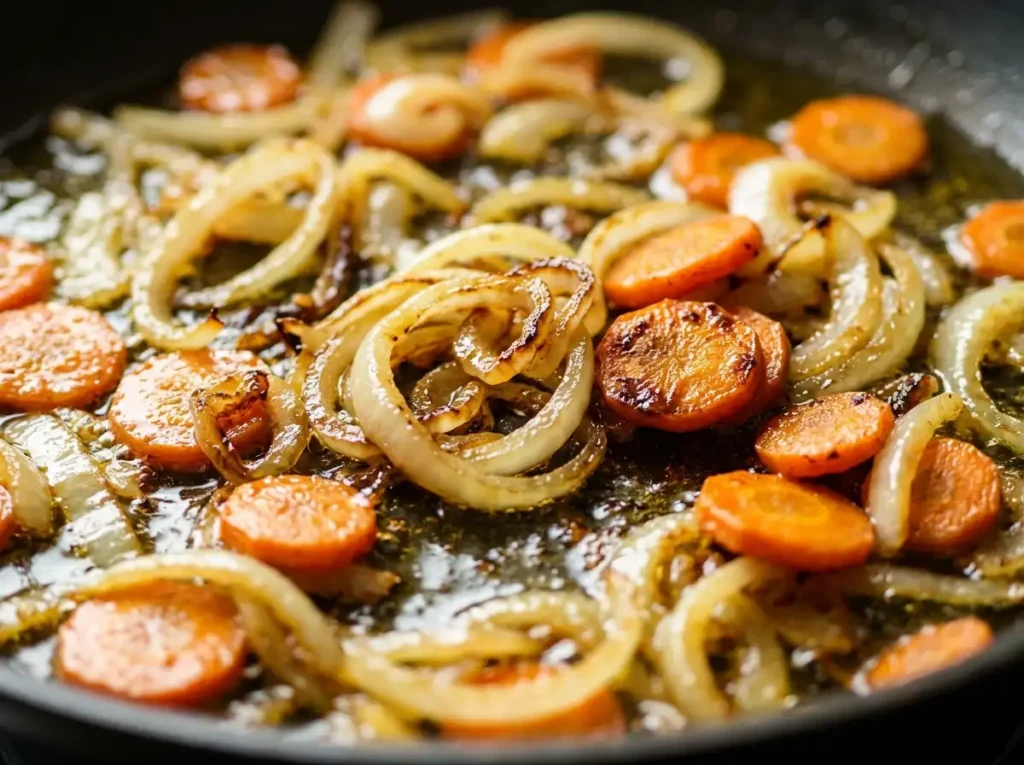
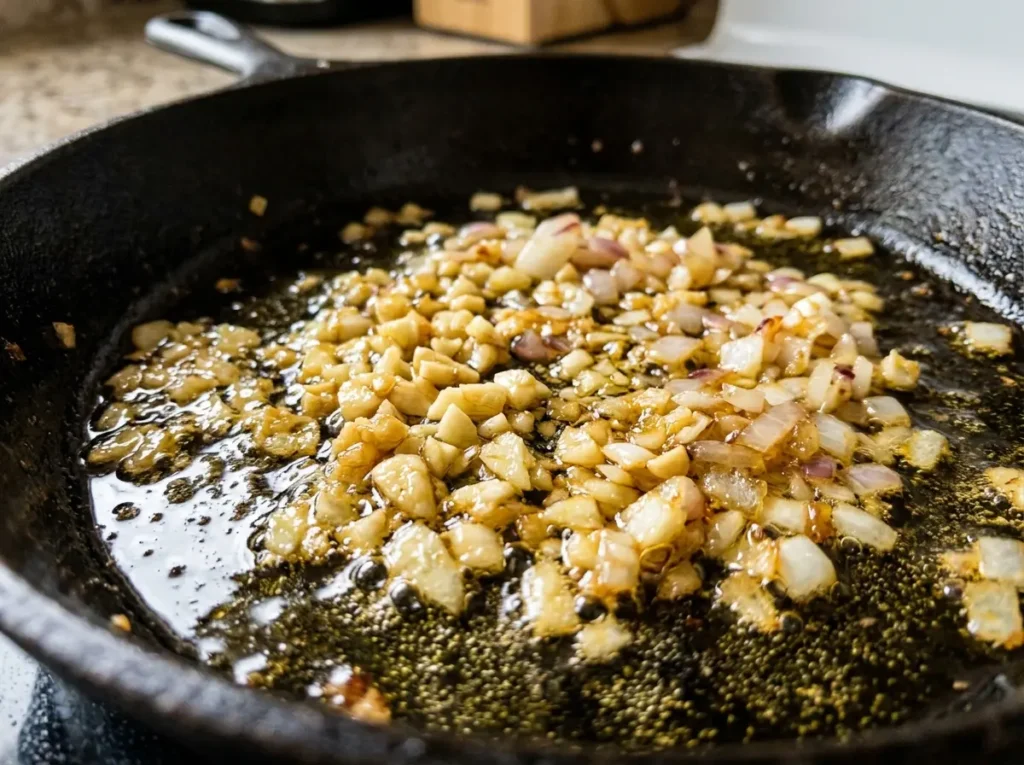
While the pasta cooks, warm the olive oil in a large wide skillet over medium heat. Add the onion and carrot first, since they take the longest to soften. Cook for about 6 to 8 minutes, stirring occasionally, until the carrot begins to yield and the onion turns translucent. Then add the garlic and cook for 1 more minute, stirring constantly. Garlic burns quickly and the goal here is fragrant and golden, not dark and sharp.
Step 3: Add the Remaining Vegetables
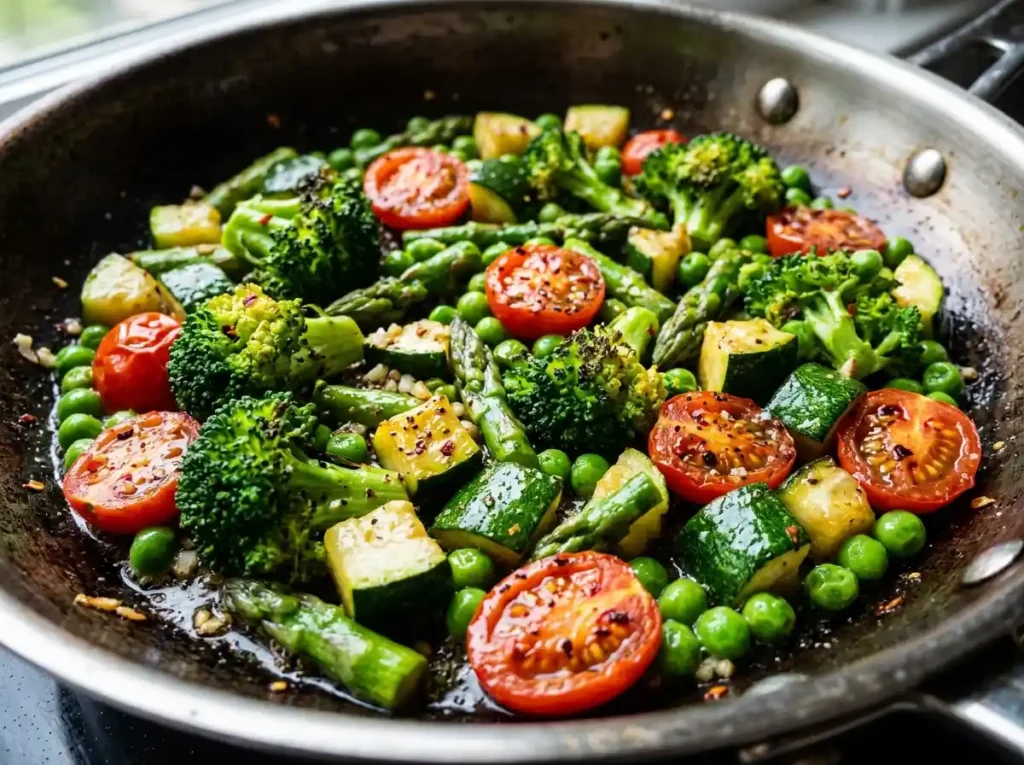
Add the zucchini, broccoli, and asparagus to the pan and cook for 3 to 4 minutes, tossing as you go. These vegetables should become tender but still hold their shape and color. In the last minute, add the cherry tomatoes and frozen peas. Tomatoes only need a moment to warm through and soften slightly at the edges. You want them to burst gently, not collapse. The peas need even less time, just enough heat to defrost and brighten.
Step 4: Build the Sauce
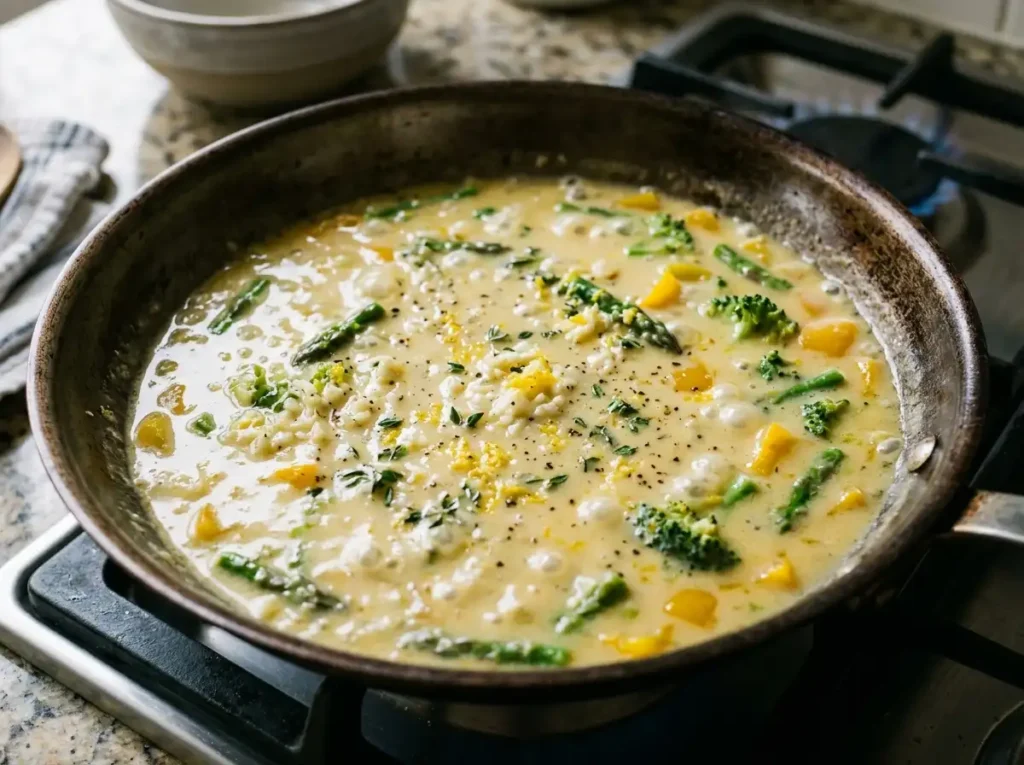
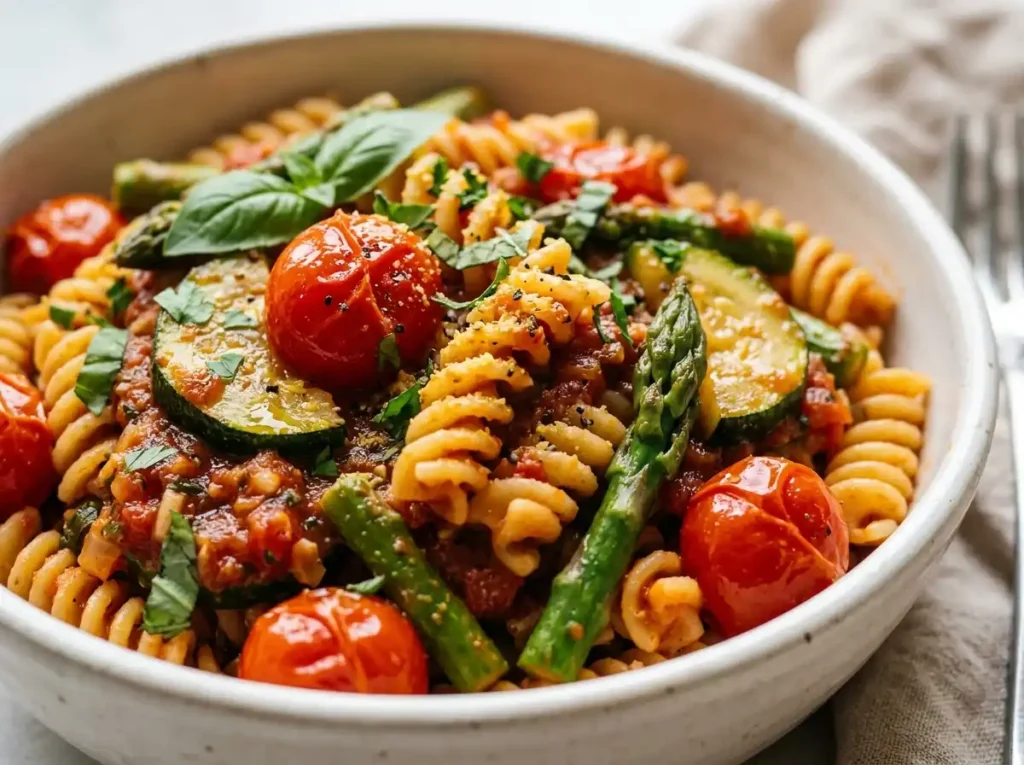
Pour the vegetable broth into the pan and let it come to a simmer. Stir in the coconut milk or cashew cream, lemon juice, lemon zest, salt, and pepper. Let the sauce simmer for 2 to 3 minutes so the flavors settle and the liquid reduces slightly. Taste it here. It should taste bright, garlicky, and just rich enough without being heavy. Adjust with more lemon or salt as needed. If you want a vegan pasta primavera red sauce variation, stir in a half cup of crushed tomatoes at this stage instead of or alongside the coconut milk.
Step 5: Toss and Finish
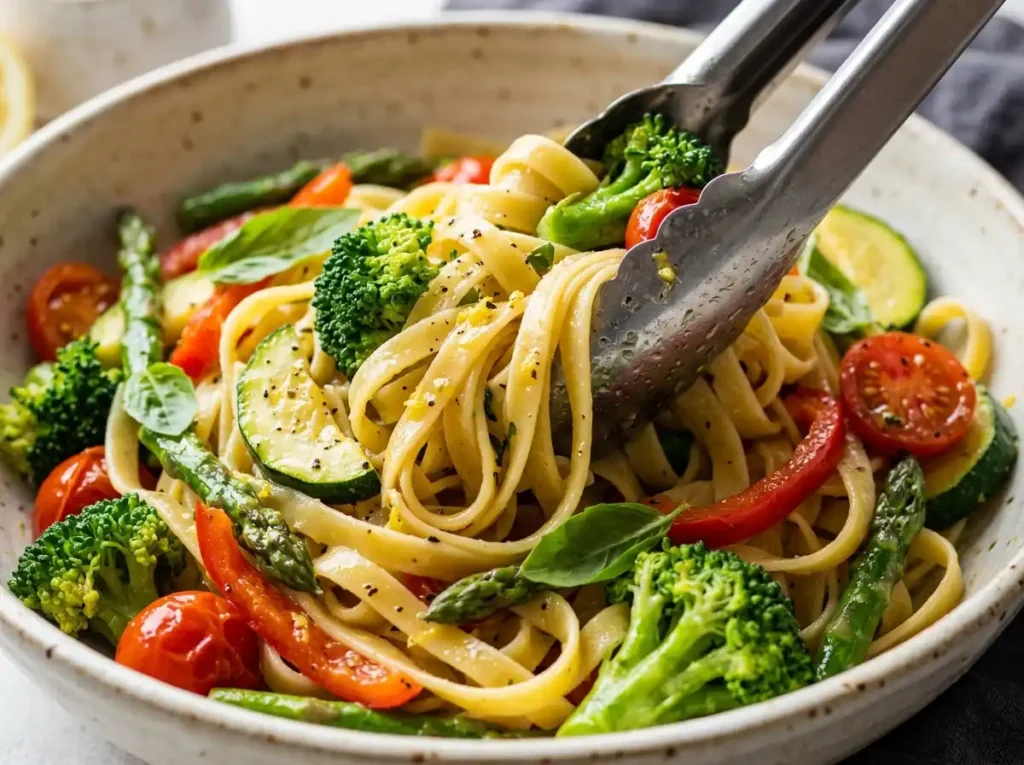
Add the drained pasta directly to the skillet and toss everything together until the noodles are fully coated in the sauce. If the sauce feels tight, add a splash of the reserved pasta water and toss again until silky. Remove from the heat and stir in the fresh basil and parsley. Serve immediately with vegan Parmesan, extra lemon zest, and a crack of black pepper. This is a dish that tastes best the moment it is finished, while the vegetables are still vivid and the sauce is still glossy.
For another light and cozy vegetable dinner, try our Easy Egg Drop Soup or pair this pasta with our Stoved Chicken Recipe on nights when the family wants something heartier alongside.
Best Variations for Vegan Pasta Primavera Recipe
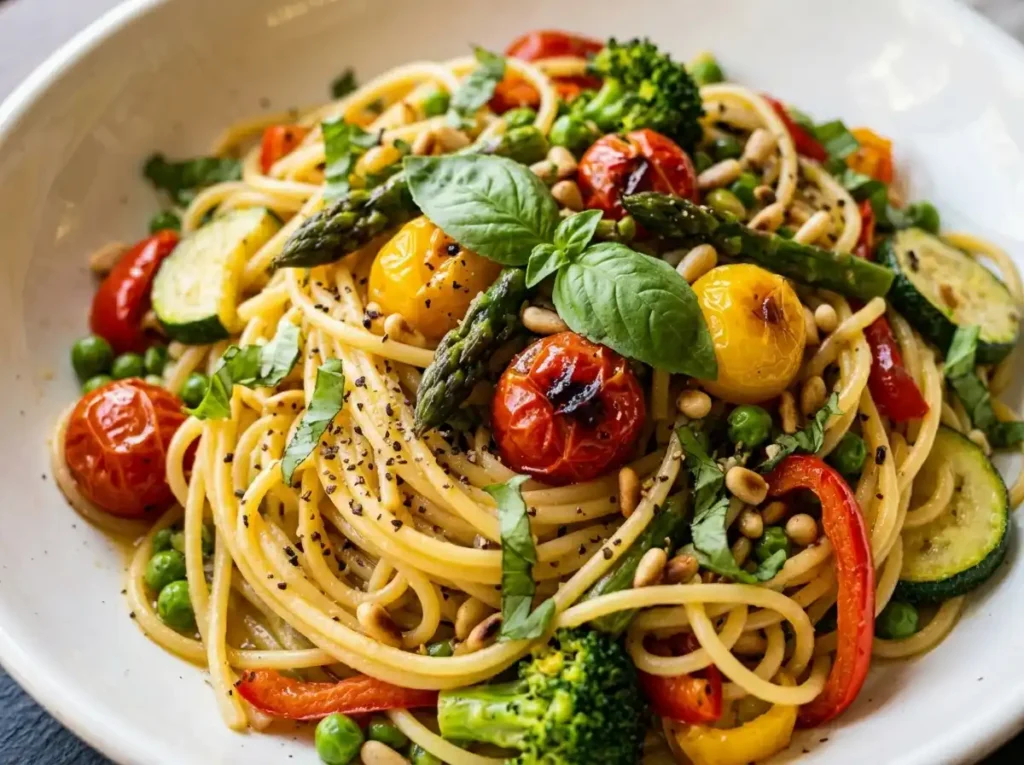
This vegan pasta primavera recipe is one of the most flexible recipes in a home cook’s rotation. The base stays the same, the variables are entirely yours.
| Variation | What Changes | Best For |
|---|---|---|
| Vegan pasta primavera recipe no cream | Use only vegetable broth and lemon, skip coconut milk | Lighter everyday version |
| Vegan pasta primavera red sauce | Add crushed tomatoes or marinara instead of cream | Heartier tomato-based flavor |
| Vegan pasta primavera coconut milk | Use full-fat coconut milk for a richer sauce | Creamy tropical warmth |
| Vegan pasta primavera recipe healthy | Use whole wheat or chickpea pasta, reduce oil | Higher fiber, lighter calories |
| Homemade gluten free vegan pasta | Swap in gluten-free pasta of your choice | Celiac-friendly family dinners |
| Connoisseurus vegan pasta primavera style | Add white wine to the sauce before the broth | More complex, deeper flavor |
For added protein, stir in drained white beans or chickpeas with the vegetables in the final step. They blend in without changing the character of the dish and make this pasta filling enough to stand alone as a complete meal.
Why This Vegan Pasta Primavera Recipe Works
This recipe succeeds because it respects the vegetables. Most pasta dishes build flavor in the sauce and use the vegetables as texture. Here, the vegetables are the flavor. The garlic builds the base, the lemon lifts everything, and the broth ties the whole sauce together without overpowering any single ingredient.
The reserved pasta water is another quiet advantage. Its starch softens the sauce and helps it coat the pasta evenly without needing cream or butter to do the work. This is why the dish feels creamy even in its lightest, no-cream version.
It also works because it is genuinely adaptable. Unlike recipes built around a single hero ingredient, this one invites substitution. Different vegetables, different pasta shapes, different sauces. The method stays the same and the result is always satisfying. According to the Harvard T.H. Chan School of Public Health, eating a variety of differently colored vegetables and fruits every day is as important as quantity, since each color group delivers a distinct set of protective plant compounds your body uses daily.
5 Mistakes to Avoid With Vegan Pasta Primavera Recipe
A good vegan pasta primavera recipe is straightforward, but these five mistakes are worth watching for.
The first mistake is overcooking the vegetables. They should finish bright, tender, and holding their shape. Grey or mushy vegetables make this dish look and taste flat before it reaches the table.
The second mistake is skipping the pasta water. This starchy liquid is one of the most useful tools in pasta cooking. A few tablespoons makes the sauce silkier and helps it cling to every piece of pasta.
The third mistake is using bottled lemon juice. Fresh lemon is essential here. The zest especially adds a layer of brightness that bottled juice cannot replicate.
The fourth mistake is cooking everything together from the start. Harder vegetables like carrots and broccoli need more time than tomatoes and peas. Add in stages so every vegetable finishes at the right texture.
The fifth mistake is serving it too late. This dish is best the moment it comes together. It can sit for a few minutes while you set the table, but leaving it too long lets the pasta absorb the sauce and the vegetables lose their brightness.
Frequently Asked Questions About Vegan Pasta Primavera Recipe
Is pasta primavera vegetarian?
Traditional pasta primavera is vegetarian and can easily be made vegan by swapping butter and cream for olive oil and dairy-free alternatives like coconut milk, cashew cream, or extra vegetable broth.
What vegetables are best for vegan pasta primavera?
Zucchini, asparagus, broccoli, cherry tomatoes, peas, carrots, and bell peppers are the most popular choices. The key is using vegetables that cook quickly and stay bright in color.
Can I make vegan pasta primavera recipe no cream?
Yes. Simply omit the coconut milk or cashew cream and use only vegetable broth, lemon juice, and olive oil for the sauce. The reserved pasta water helps create a light, silky coating without any cream.
What pasta is best for vegan pasta primavera recipe?
Spaghetti, penne, fettuccine, and rigatoni all work well. For a gluten-free version, use chickpea pasta, rice pasta, or any certified gluten-free brand you enjoy.
Can I add protein to this vegan pasta primavera recipe?
Yes. White beans, chickpeas, baked tofu, or grilled tempeh are all excellent protein additions. Stir them in during the final toss so they warm through without becoming overcooked.
How do I store leftover vegan pasta primavera?
Store leftovers in an airtight container in the refrigerator for up to 3 days. Reheat gently on the stove with a splash of vegetable broth to loosen the sauce. The pasta will have absorbed some liquid overnight, so extra broth helps restore the texture.
Is vegan pasta primavera recipe healthy?
Yes. This dish is naturally high in fiber and vitamins from the vegetables, low in saturated fat, and completely plant-based. Using whole wheat or chickpea pasta increases the protein and fiber content further.
Conclusion: A Vegan Pasta Primavera Recipe Worth Making Every Season
This vegan pasta primavera recipe is proof that plant-based cooking does not ask for sacrifice. It asks for good vegetables, a bright sauce, and a little attention at the stove. What comes back is a bowl of dinner that feels celebratory on a Tuesday.
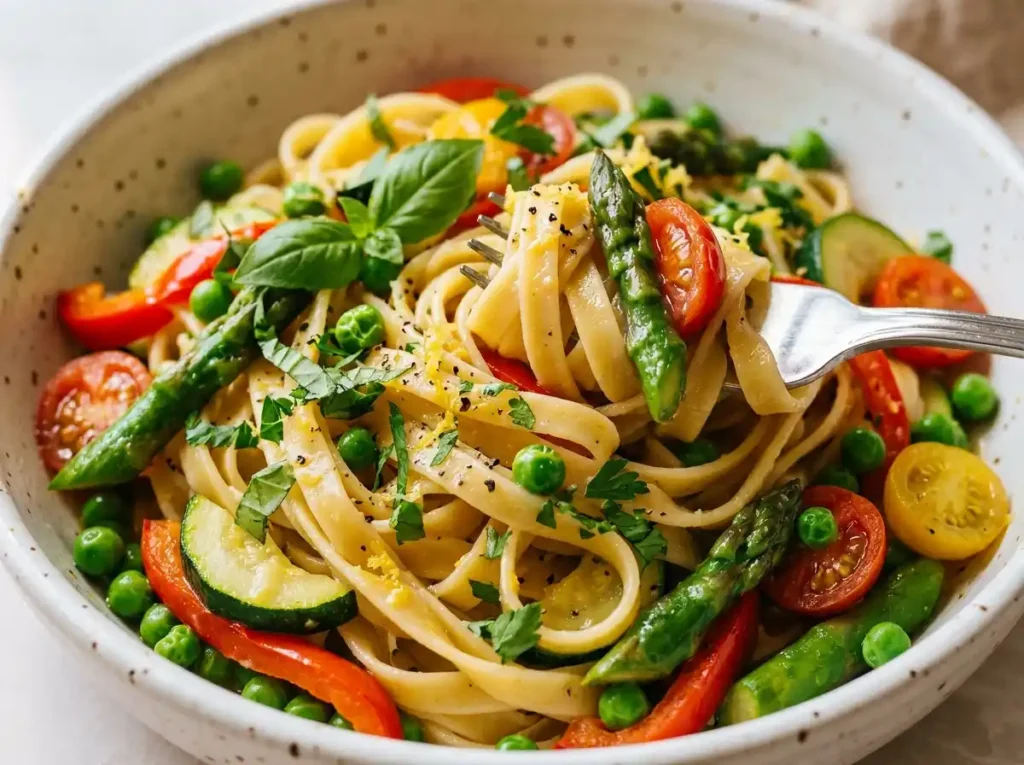
Make it in spring with asparagus and peas when they are freshest. Make it in summer with zucchini and tomatoes when they are warm from the garden. Make it in autumn with whatever sturdy vegetables are still in season and still cheerful. This recipe has room for all of it.
The first bowl will be the one that makes you put it on the regular rotation. The second bowl, which you will want to make within the week, will be the one you start varying by season and instinct, which is exactly how the best recipes settle into a home kitchen.