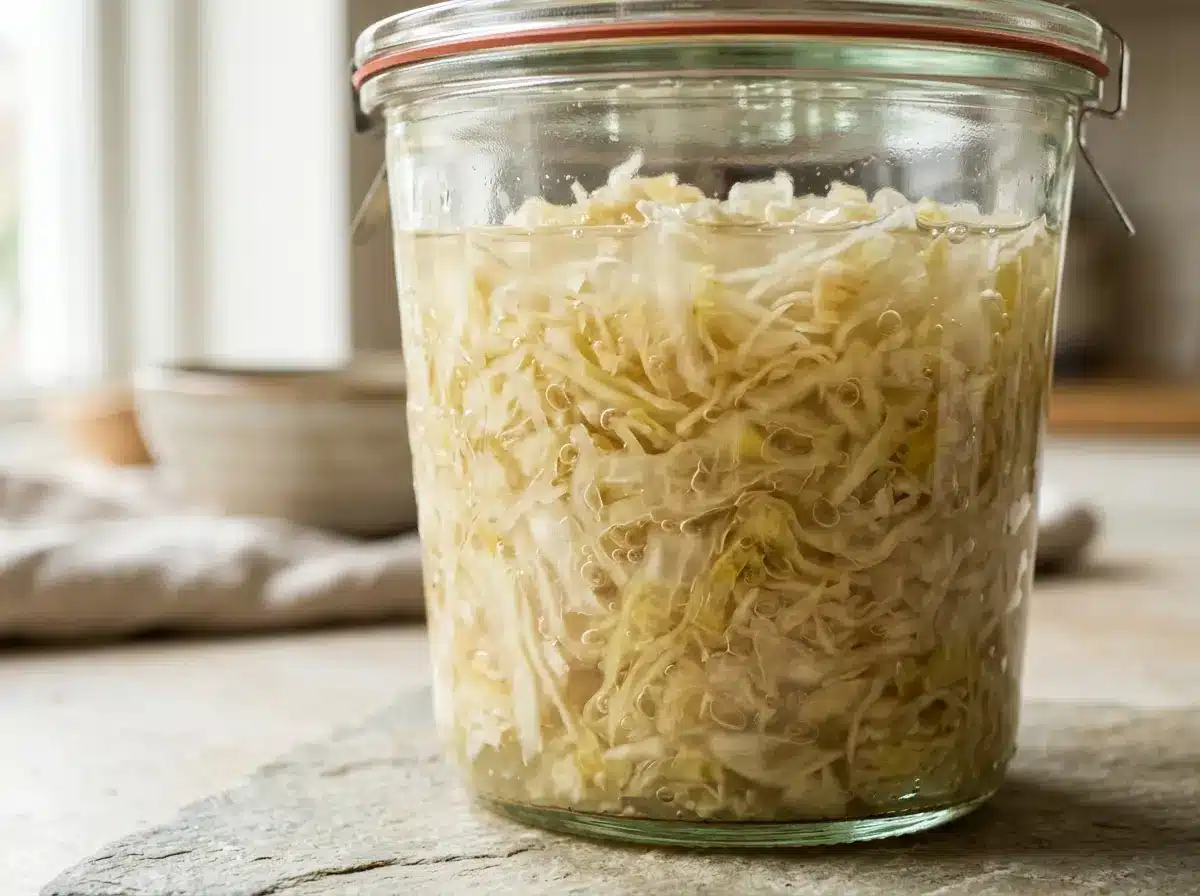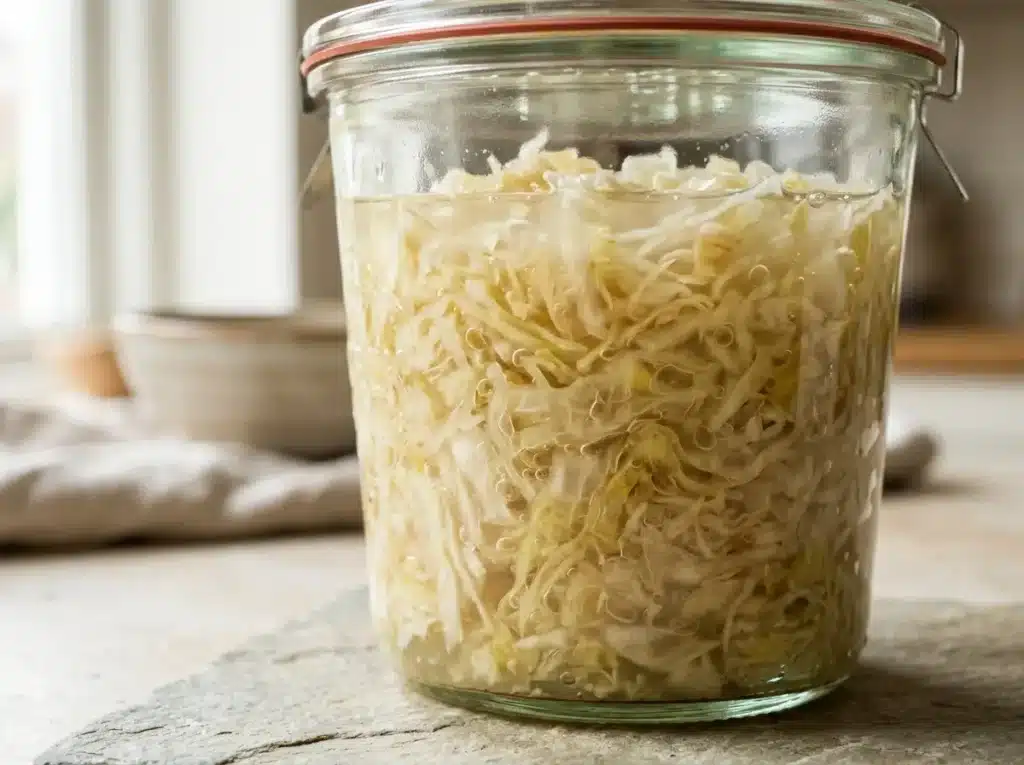
My grandmother kept a crock of fermenting cabbage on her kitchen counter every fall, and as a kid I thought it smelled a little strange. It took me years to understand what she already knew, that jar of tangy, bubbling cabbage was doing more for her digestion than almost anything else on the table. Now I keep my own jar going most months, and I finally understand why she never stopped making it.
This guide covers everything you need to make fermented cabbage recipes for gut health at home, from the exact salt ratio that keeps your batch safe to the science behind why this simple vegetable does so much for your digestive system. Whether you are curious about classic sauerkraut, Korean-style kimchi, or just want to understand the process before trying it yourself, you will find the real technique here. By Chef Elise, TasteOurDish.com.
Table of Contents
Table of Contents
Key Takeaways
- Fermented cabbage relies on a precise salt ratio, typically 1.5 to 2.5 percent of the cabbage’s total weight, to ferment safely.
- The fermentation process produces live probiotics, mainly Lactobacillus strains, that support a healthy gut microbiome.
- Research from Stanford Medicine found that a diet rich in fermented foods increased microbiome diversity and lowered inflammation markers.
- Fermented cabbage should be kept submerged in its own brine and stored in a cool, dark place during fermentation.
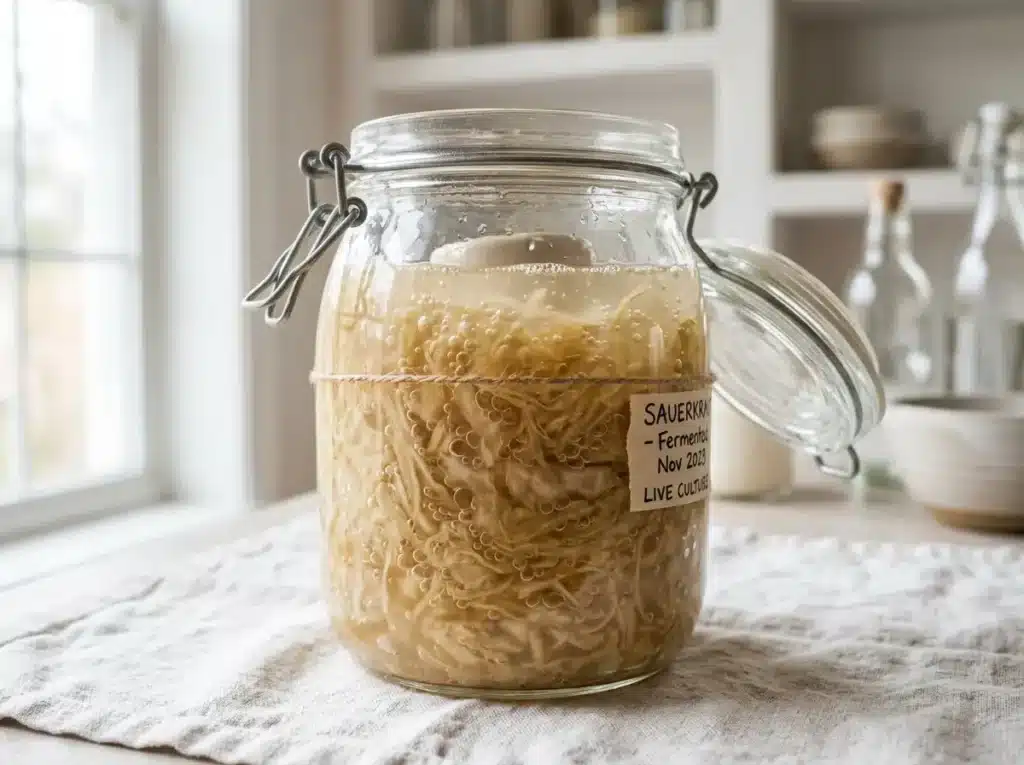
- Look for visible bubbles and a pleasantly sour smell as signs your batch is fermenting correctly.
What Is Fermented Cabbage and Why Does It Support Gut Health?
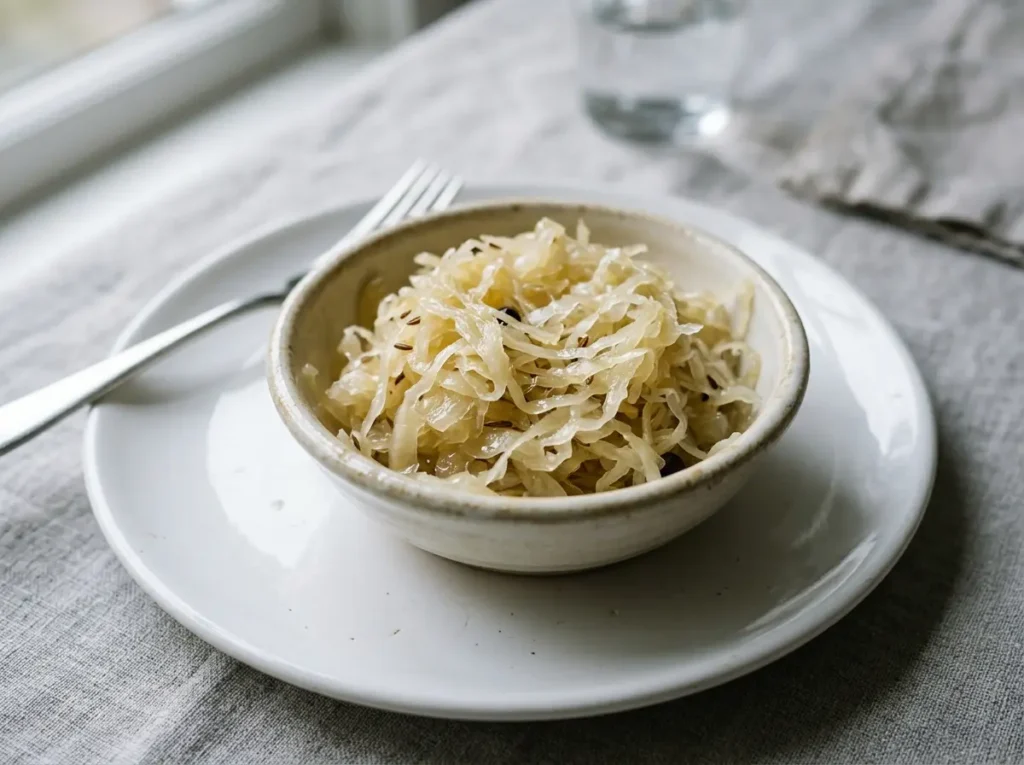
Fermented cabbage is cabbage that has been salted and left to sit at room temperature, allowing naturally occurring bacteria to convert its sugars into lactic acid. This process, called lactofermentation, preserves the cabbage while also creating a tangy, complex flavor and a population of live probiotic bacteria. The most common examples are sauerkraut, a simple salted cabbage ferment popular across Europe, and kimchi, a spiced Korean version made with napa cabbage, chili, and garlic.
The gut health connection comes down to what fermentation actually produces. According to a review published through the National Institutes of Health, fermented foods like sauerkraut can measurably change the composition of the gut microbiome, with unpasteurized versions showing significantly higher levels of beneficial lactic acid bacteria compared to pasteurized store-bought versions.
Answer capsule: Fermented cabbage is cabbage preserved through lactofermentation, a process that creates live probiotic bacteria beneficial for gut health. Sauerkraut and kimchi are the two most common forms. Choose unpasteurized versions with visible bubbles for the most active probiotic content.
Ingredients for Basic Fermented Cabbage
- 1 medium head green cabbage (about 2 to 3 pounds), outer leaves removed
- Non-iodized salt (kosher or sea salt), roughly 1.5 to 2.5 percent of the cabbage’s weight
- Optional: caraway seeds, juniper berries, or sliced garlic for flavor
The salt ratio here is not a suggestion, it is the single most important safety factor in fermentation. Salt draws moisture out of the cabbage to create the brine that submerges and protects it, while also slowing the growth of unwanted bacteria long enough for beneficial lactic acid bacteria to take over. According to USDA’s Agricultural Research Service, fermented vegetables are safe for human consumption as long as microbial growth is controlled and an appropriate pH level is maintained throughout the process, which is exactly what the correct salt ratio accomplishes.
How to Make Fermented Cabbage Step by Step
Step 1: Weigh and shred the cabbage
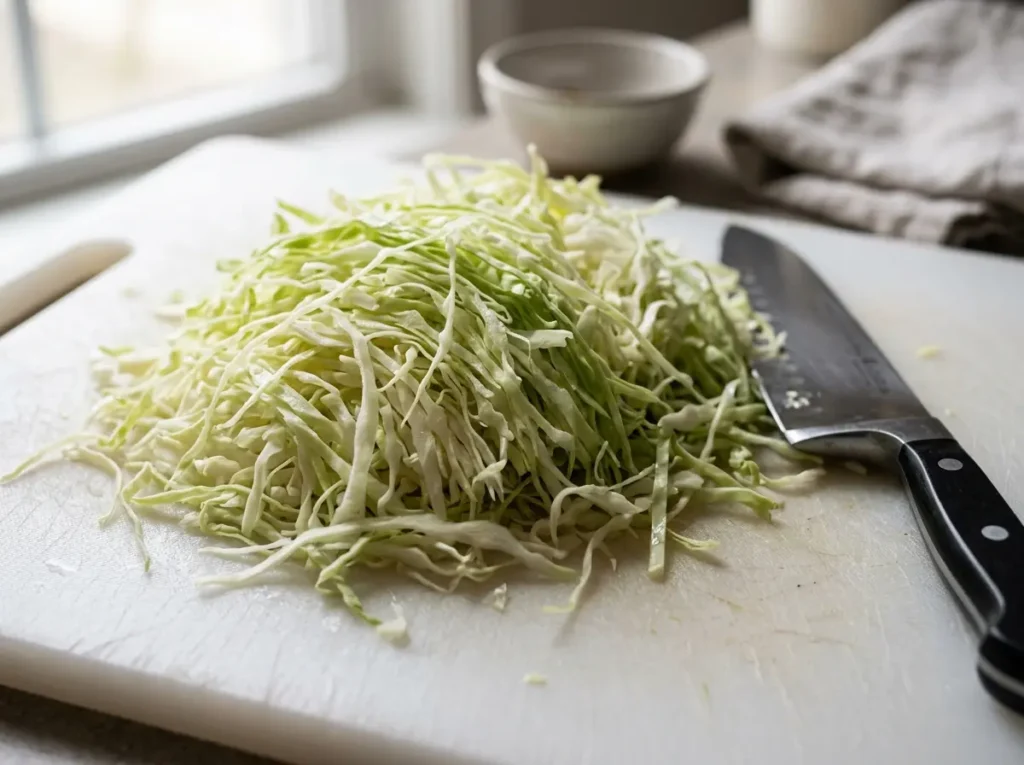
Remove any tough outer leaves and weigh your cabbage on a kitchen scale, since this number determines your exact salt amount. Shred the cabbage thinly using a knife, mandoline, or food processor, and place it all in a large mixing bowl. Thinner shreds ferment faster and pack more tightly, so take your time here.
Step 2: Calculate and add the salt
Multiply your cabbage’s weight by 0.02 to get a standard 2 percent salt ratio, then weigh out that amount of salt. Sprinkle it evenly over the shredded cabbage and toss thoroughly to distribute it. Let the salted cabbage rest for 15 minutes before continuing.
Step 3: Massage and release the brine
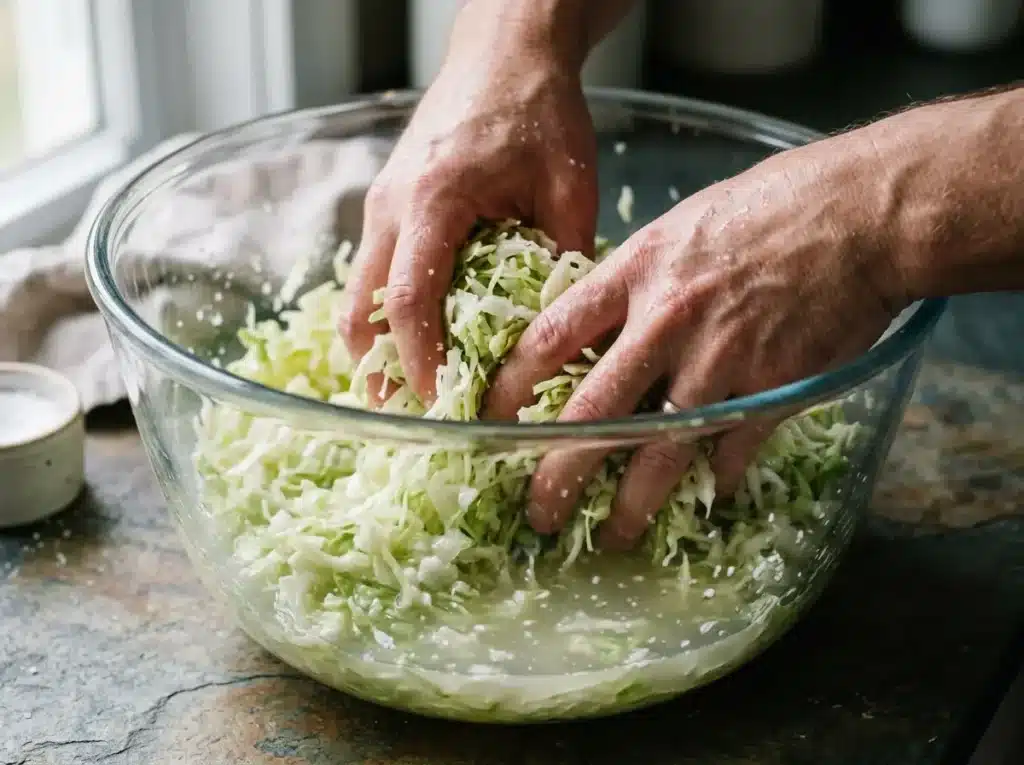
Using clean hands, squeeze and knead the salted cabbage firmly for several minutes, then let it rest and repeat every 15 minutes over the next hour. This process draws liquid out of the cabbage cells to create the natural brine that will protect it during fermentation. You should end up with enough liquid pooling in the bowl to fully submerge the cabbage once packed.
Step 4: Pack the jar tightly
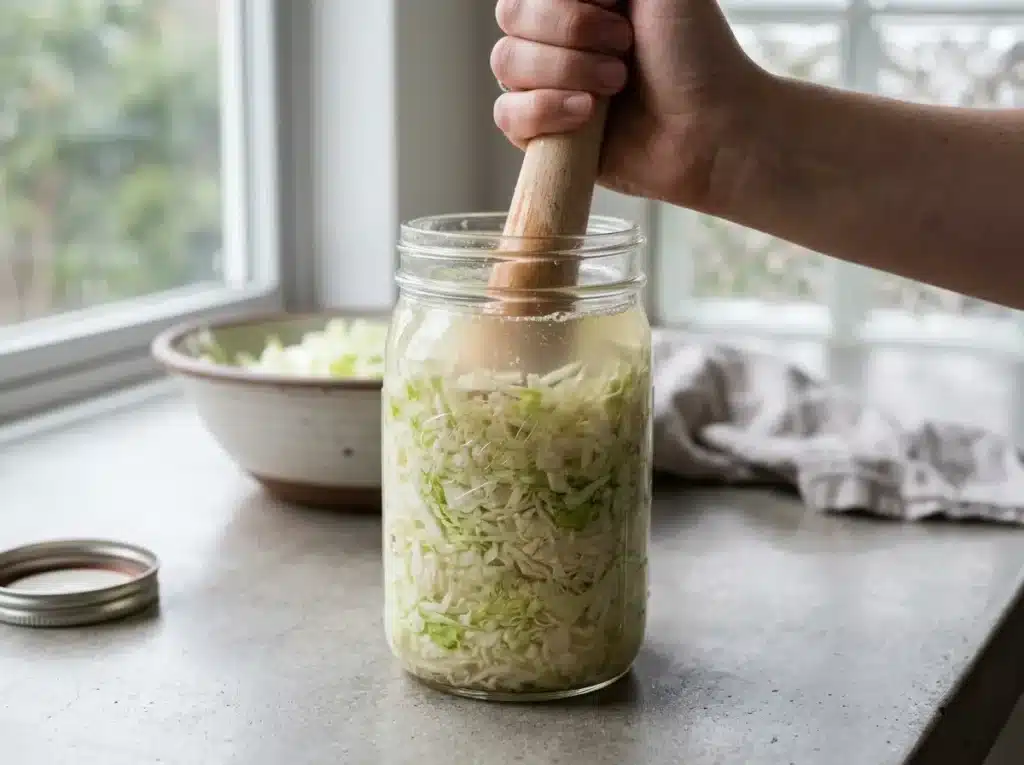
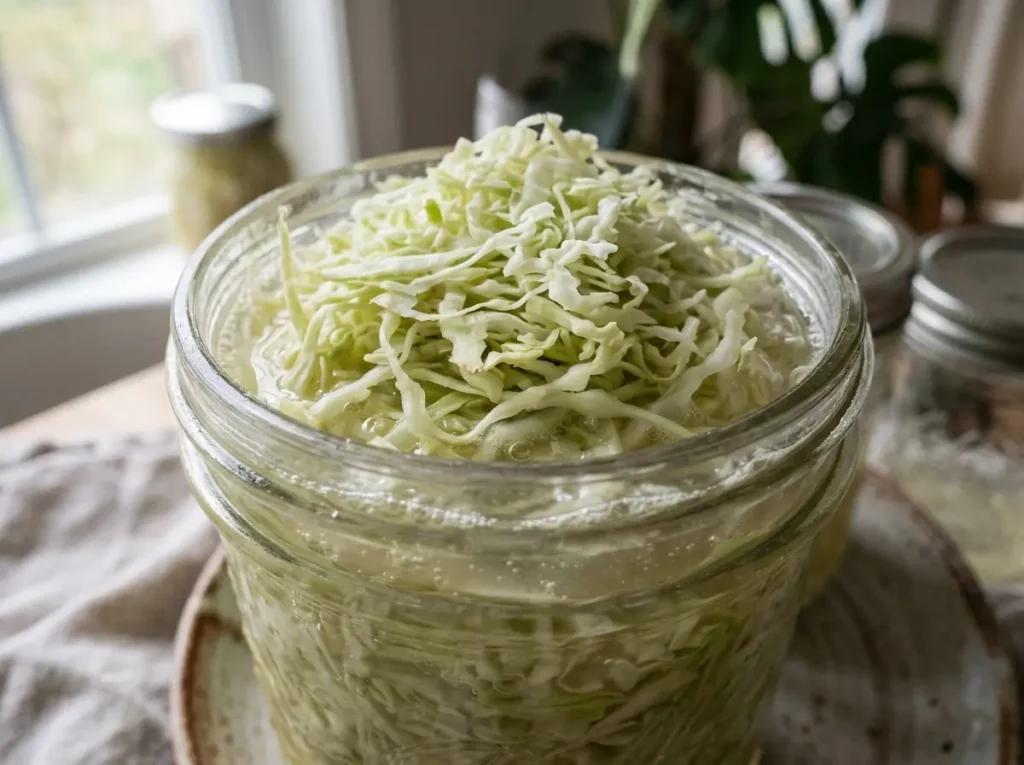
Transfer the cabbage and all its released liquid into a clean glass jar, pressing down firmly with your fist or a wooden tool after each handful to remove air pockets. The brine should rise up and cover the cabbage completely once packed. If there is not enough natural liquid, mix a 2 percent saltwater brine separately and top off the jar until the cabbage is fully submerged.
Step 5: Ferment and check daily
Cover the jar loosely, or use a fermentation lid designed to release gas, and store it in a cool, dark spot away from direct sunlight. Check daily to make sure the cabbage stays submerged, pressing it back down if needed. Depending on room temperature, fermentation typically takes 1 to 4 weeks, and you will notice bubbling and a sour aroma developing as it progresses.
Print
Fermented Cabbage Recipes for Gut Health: 1 Easy Guide
- Total Time: 1 to 4 weeks fermentation
- Yield: 1 quart
Description
Learn easy fermented cabbage recipes for gut health, with the right salt ratio, tips, and real probiotic science.
Ingredients
1 medium head green cabbage (about 2 to 3 pounds), outer leaves removed
Non-iodized salt (kosher or sea salt), roughly 1.5 to 2.5 percent of cabbage weight
Optional: caraway seeds, juniper berries, or sliced garlic
Instructions
1. Weigh and shred the cabbage thinly.
2. Calculate 2 percent of the cabbage weight in salt, sprinkle evenly, and toss to combine.
3. Massage the salted cabbage for several minutes every 15 minutes over 1 hour to release brine.
4. Pack the cabbage and its liquid tightly into a clean glass jar, pressing out air pockets until fully submerged.
5. Cover loosely, store in a cool dark spot, and check daily for 1 to 4 weeks until fermented to taste.
Notes
Refrigerate once fermented to your liking to slow the process and store for several months.
Always use a clean utensil when serving to avoid introducing unwanted bacteria.
Discard if you see pink or fuzzy mold, though a thin white film is generally harmless and can be skimmed off.
- Prep Time: 1 hour 15 minutes
- Cook Time: 0 minutes
- Category: Wellness
- Method: Ferment
- Cuisine: American, Family Heritage, Wellness
Nutrition
- Serving Size: 2 tablespoons
- Calories: 10
- Sugar: 1g
- Sodium: 190mg
- Fat: 0g
- Saturated Fat: 0g
- Unsaturated Fat: 0g
- Trans Fat: 0g
- Carbohydrates: 2g
- Fiber: 1g
- Protein: 0g
- Cholesterol: 0mg
Sauerkraut vs Kimchi: A Quick Comparison
| Style | Main Ingredients | Flavor Profile |
|---|---|---|
| Classic Sauerkraut | Green cabbage, salt | Tangy, simple, mildly sour |
| Kimchi | Napa cabbage, gochugaru, garlic, ginger, fish sauce | Spicy, pungent, deeply savory |
| Curtido | Cabbage, carrots, onion, oregano, chili | Bright, herbal, lightly spiced |
| Quick Refrigerator Ferment | Cabbage, salt, vinegar boost | Milder tang, faster turnaround |

If you want to try the spiced, more elaborate version of this technique, my 7 Easy Fermented Cabbage Kimchi Recipes walks through the traditional, vegan, and mason jar methods in detail, building on the same core fermentation principles covered here.
The Real Science Behind Fermented Cabbage and Gut Health
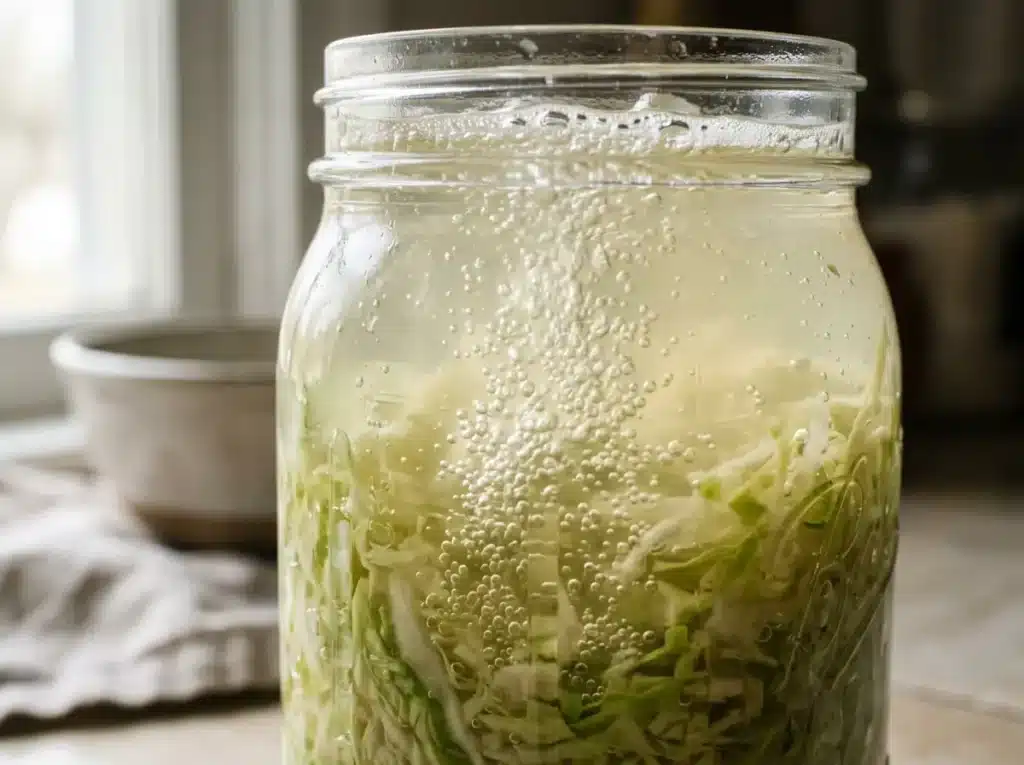
Fermented cabbage does more than add tang to a sandwich. As cabbage ferments, naturally occurring Lactobacillus bacteria consume its natural sugars and produce lactic acid, which is what preserves the vegetable and gives it that distinctive sour flavor. These same bacteria become part of what you consume, potentially supporting the diversity of bacteria already living in your gut.
A widely cited study out of Stanford Medicine found that participants who ate a diet high in fermented foods for 10 weeks saw increased microbiome diversity and a measurable decrease in inflammatory markers, compared to a group who simply increased their fiber intake instead. This is one of the more direct pieces of clinical evidence connecting fermented foods like cabbage to gut health outcomes, rather than relying purely on theory.
That said, not all fermented cabbage products deliver the same benefit. Pasteurization, the heat treatment often used in shelf-stable, store-bought sauerkraut, kills off the live bacteria that make fermented foods beneficial in the first place. If gut health is your goal, look for unpasteurized, refrigerated versions, or make your own at home where you control the entire process.
How to Eat Fermented Cabbage for Gut Health
You do not need large amounts to benefit from fermented cabbage. Most guidance suggests a few tablespoons most days of the week is enough to introduce beneficial bacteria consistently without overwhelming your digestive system, especially if you are new to fermented foods. Start small, since introducing a lot of fermented food at once can cause temporary bloating as your gut adjusts.
Fermented cabbage works well as a simple side dish, a topping for grain bowls, or folded into a sandwich for extra tang. If you want to pair it with a heartier main dish, my Corned Beef and Cabbage Recipe is a comforting classic that goes naturally with a spoonful of fermented cabbage on the side.
Storing and Troubleshooting Your Batch
Once fermentation reaches the flavor you like, transfer the jar to the refrigerator, where cold temperatures slow the process dramatically and let the cabbage keep for several months. Always use a clean utensil when serving to avoid introducing unwanted bacteria into the jar. If you notice pink or fuzzy mold on the surface, discard the batch entirely, but a thin, harmless white film called kahm yeast is generally safe to skim off and discard.
If a full fermentation project feels like too much of a commitment right now, my Cabbage Soup Weight Loss recipe is a simpler way to work more cabbage into your routine while you build confidence with fermentation on the side.
5 Mistakes to Avoid
- Using iodized table salt. Iodine and anti-caking agents can interfere with fermentation. Stick to kosher or sea salt.
- Guessing the salt amount instead of weighing it. I ruined an early batch by eyeballing the salt, and it turned mushy instead of crisp. Always weigh both cabbage and salt.
- Letting the cabbage float above the brine. Exposed cabbage can grow mold. Always keep it weighted down and fully submerged.
- Fermenting in direct sunlight or heat. A cool, dark spot ferments more evenly and reduces spoilage risk.
- Assuming all store-bought sauerkraut has probiotics. Pasteurized versions no longer contain live cultures, even if the label says “fermented.”
If you already have a favorite way to enjoy cabbage and want something warm and savory instead, my Sausage and Cabbage Stir Fry is a good non-fermented option to rotate into your weekly meals alongside your fermenting jar.
FAQ About Fermented Cabbage Recipes for Gut Health
What is the correct salt ratio for fermented cabbage?
The standard salt ratio for fermented cabbage is 1.5 to 2.5 percent of the cabbage’s total weight, with 2 percent being the most commonly recommended amount. This translates to roughly one tablespoon of salt per pound of cabbage. Weighing your ingredients on a kitchen scale gives far more consistent results than measuring by volume alone.
Is fermented cabbage actually good for gut health?
Yes, unpasteurized fermented cabbage contains live Lactobacillus bacteria that can support gut microbiome diversity. Research from Stanford Medicine found that a diet high in fermented foods increased microbiome diversity and reduced inflammation markers over a 10-week period. Choose unpasteurized, refrigerated versions for the most active probiotic content.
How long does it take to ferment cabbage?
Basic fermented cabbage typically takes 1 to 4 weeks at room temperature, depending on your kitchen’s temperature and how tangy you prefer the final flavor. Warmer temperatures speed up fermentation, while cooler spots slow it down and often produce a more complex flavor. Taste periodically starting around week one to find your preferred level of tang.
How do you eat fermented cabbage for gut health benefits?
A few tablespoons most days of the week is generally enough to introduce beneficial bacteria consistently. Start with small amounts if you are new to fermented foods, since a sudden increase can cause temporary bloating. Fermented cabbage works well as a side dish, sandwich topping, or mixed into grain bowls.
Where can I buy fermented cabbage if I do not want to make it?
Look for unpasteurized sauerkraut or kimchi in the refrigerated section of grocery stores, since shelf-stable versions are usually pasteurized and lack live cultures. Check the label for phrases like “naturally fermented” or “contains live cultures.” Farmers markets and specialty health food stores often carry high-quality unpasteurized options as well.
Why does my fermented cabbage smell strong?
A strong, sour smell is completely normal and expected during fermentation, since it is a natural byproduct of lactic acid bacteria breaking down the cabbage’s sugars. The smell should be pleasantly sour and tangy, not rotten or putrid. If the smell seems off in a way that concerns you, or you see pink or fuzzy mold, it is safest to discard the batch.
Can fermented cabbage go bad or become unsafe?
Yes, if the cabbage is not kept fully submerged in brine or if the salt ratio is too low, harmful bacteria can potentially grow instead of the beneficial lactic acid bacteria you want. Always keep the cabbage weighted down under the brine and use the correct salt percentage. Discard any batch showing pink or fuzzy mold, though a thin white film is typically harmless and can be skimmed off.
Conclusion
Fermented cabbage is one of those old-world techniques that turns out to have real, measurable science behind it, not just tradition for tradition’s sake. Once you get the salt ratio right and understand what to watch for, this becomes a simple, repeatable process you can build into your routine for genuine gut health support. Give it a try this month, and if you want to explore the spicier side of fermentation next, my Fermented Cabbage Kimchi Recipes is the natural next step.
Nutritional Disclaimer
The content on TasteOurDish.com is for informational and educational purposes only and does not constitute medical or nutritional advice. Nutritional values are estimates only. Always consult a healthcare professional before making significant dietary changes, especially if you have a digestive condition or are immunocompromised.
About the Author: Chef Elise writes wholesome, family-tested recipes at TasteOurDish.com. She learned to cook watching her grandmother’s hands, and she now tests every recipe in her own kitchen before sharing it with readers.