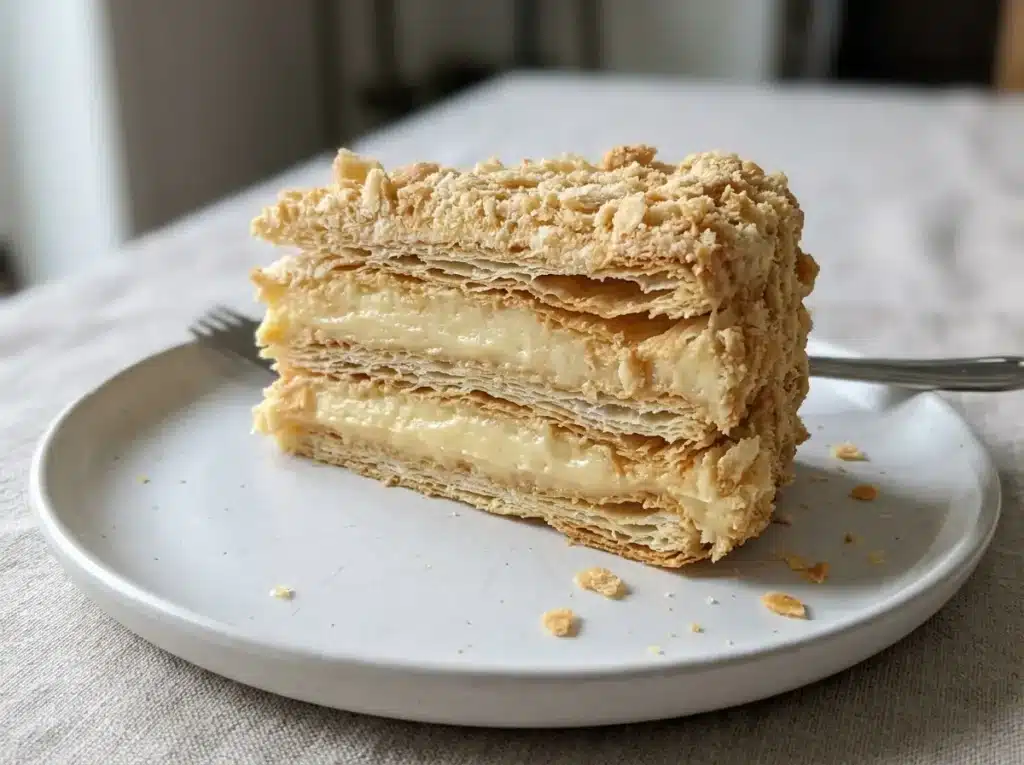
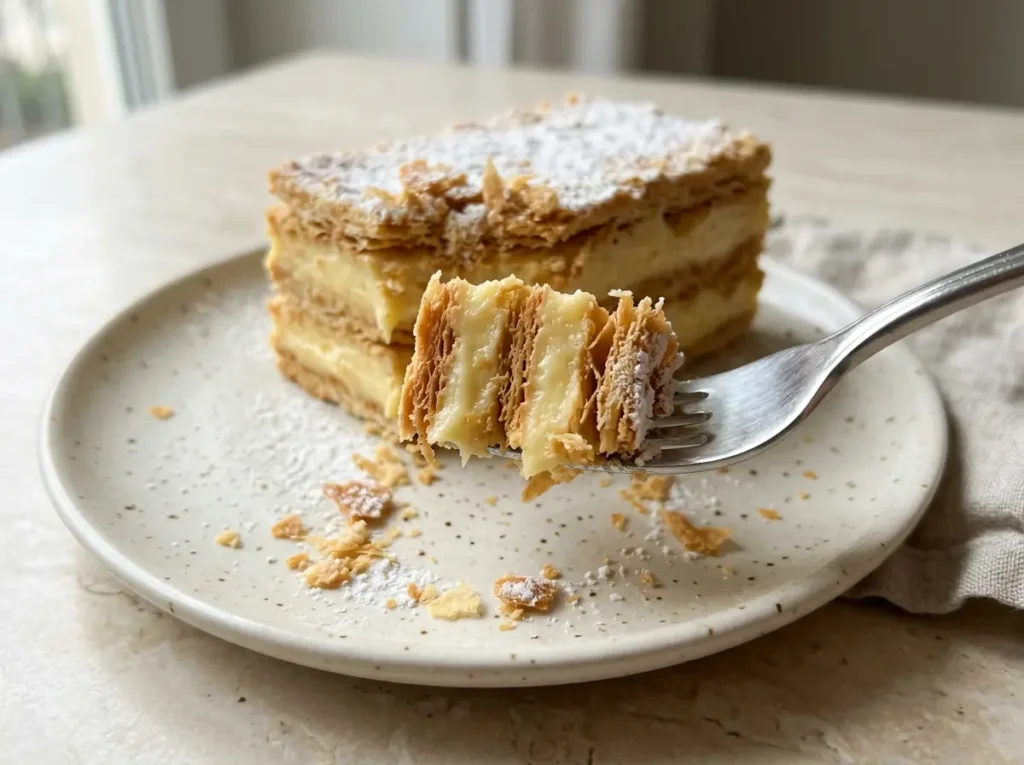
The first time I saw a Napoleon cake cut open at a family gathering, I could not stop staring at the layers. Thin, crisp pastry sheets stacked between thick vanilla custard, all wrapped in a coat of buttery crumbs. It looked like something from an old European bakery window, and it tasted even better than it looked.
This napoleon cake recipe is my easy home-kitchen version of the Russian classic. It uses store-bought puff pastry to save hours of laminating dough by hand, paired with a rich egg-yolk custard that soaks into every layer. By the time it has chilled overnight, the pastry is tender but still has a little bite, and the cream is silky and deeply vanilla. By Chef Elise, TasteOurDish.com.
Table of Contents
Table of Contents
Key Takeaways
- Napoleon cake is a Russian layered dessert made from thin puff pastry sheets and vanilla custard cream.
- It is a cousin of the French mille-feuille, but the Russian version uses more layers and a thicker, butter-enriched custard.
- Store-bought puff pastry makes this an easy recipe without sacrificing the classic flaky texture.
- The cake needs at least 6 to 12 hours of chilling so the custard softens the pastry layers evenly.
- Crushed pastry crumbs pressed into the sides and top give the cake its signature snowy finish.
What Is Napoleon Cake?
Napoleon cake, known in Russian as “Napoleon” (Наполеон), is a many-layered dessert built from alternating sheets of puff pastry and a thick vanilla custard. The whole cake is then coated in crushed pastry crumbs, giving it a pale, snow-dusted look that has become its signature.
The dessert traces its roots to the French mille-feuille, a pastry of puff pastry layers filled with custard that dates back to 17th-century France. The name “mille-feuille” literally means “a thousand leaves” in French, referring to the many thin pastry layers. Russian bakers took this French idea and made it their own, creating a taller, more custard-heavy cake that became a staple of celebratory tables across Russia and the former Soviet Union.
The most popular origin story ties the cake to 1912, when Russian confectioners created it to mark the 100th anniversary of Russia’s victory over Napoleon Bonaparte in the War of 1812. The triangular shape of early versions was said to echo the emperor’s tricorne hat, and the crumb coating represented the snow that helped stop his army. While historians debate how much of this story is fact versus legend, the name and the celebration connection have stuck.
Answer capsule: Napoleon cake is a Russian layered dessert of thin puff pastry sheets filled with vanilla custard, coated in pastry crumbs. It evolved from the French mille-feuille and became a Russian classic around 1912. A homemade version uses puff pastry, egg yolks, milk, sugar, flour, butter, and vanilla.
Napoleon Cake Recipe Ingredients
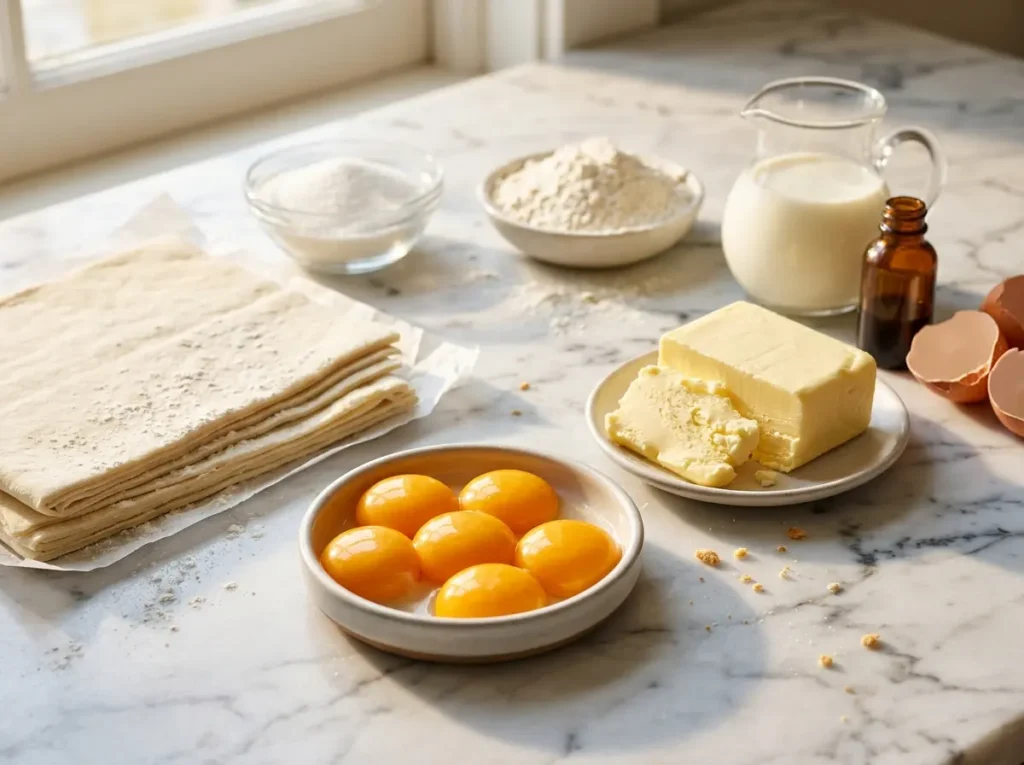
For the Pastry Layers
- 2 sheets store-bought puff pastry, thawed but still cold
- 1 tablespoon all-purpose flour, for dusting
For the Vanilla Custard
- 4 large egg yolks
- 3/4 cup granulated sugar
- 1/4 cup all-purpose flour
- 2 cups whole milk
- 1 teaspoon vanilla extract
- 4 tablespoons unsalted butter, softened
For Assembly
- Reserved baked pastry scraps, crushed fine
- Powdered sugar, optional, for dusting
Real butter and whole milk give the custard its rich, old-fashioned flavor. Egg yolks are the backbone of the cream, providing both thickness and that deep golden color that makes the filling taste like it came from a proper bakery. According to the USDA FoodData Central, butter is almost entirely fat, which is exactly what gives the custard its smooth, luxurious body when whipped in at the end.
How to Make Napoleon Cake
Step 1: Bake the pastry layers
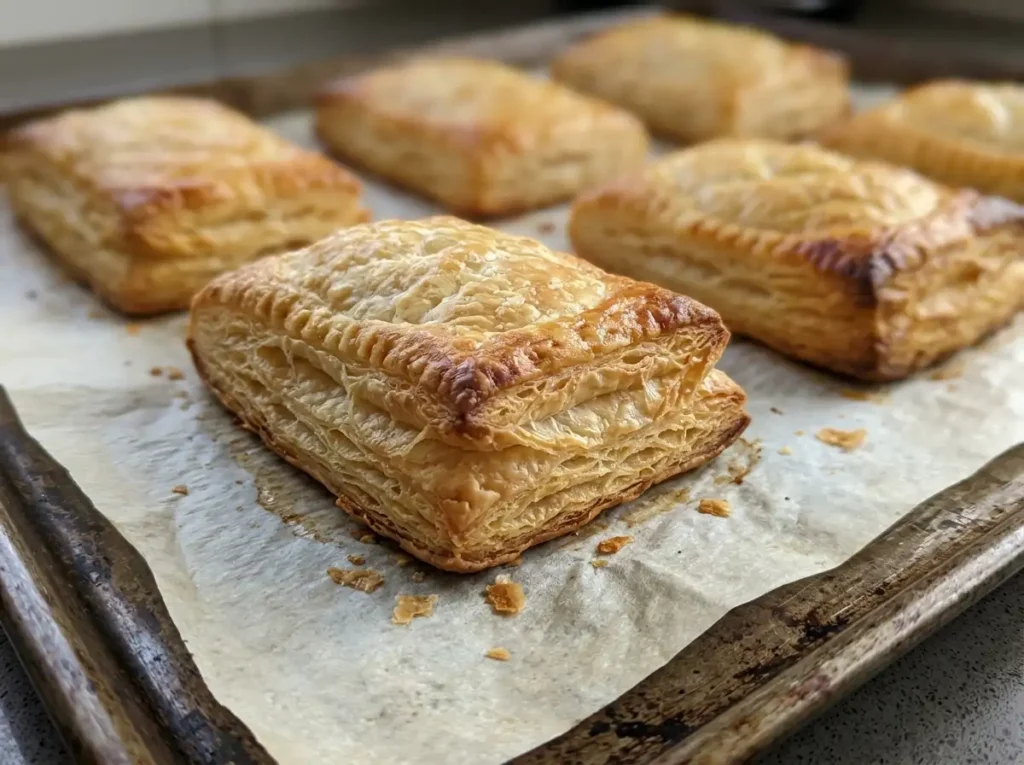
Preheat your oven to 400°F (200°C). Roll each thawed puff pastry sheet on a lightly floured surface until it is about 1/8 inch thick. Cut each sheet into 3 or 4 equal rectangles, prick them all over with a fork to prevent excessive puffing, and bake on a parchment-lined sheet for 12 to 15 minutes until deeply golden. Reserve any trimmings and bake those too, since they become your crumb coating later.
Step 2: Make the vanilla custard
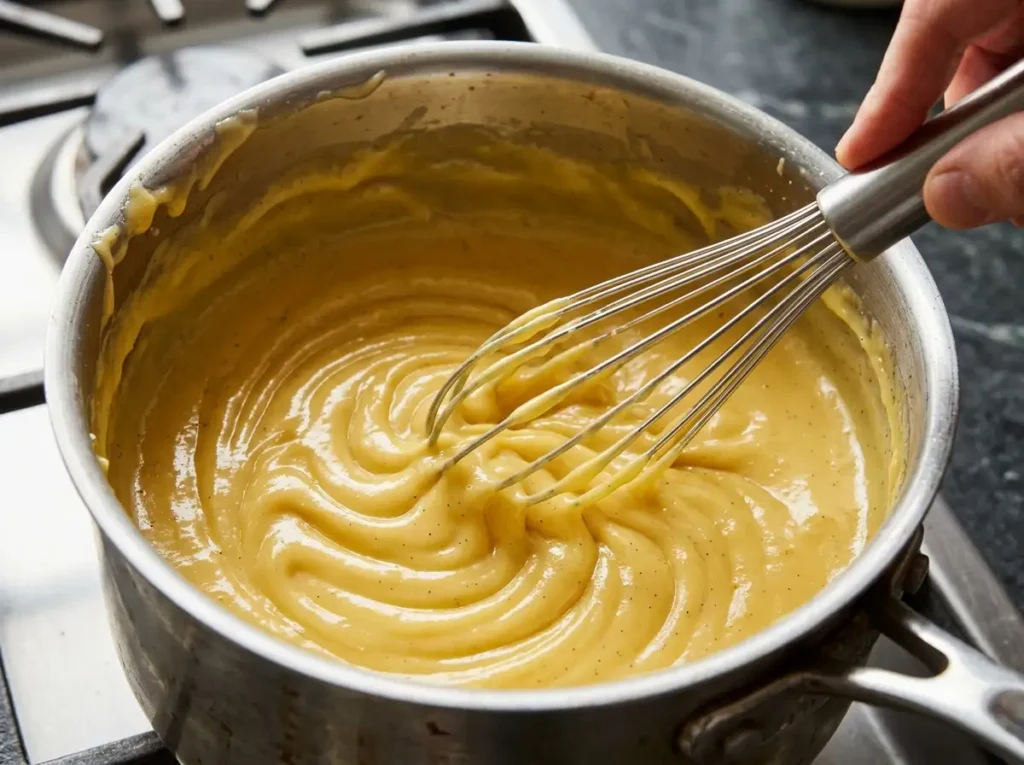
In a medium saucepan, whisk the egg yolks and sugar until pale and smooth. Whisk in the flour until no lumps remain. Heat the milk in a separate pot until steaming but not boiling, then slowly pour it into the egg mixture while whisking constantly to temper the yolks. Return everything to the saucepan and cook over medium heat, whisking without stopping, until the custard thickens and begins to bubble. Cook for 1 to 2 more minutes to remove the raw flour taste, then remove from heat and stir in the butter and vanilla until glossy.
Step 3: Cool the custard completely
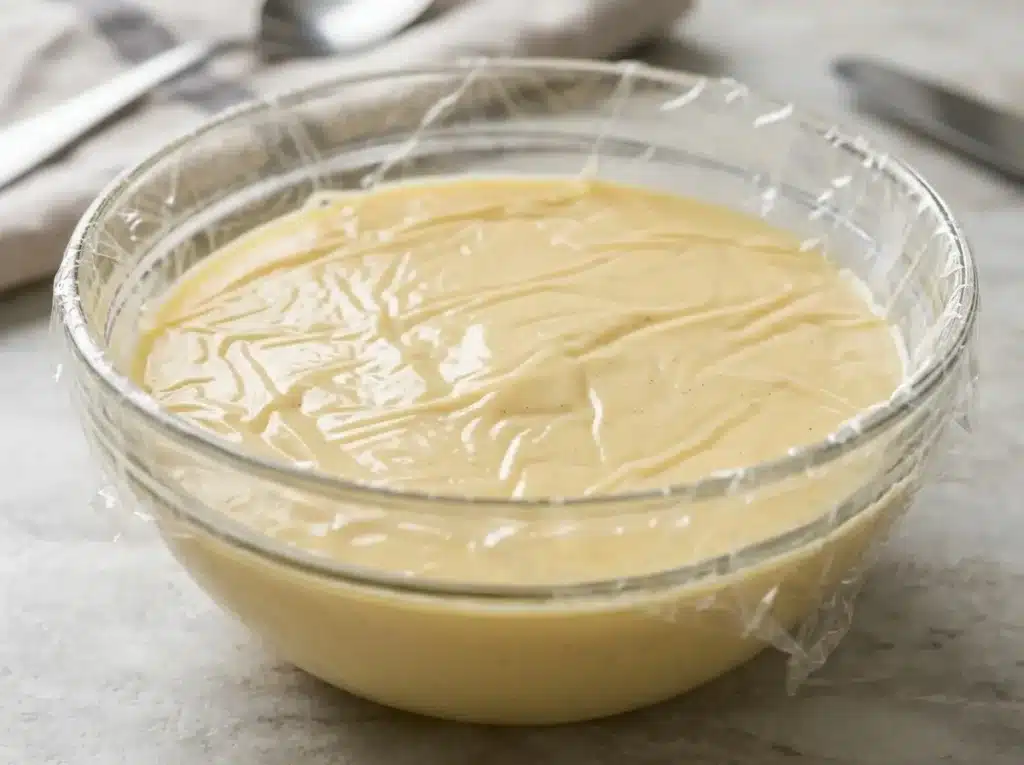
Press plastic wrap directly onto the surface of the warm custard to prevent a skin from forming. Let it cool to room temperature, then refrigerate for at least 1 hour. Cold custard spreads much more evenly between the pastry layers than warm custard, which would melt the butter in the pastry and make everything soggy.
Step 4: Layer the cake
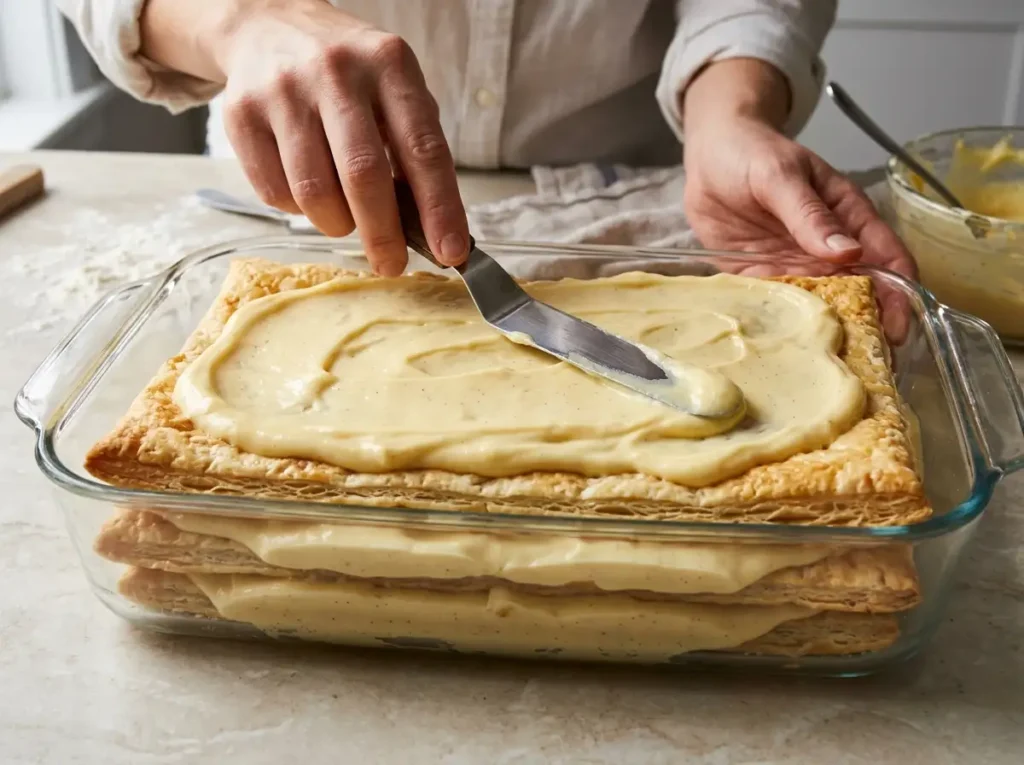
Place one baked pastry rectangle on a serving plate and spread a generous layer of chilled custard over it. Add the next pastry sheet and repeat until you have used all the layers, finishing with a thin layer of custard on top. Gently press down on the stack after each layer so the cake settles evenly.
Step 5: Coat with crumbs and chill
Crush the reserved baked pastry trimmings into fine crumbs using your hands or a food processor. Press the crumbs into the custard on the top and sides of the cake until fully coated. Cover loosely and refrigerate for at least 6 hours, though overnight is even better. The long chill is what transforms the crisp pastry into that tender, almost cake-like texture that makes Napoleon so beloved.
Print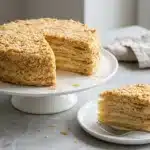
Napoleon Cake Recipe: 1 Easy Russian Puff Pastry Classic
- Total Time: 6 hours 35 minutes
- Yield: 8 servings 1x
- Diet: Vegetarian
Description
Make an easy Napoleon cake at home with flaky puff pastry, silky vanilla custard, and a buttery crumb coating. A classic Russian dessert made simple.
Ingredients
2 sheets store-bought puff pastry, thawed
1 tablespoon all-purpose flour, for dusting
4 large egg yolks
3/4 cup granulated sugar
1/4 cup all-purpose flour
2 cups whole milk
1 teaspoon vanilla extract
4 tablespoons unsalted butter, softened
Reserved baked pastry scraps, crushed fine
Powdered sugar, optional, for dusting
Instructions
1. Preheat oven to 400°F (200°C). Roll puff pastry thin, cut into rectangles, prick with a fork, and bake 12 to 15 minutes until golden.
2. Whisk egg yolks and sugar until pale, then whisk in flour. Temper with hot milk, return to heat, and cook whisking until thick and bubbling. Stir in butter and vanilla.
3. Press plastic wrap on the warm custard and chill at least 1 hour until completely cold.
4. Layer pastry and custard in a serving dish, pressing gently after each layer.
5. Crush reserved pastry trimmings and press crumbs into the top and sides. Chill 6 to 12 hours or overnight before slicing.
Notes
Store-bought puff pastry saves hours and works beautifully for this recipe.
The overnight chill is essential for the tender, cake-like texture.
For a richer custard, add an extra tablespoon of butter at the end.
- Prep Time: 20 minutes
- Cook Time: 15 minutes
- Category: Dessert And Drinks
- Method: Bake
- Cuisine: Russian, European, Family Heritage
Nutrition
- Serving Size: 1 slice
- Calories: 420
- Sugar: 22g
- Sodium: 210mg
- Fat: 26g
- Saturated Fat: 15g
- Unsaturated Fat: 9g
- Trans Fat: 0g
- Carbohydrates: 42g
- Fiber: 1g
- Protein: 6g
- Cholesterol: 185mg
How Napoleon Cake Differs From Mille-Feuille
| Feature | Russian Napoleon Cake | French Mille-Feuille |
|---|---|---|
| Layers | Many thin pastry sheets, often 6 to 10 or more | Typically 3 pastry layers |
| Custard | Thick, butter-enriched vanilla custard | Lighter pastry cream (crème pâtissière) |
| Coating | Crushed pastry crumbs on top and sides | Powdered sugar or fondant icing |
| Shape | Round or rectangular cake, sliced like a cake | Individual rectangular pastry portions |
| Chilling time | 6 to 12 hours or overnight | Served fresh, minimal chilling |
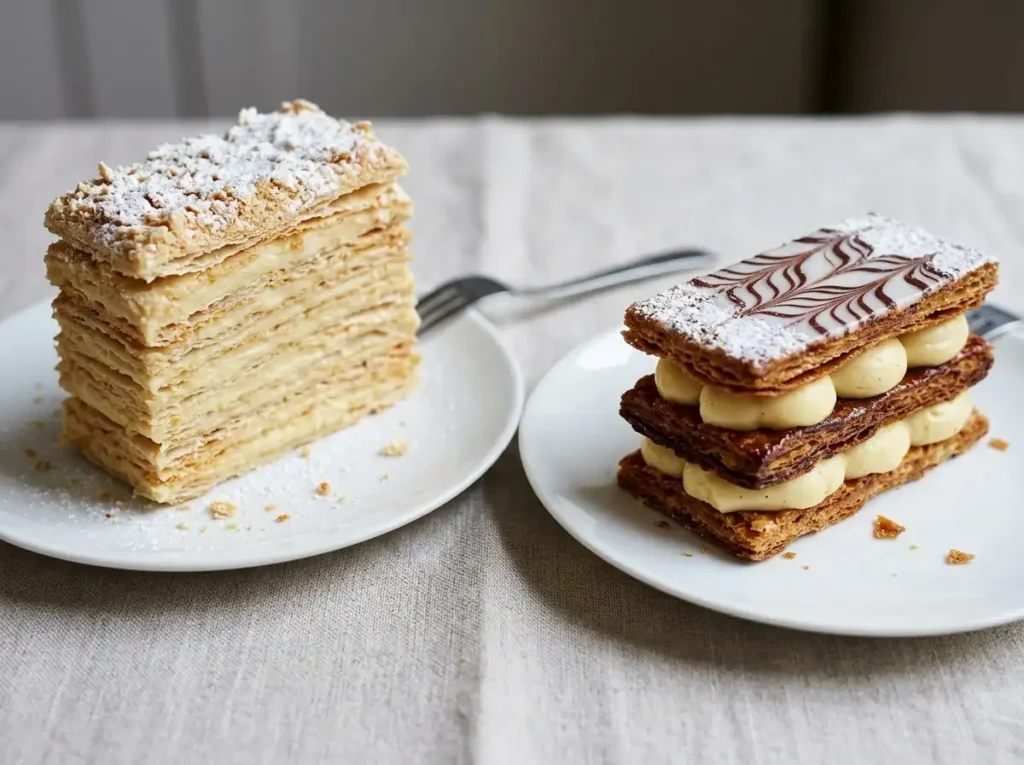
The Russian version is essentially a bigger, softer, more custard-soaked take on the French original. Where a mille-feuille is meant to be eaten the day it is made, with the pastry still crisp, a Napoleon cake is designed to rest overnight so the layers meld together into something tender and cohesive. Both are delicious, but they are different desserts with different textures.
Why This Easy Version Works
Making puff pastry from scratch is a beautiful skill, but it takes hours of folding, chilling, and rolling. Store-bought puff pastry gets you 90 percent of the way there with none of the fuss, and once it is baked thin and layered with custard, most people cannot tell the difference. This is the kind of shortcut that makes a classic recipe actually get made on a regular weeknight instead of only once a year.
The custard is where the real flavor lives. Whisking the yolks and sugar first, then tempering with hot milk, prevents scrambled eggs and gives you a perfectly smooth cream. Cooking it just until it bubbles, then cooking 1 to 2 minutes more, removes any starchy flour taste and leaves you with a custard that is thick enough to hold the layers together without being gluey.
Napoleon Cake Nutrition and Serving
Napoleon cake is a rich dessert, and a single slice carries a meaningful amount of calories from the butter in both the pastry and the custard. According to USDA data, butter contains roughly 717 calories per 100 grams, almost all from fat, which is why a small slice goes a long way. This is a celebration cake, not an everyday snack, and that is part of what makes it feel special when it appears on the table.
A typical slice from an 8-layer cake made with this recipe lands around 380 to 450 calories, depending on how generously the custard is spread. Serve it in modest portions alongside coffee or tea, and it satisfies completely without needing a second helping. If you want a lighter dessert option for the same table, my Lemon Tart Recipe is a brighter, citrus-forward alternative.
Napoleon Cake for Celebrations
This cake is a natural fit for holidays, birthdays, and any gathering where you want a dessert that looks impressive without requiring last-minute work. Because it needs to chill overnight anyway, it is actually easier to make ahead than most cakes. Bake the pastry and make the custard the day before, assemble it in the evening, and it is ready to slice the next afternoon.
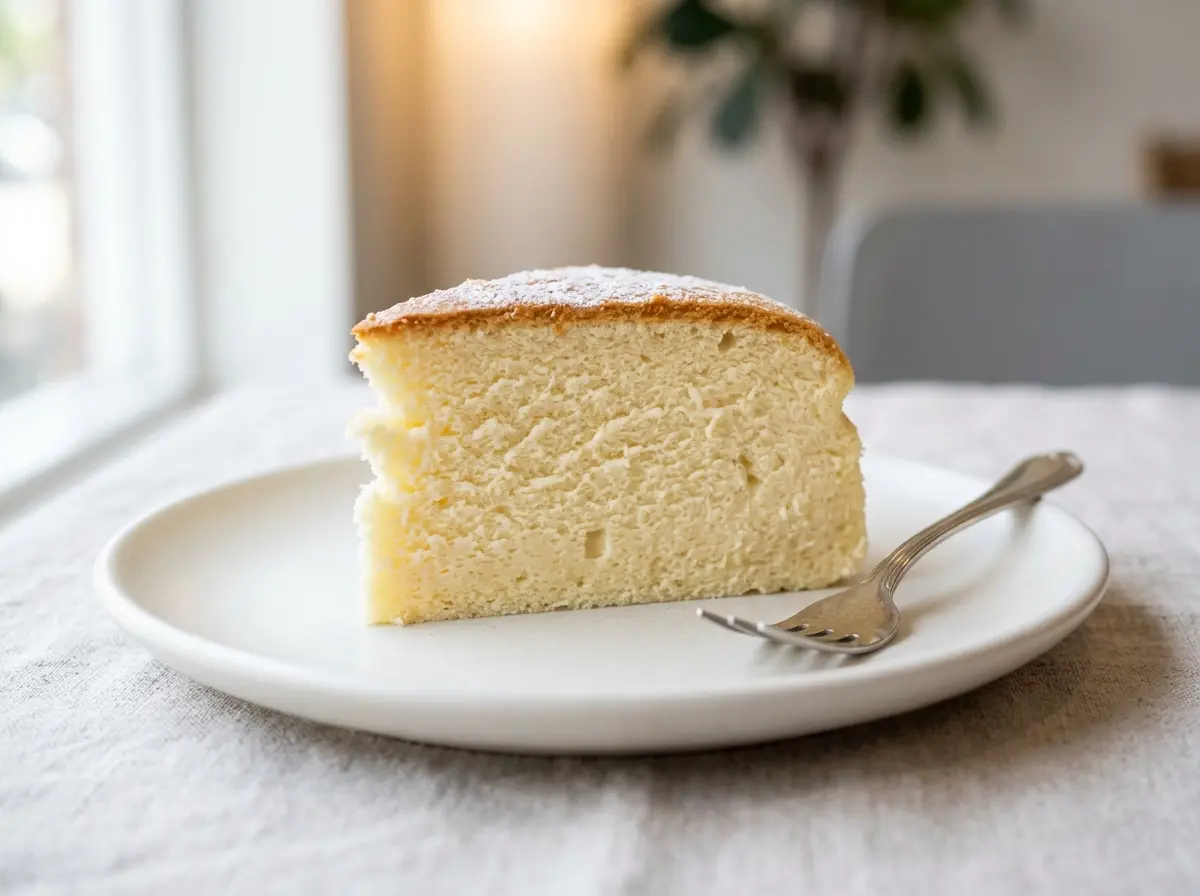
For a full dessert spread, I love pairing Napoleon cake with something fruit-forward to cut through the richness. My Rhubarb Coffee Cake brings a tart, jammy contrast, while my Japanese Cheesecake offers a lighter, airier option for guests who want something less dense.
5 Mistakes to Avoid
- Skipping the fork-pricking step. Unpricked pastry puffs up into a balloon instead of baking into flat, even layers.
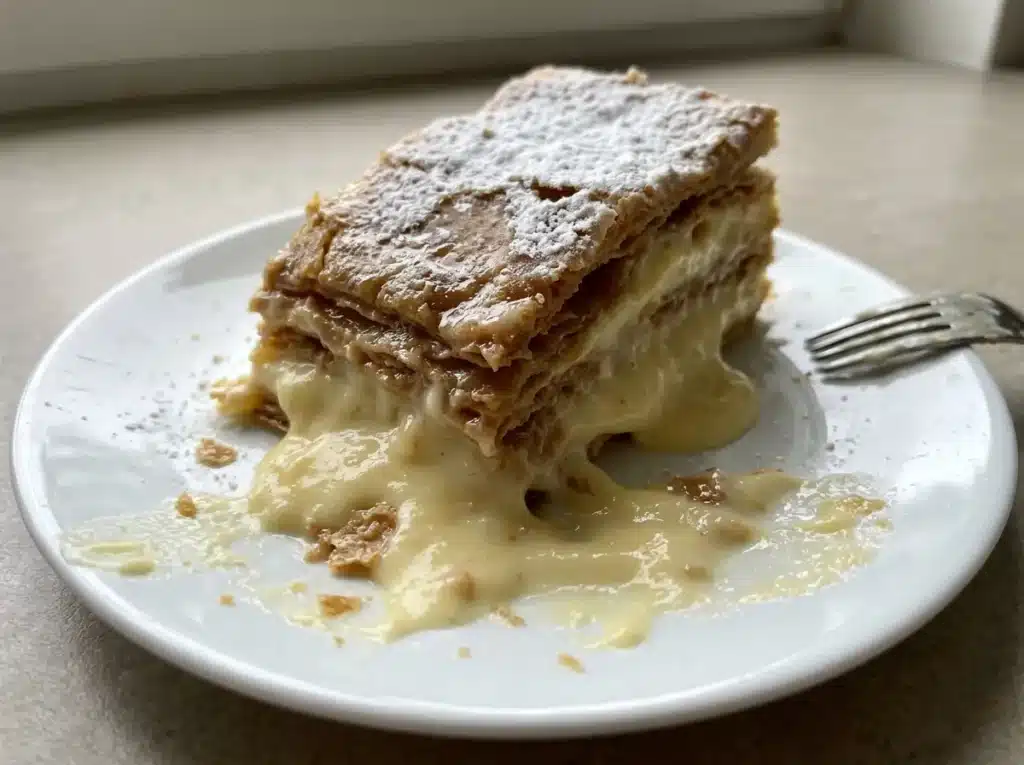
- Using warm custard between layers. Warm custard melts the butter in the pastry and turns the whole cake soggy before it even chills.
- Not chilling long enough. Less than 6 hours and the pastry stays too crisp, making the cake hard to slice cleanly.
- Overcooking the custard. Once it thickens and bubbles, 1 to 2 more minutes is enough. Beyond that, it can turn grainy or scorch on the bottom.
- Skipping the crumb coating. The crumbs are not just decoration. They absorb a little custard and give the cake its signature texture and look.
If you enjoy classic European-style desserts, my Pecan Pie Dump Cake is another easy option that delivers big flavor with minimal hands-on time.
FAQ About Napoleon Cake
What is a Napoleon cake made of?
Napoleon cake is made from thin layers of puff pastry filled with a thick vanilla custard, then coated in crushed pastry crumbs. The custard typically contains egg yolks, sugar, flour, milk, butter, and vanilla. The Russian version uses more layers and a richer custard than the French mille-feuille it descended from.
Is Napoleon cake the same as mille-feuille?
No, Napoleon cake and mille-feuille are related but different desserts. Mille-feuille is a French pastry with usually 3 layers of puff pastry and lighter pastry cream, served fresh. Napoleon cake is the Russian adaptation with many more layers, a thicker butter-enriched custard, and a crumb coating, designed to chill overnight.
Why is it called Napoleon cake?
The most widely told story is that the cake was created in Russia in 1912 to mark the 100th anniversary of Russia’s victory over Napoleon in the War of 1812. Early versions were triangular, echoing the emperor’s hat, and the crumb coating symbolized the snow of the Russian winter. Historians note the story is part legend, but the name and celebration link are well established.
Can I make Napoleon cake ahead of time?
Yes, and it is actually better made ahead. The cake needs at least 6 hours of chilling, and overnight is ideal, so assembling it the day before serving is the standard approach. The pastry softens into the custard as it rests, which is exactly the texture you want.
How long does Napoleon cake last in the fridge?
Napoleon cake keeps well in the refrigerator for 3 to 4 days when covered. The pastry continues to soften over time, so it is best within the first 2 days for the ideal balance of tender pastry and creamy custard. Keep it loosely covered rather than sealed airtight to preserve some texture.
Can I use store-bought puff pastry for Napoleon cake?
Yes, store-bought puff pastry is the easiest way to make this cake at home and works beautifully. Roll it thinner than it comes, bake until deeply golden, and it delivers the same flaky layers as homemade without hours of laminating. This is the approach used in this recipe.
Can I make Napoleon cake without eggs?
A traditional Napoleon cake relies on egg yolks for the custard’s thickness and flavor, so an egg-free version requires a different approach. You can substitute a cornstarch-based custard thickened with additional flour or cornstarch, though the flavor and color will be lighter. The texture will still work for layering.
Conclusion
Napoleon cake is one of those desserts that looks complicated but is surprisingly forgiving once you understand the rhythm: bake thin pastry, make a smooth custard, layer, chill, and wait. The overnight rest does most of the work, turning crisp pastry and loose cream into something cohesive and unforgettable. If you love layered desserts with a story behind them, my Hummingbird Bundt Cake is another classic worth adding to your baking rotation.
About the Author: Chef Elise writes wholesome, family-tested recipes at TasteOurDish.com. She learned to cook watching her grandmother’s hands, and she now tests every recipe in her own kitchen before sharing it with readers.