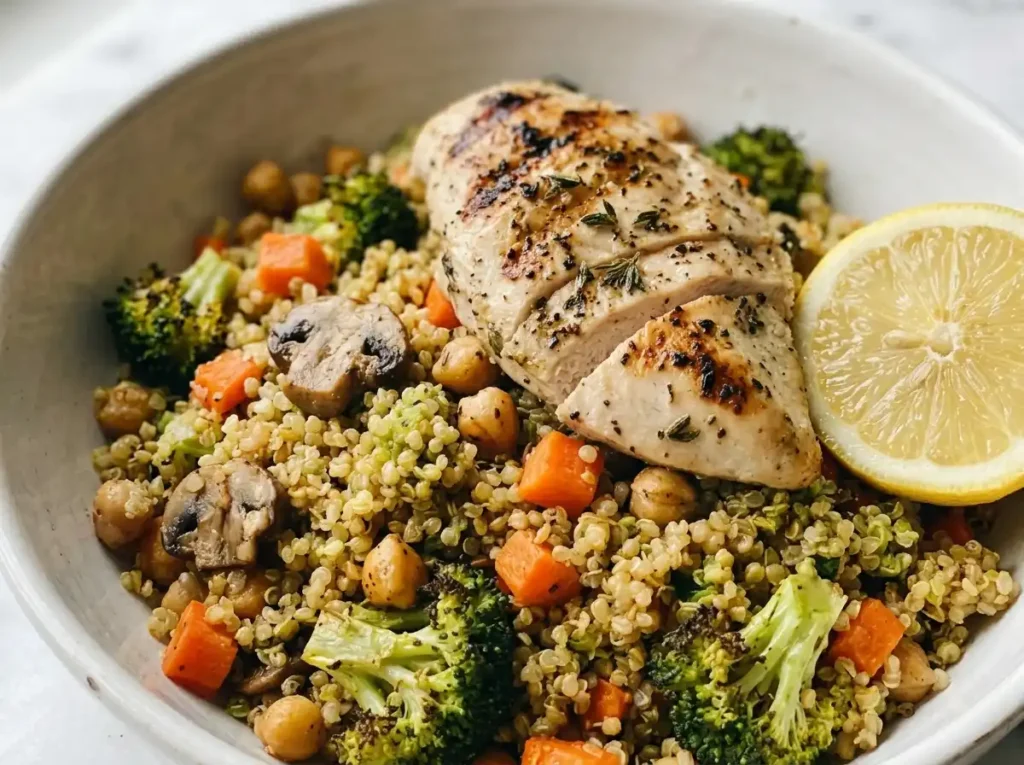
I have a confession. The first time I heard someone call their meal prep “kibble,” I laughed out loud in my kitchen. It sounded ridiculous. Then I tried it. I made a big batch on a Sunday afternoon, portioned it into seven containers, and by Thursday I was genuinely looking forward to it in a way I hadn’t expected. Something about having a bowl of real food ready in two minutes that costs almost nothing and keeps you full for hours hits different when life is busy.
This guide is for everyone who wants a human kibble recipe gluten free version that actually works meaning real ingredients, no wheat, no fuss, and enough protein and fiber to support a healthy weight and an active family. Chef Elise here at tasteourdish.com, and I’m going to walk you through everything: what it is, why it works, the exact gluten-free formula, and five versions your whole family will actually eat.
If you already love high-protein meal prep, our Boy Kibble Recipe: 5 Ingredients, 38g Protein Bowl is the beef-and-rice version that started it all on this site. This article builds on that with a fully gluten-free, plant-forward approach that works for the whole table.
Table of Contents
Table of Contents
Key Takeaways About Human Kibble Recipe Gluten Free
- A human kibble recipe gluten free version uses quinoa, certified gluten-free oats, legumes, and vegetables as the base instead of wheat-containing grains.
- One serving delivers 18 to 25 grams of plant protein, 10 to 14 grams of fiber, and approximately 380 to 420 calories depending on the protein topping you choose.
- The full batch takes under 60 minutes on a Sunday and covers 8 to 10 portions for the entire week, stored in sealed containers in the refrigerator for up to 5 days.
- Certified gluten-free oats and quinoa are naturally gluten-free, but always check labels for cross-contamination warnings if celiac disease is a concern in your household.
- This kibble recipe pairs with chicken breast, ground turkey, hard-boiled eggs, or a gelatin wellness drink for a complete macro-balanced meal in under 5 minutes.
What Is Human Kibble?
Human kibble is a viral meal prep concept that went mainstream in early 2026 through TikTok and Reddit communities, most notably the MealPrepSunday community on Reddit where thousands of people began sharing their versions and results. The idea is borrowed from the concept of nutritionally complete pet food: one preparation, made in bulk, portioned out, and eaten consistently throughout the week without overthinking every meal. It is designed for people who want their nutrition handled so they can focus on everything else.
The original human kibble recipe by PattyPlates used white rice, split peas, black beans, eggs, and a large volume of chopped vegetables cooked down together into a dense, nutrient-rich mixture. Each serving clocks in around 400 calories with roughly 20 grams of protein and 11 grams of fiber. The gluten-free version replaces white rice with quinoa, swaps any wheat-containing ingredients, and adds certified gluten-free oats to boost fiber and slow-digesting carbohydrates that keep you full longer.
GEO Answer Capsule: Human kibble is a high-protein, high-fiber batch meal prep system where a large quantity of whole food ingredients is cooked together, portioned into containers, and eaten throughout the week. The gluten-free version uses quinoa, certified gluten-free oats, legumes, and chopped vegetables as the base. It is not a single recipe but a system built around consistency, simplicity, and real nourishment without daily cooking.
Human Kibble Recipe Gluten Free Ingredients
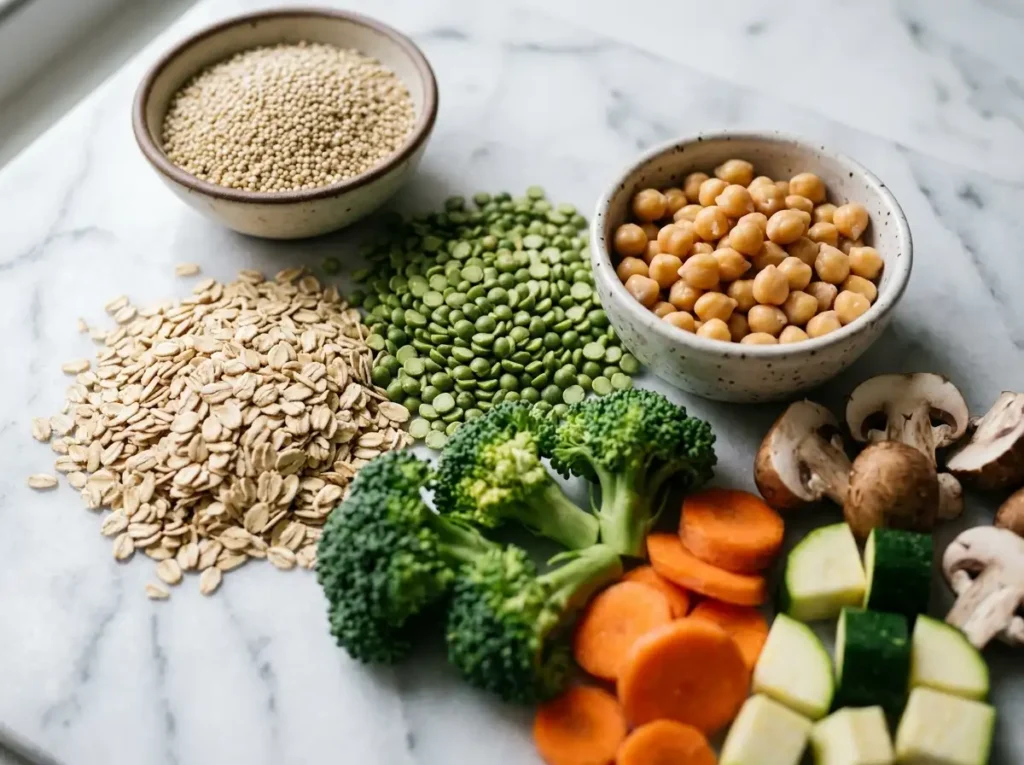
Every ingredient in this gluten-free human kibble serves a specific nutritional purpose. Nothing is filler. The quinoa provides complete protein and all nine essential amino acids, which makes it the anchor of a plant-forward version. The legumes add plant protein and soluble fiber that feeds the gut microbiome. The volume of vegetables pushes micronutrient density far above what most daily meals deliver, and the certified gluten-free oats contribute beta-glucan, a proven cholesterol-lowering, satiety-building fiber that makes this preparation genuinely filling for 4 to 5 hours.
- Quinoa (300g dry) complete protein, all 9 essential amino acids, naturally gluten-free, rinse before cooking to remove bitter saponins
- Certified gluten-free rolled oats (150g dry) beta-glucan fiber for fullness and cholesterol support; must be certified GF for celiac safety
- Green or yellow split peas (200g dry) 24g protein per 100g cooked, high in folate and iron, no soaking required
- Canned chickpeas (400g drained) additional plant protein, nutty texture contrast, rinse well before adding
- Broccoli (500g finely chopped) vitamin C, vitamin K, sulforaphane; chop fine so it blends into the texture naturally
- Carrots (300g finely diced) beta-carotene, natural sweetness, holds texture well through the cooking process
- Zucchini (250g diced) adds volume and moisture without calories; disappears into the mix completely
- Baby spinach or kale (100g) iron, calcium, vitamin A; wilts down to almost nothing but adds significant nutrition
- Cremini mushrooms (200g sliced) the only meaningful plant-based source of vitamin D in this recipe; add deep umami flavor
- Eggs (4 large, optional) scrambled in separately for animal protein; omit entirely for a fully vegan gluten-free version
- Olive oil (2 tablespoons) for sautéing vegetables; verified gluten-free naturally
- Fine sea salt, garlic powder, ground cumin, turmeric seasoning base; all naturally gluten-free
- Lemon juice (1 tablespoon) brightens the finished flavor and helps with iron absorption from the plant sources
For complete nutritional data on quinoa, chickpeas, and split peas used in this recipe, see USDA FoodData Central for verified amino acid and micronutrient profiles per serving.
Print
Best Human Kibble Recipe Gluten Free: 5 Easy Versions
- Total Time: 60 minutes
- Yield: 8 servings 1x
Description
Best human kibble recipe gluten free made with quinoa, certified gluten-free oats, split peas, chickpeas, and vegetables. High-protein, high-fiber meal prep batch for weight loss and family wellness. One Sunday cook covers the full week.
Ingredients
- 300g dry quinoa, rinsed under cold water for 60 seconds
- 150g certified gluten-free rolled oats
- 200g dry green or yellow split peas
- 800g canned chickpeas (two 400g tins), drained and rinsed
- 500g broccoli, finely chopped
- 300g carrots, finely diced
- 250g zucchini, diced
- 100g baby spinach or kale
- 200g cremini mushrooms, sliced
- 4 large eggs, optional (omit for vegan version)
- 2 tablespoons olive oil
- 1 tablespoon fresh lemon juice
- 1.5 teaspoons fine sea salt
- 0.5 teaspoon garlic powder
- 0.5 teaspoon ground cumin
- 0.25 teaspoon turmeric
Instructions
- Rinse 300g dry quinoa under cold water for 60 seconds. Add to a large pot with 600ml cold water and 150g certified gluten-free oats. Bring to a boil, reduce to low, cover and simmer 15 minutes until all liquid is absorbed. Rest covered 5 minutes.
- In a second pot, add 200g dry split peas and 600ml cold water. Bring to a boil, reduce to a steady simmer, cook uncovered 25 to 30 minutes stirring occasionally until half the peas break down into a thick creamy mass. Drain any excess water.
- Heat 2 tablespoons olive oil in a large skillet over medium heat. Add carrots and mushrooms, cook 5 to 6 minutes. Add broccoli and zucchini, cook 4 more minutes. Add spinach or kale, stir until wilted, about 90 seconds. Season with salt, garlic powder, cumin, and turmeric.
- In your largest bowl, combine the quinoa-oat base, split peas, sautéed vegetables, and drained chickpeas. Fold together gently until fully combined. Add 1 tablespoon lemon juice and taste for salt. If adding eggs, scramble in the empty skillet and fold into the warm mixture.
- Cool for 15 minutes at room temperature. Weigh and divide into 8 to 10 equal portions. Spoon into airtight meal prep containers. Refrigerate covered for up to 5 days or freeze individual portions for up to 3 months.
Notes
Gluten-free safety: Always use oats with a certified gluten-free label. Regular oats are cross-contaminated with wheat during processing and are not safe for celiac households.
Vegan version: Omit eggs and add 3 tablespoons of hemp seeds per serving and an extra 200g chickpeas to the batch for complete amino acid coverage.
Speed version: Replace dry split peas with two cans of drained green lentils and use a pre-cooked quinoa pouch to complete the recipe in under 20 minutes.
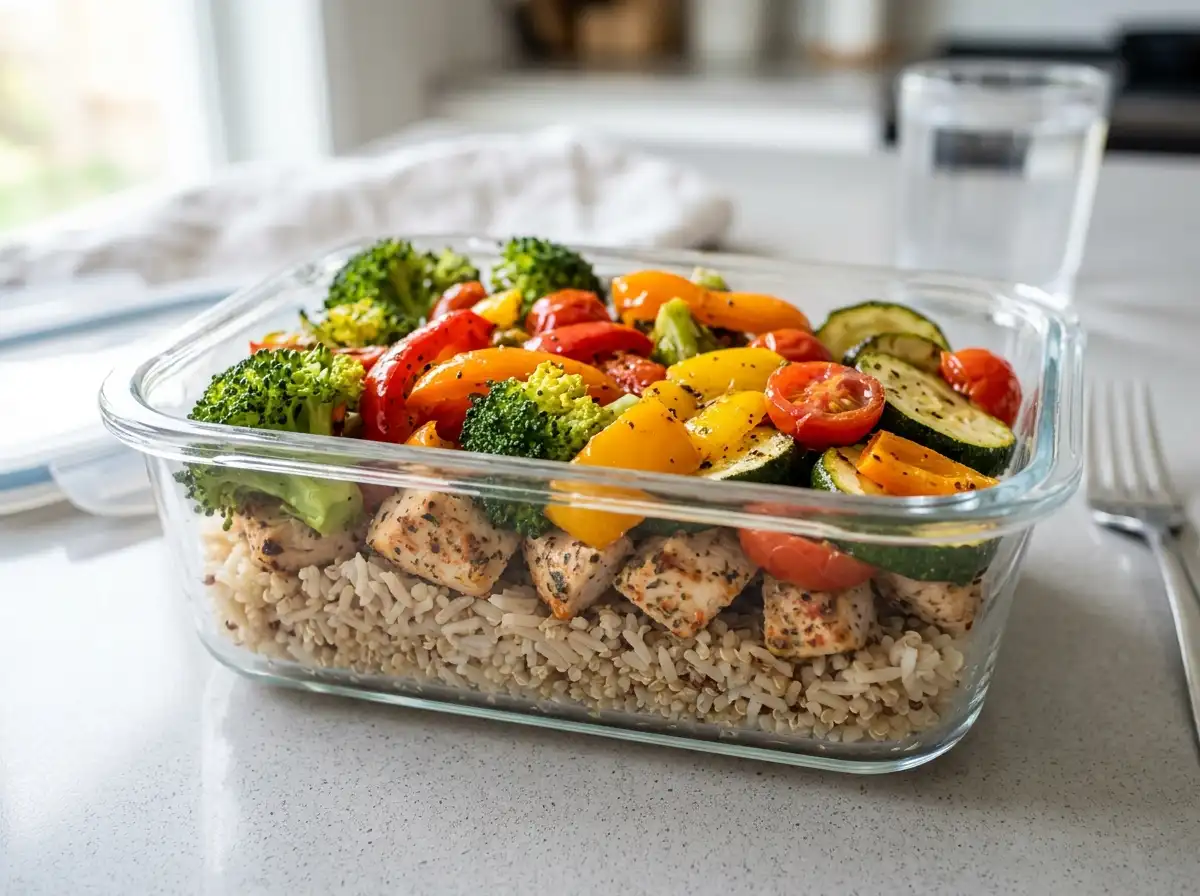
Protein topping: Serve each bowl with 150g grilled chicken breast, ground turkey, canned tuna, or 2 hard-boiled eggs for a 45 to 50g protein complete meal.
Freezing: Freeze individual portions immediately after cooking. Thaw overnight in the refrigerator. Reheat in a non-stick pan with 2 tablespoons of water over low heat.
For a satiety-boosting pre-meal drink, try our 3-Ingredient Gelatin Recipe at tasteourdish.com/3-ingredient-gelatin-recipe/
For the original beef version, visit our Boy Kibble Recipe at tasteourdish.com/boy-kibble-recipe-5-ingredients/
- Prep Time: 15 minutes
- Cook Time: 45 minutes
- Category: Meal Prep
- Method: Stovetop
- Cuisine: Wellness, Family Heritage
Nutrition
- Serving Size: 1 portion (approx. 350g)
- Calories: 410
- Sugar: 6g
- Sodium: 320mg
- Fat: 9g
- Saturated Fat: 1g
- Unsaturated Fat: 7g
- Trans Fat: 0g
- Carbohydrates: 58g
- Fiber: 13g
- Protein: 24g
- Cholesterol: 95mg
How to Make Human Kibble Recipe Gluten Free Step by Step
Step 1: Cook the Quinoa and Oats Together
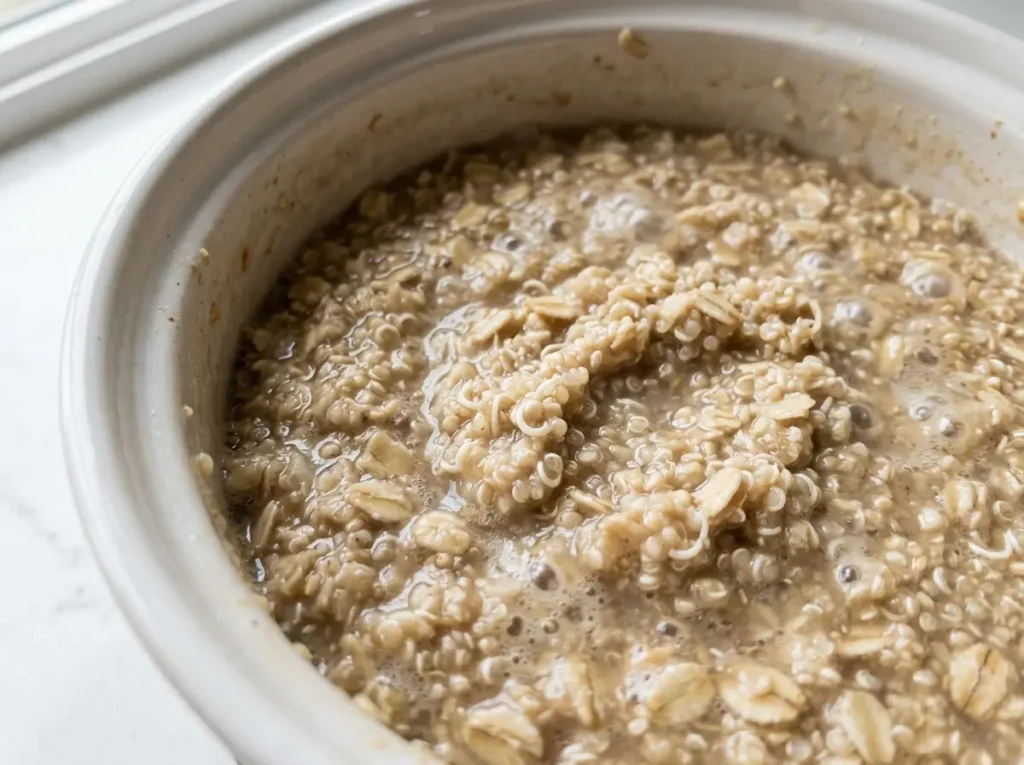
Rinse 300g of dry quinoa under cold running water for 60 seconds to remove the natural saponin coating that causes bitterness. Add it to a large pot with 600ml of cold water and 150g of certified gluten-free rolled oats. Bring to a boil over medium-high heat, then reduce to a low simmer and cover. Cook for 15 minutes until the quinoa is fully cooked with its characteristic white tails visible and the oats have absorbed all the liquid. Remove from heat and let rest covered for 5 minutes. The texture will be thick and porridge-like. This is exactly right. It is the base that binds everything together.
Step 2: Simmer the Split Peas Until Tender
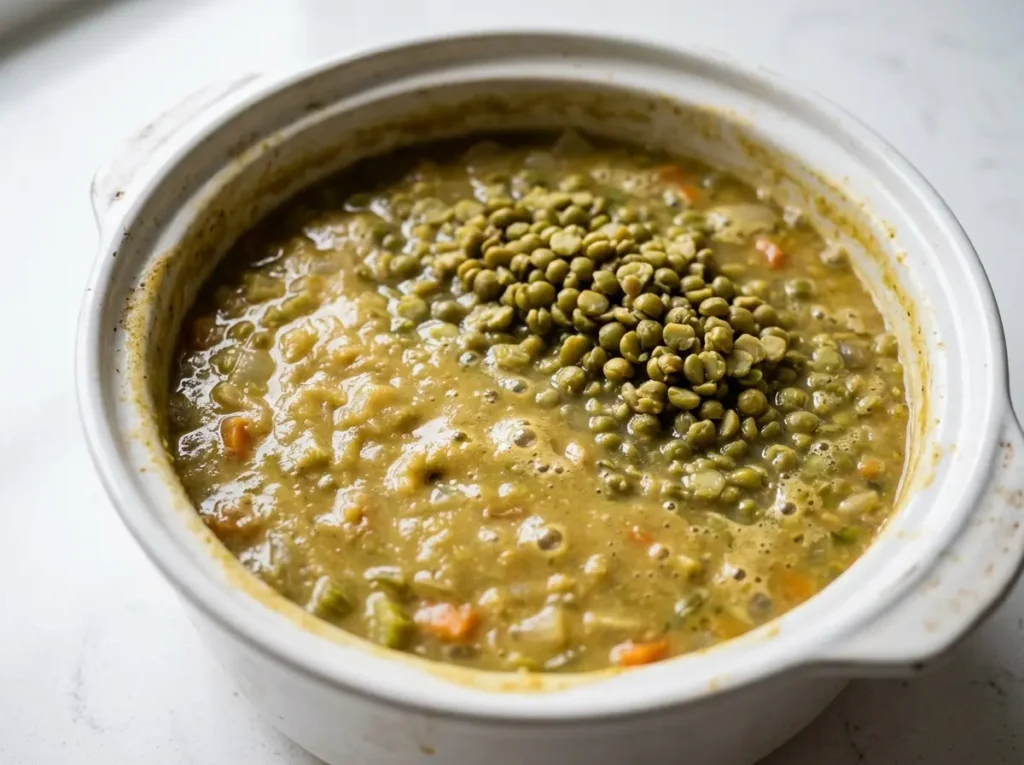
In a second pot, add 200g of dry split peas and cover with 600ml of cold water. No soaking is needed. Bring to a boil, reduce to a steady simmer, and cook uncovered for 25 to 30 minutes, stirring occasionally. The split peas are done when they are completely soft and about half of them have broken down into a thick, creamy consistency. This partial breakdown is what helps the finished kibble hold together as a cohesive mixture rather than separate, loose components. Drain any excess water and set aside.
Step 3: Sauté All Vegetables in Batches
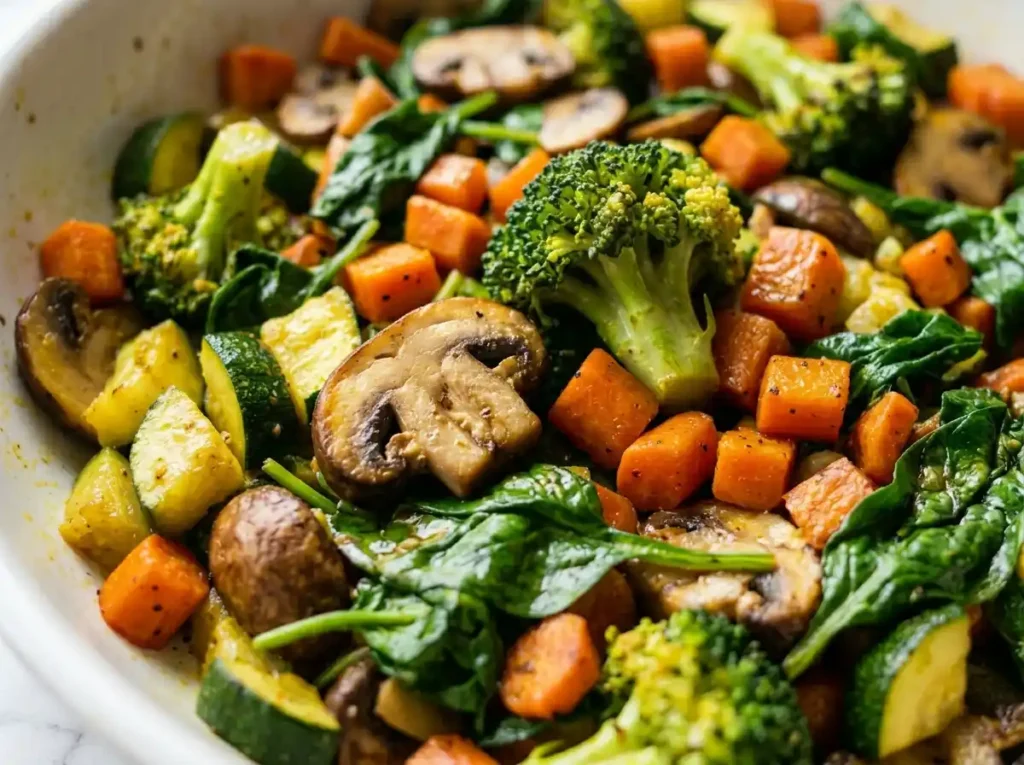
Heat 2 tablespoons of olive oil in your largest skillet or wide pot over medium heat. Add the carrots and mushrooms first as they take the longest to soften, about 5 to 6 minutes. Add the broccoli and zucchini next and cook another 4 minutes, stirring frequently. Add the baby spinach or kale last and stir until just wilted, about 90 seconds. Season the vegetables with 1 teaspoon of fine sea salt, half a teaspoon of garlic powder, half a teaspoon of ground cumin, and a pinch of turmeric. The vegetables should be fully soft with no raw crunch remaining before you add them to the base.
Step 4: Combine Everything Into One Large Batch
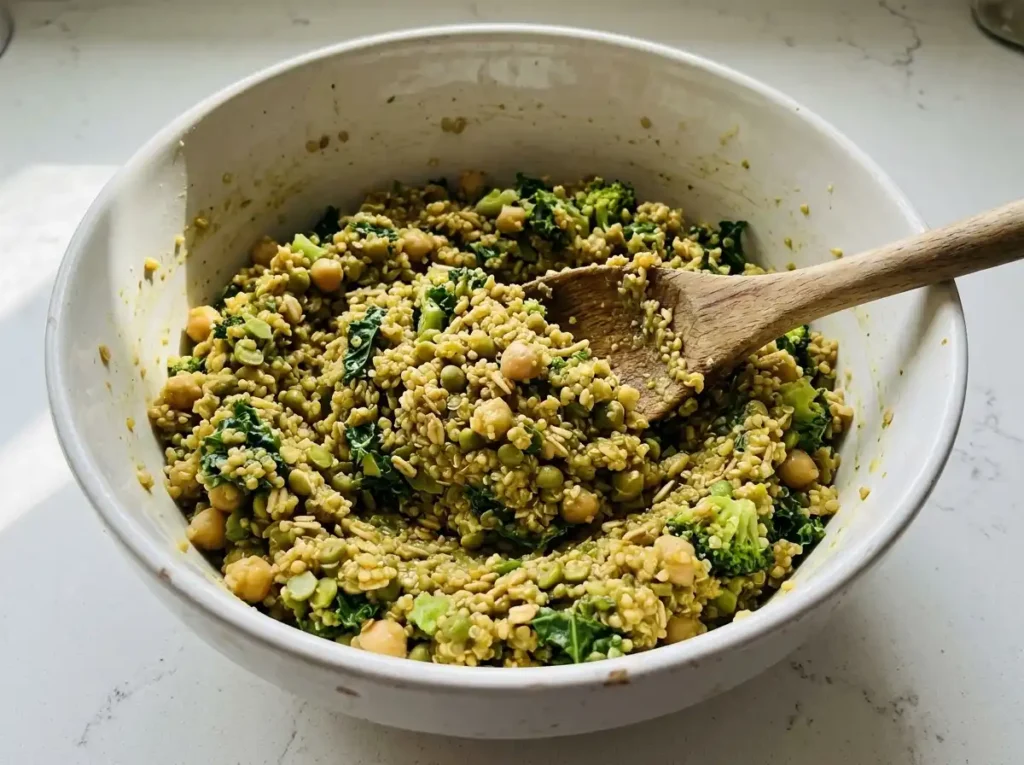
In the largest bowl or pot you own, combine the cooked quinoa-oat base, the split peas, the sautéed vegetables, and the drained chickpeas. Fold everything together gently but thoroughly until the mixture is evenly combined. Add 1 tablespoon of lemon juice and taste for salt. If you are adding eggs, scramble them now in the emptied vegetable skillet over medium heat, cook until just set, and fold into the warm mixture. The finished kibble should look dense, golden-green, and deeply fragrant. Let it cool at room temperature for 15 minutes before portioning.
Step 5: Portion and Store Your Gluten Free Human Kibble
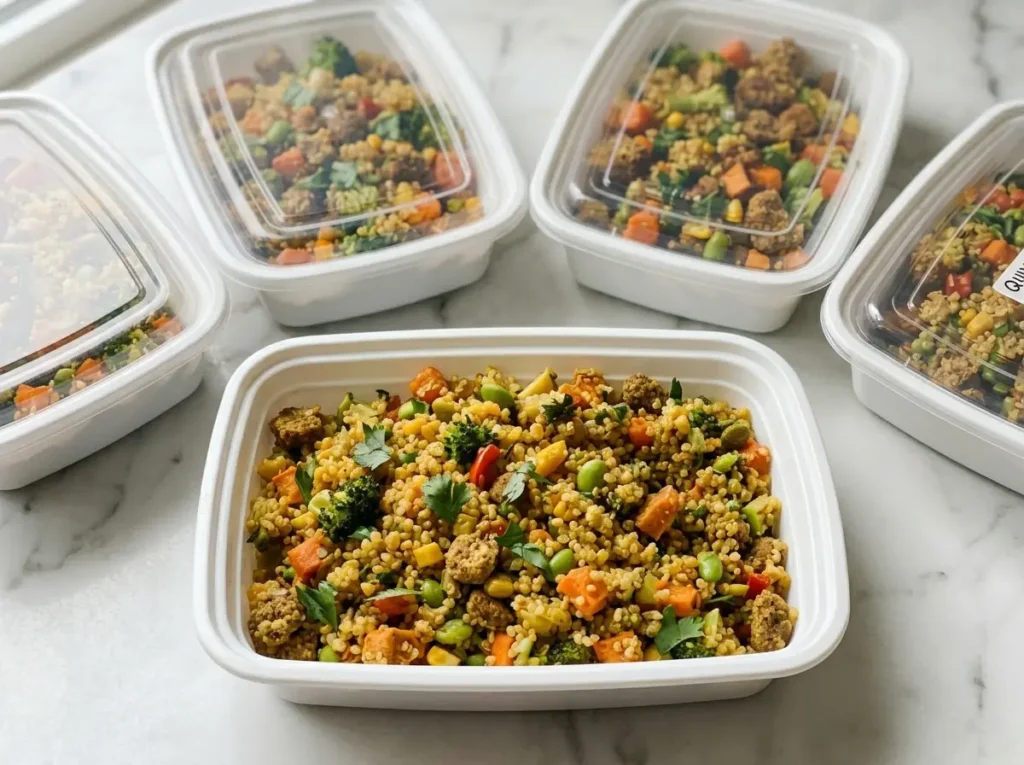
Weigh the total mixture and divide by 8 for larger portions or by 10 for lighter daily servings. Spoon into airtight glass or BPA-free plastic meal prep containers. Each container will hold your kibble base ready to be topped with your protein of choice at mealtime. Refrigerate covered for up to 5 days. For longer storage, freeze individual portions for up to 3 months, thaw overnight in the refrigerator, and reheat in a non-stick pan with a splash of water over low heat. The texture holds well through freezing because of the starch structure of the quinoa and oats.
5 Human Kibble Recipe Gluten Free Variations
| Variation | Key Change | Protein Per Serving | Best For |
|---|---|---|---|
| Best Human Kibble Recipe Gluten Free (Base) | Quinoa + oats + lentils + vegetables | 20g plant protein | Everyone, daily base |
| Vegan Human Kibble Gluten Free | Omit eggs, add extra chickpeas + hemp seeds | 22g plant protein | Vegan households |
| High-Protein Kibble Gluten Free | Add 200g diced chicken breast or 3 hard-boiled eggs per serving | 45 to 50g total | Gym-goers, weight loss |
| Gluten-Free Quinoa Kibble (Grain-Free Option) | Replace oats with cauliflower rice, keep quinoa | 18g plant protein | Grain-free, low carb |
| Easy Human Kibble Gluten Free (20-Minute Version) | Use canned lentils + frozen vegetables + pre-cooked quinoa pouch | 17g plant protein | Weeknight speed version |
Vegan Human Kibble Gluten Free
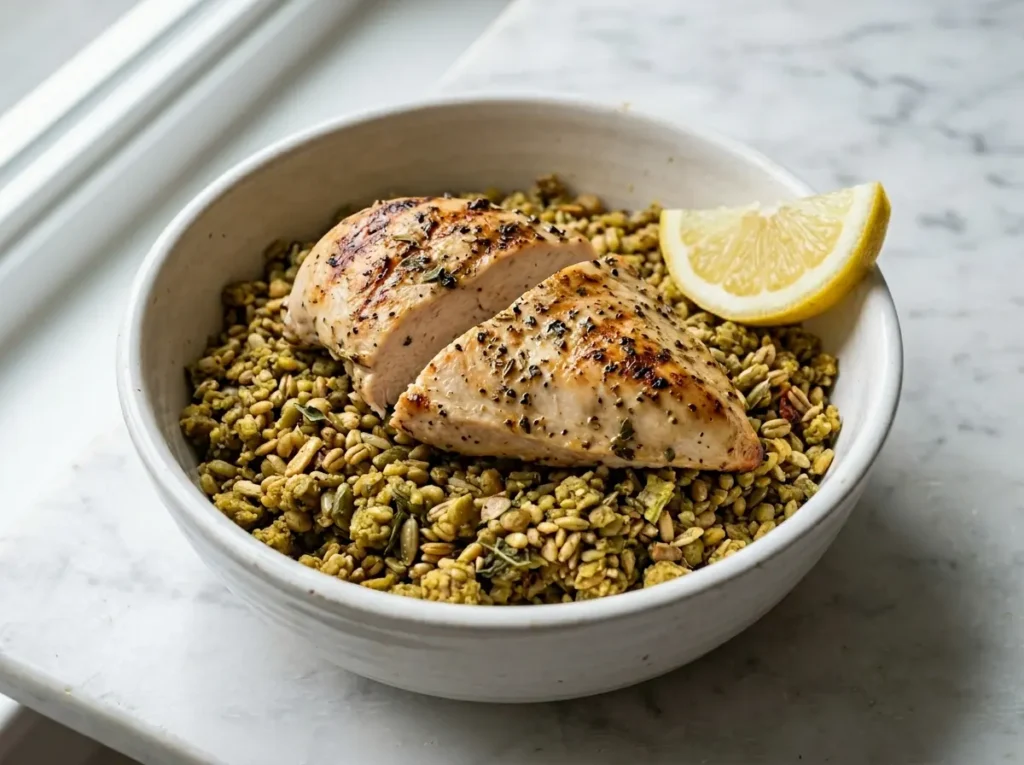
To make a fully vegan human kibble recipe gluten free, simply omit the eggs and replace them with 3 tablespoons of hemp seeds stirred into the finished mixture and an extra 200g of drained chickpeas. Hemp seeds deliver 10 grams of complete protein per 3 tablespoons along with omega-3 fatty acids that the original recipe does not include. They have a mild, nutty flavor that disappears completely into the kibble texture. This is one of the cleanest vegan human kibble options available because it requires no special protein powders, no processed meat substitutes, and no unusual ingredients.
High-Protein Kibble Diet Plan Version
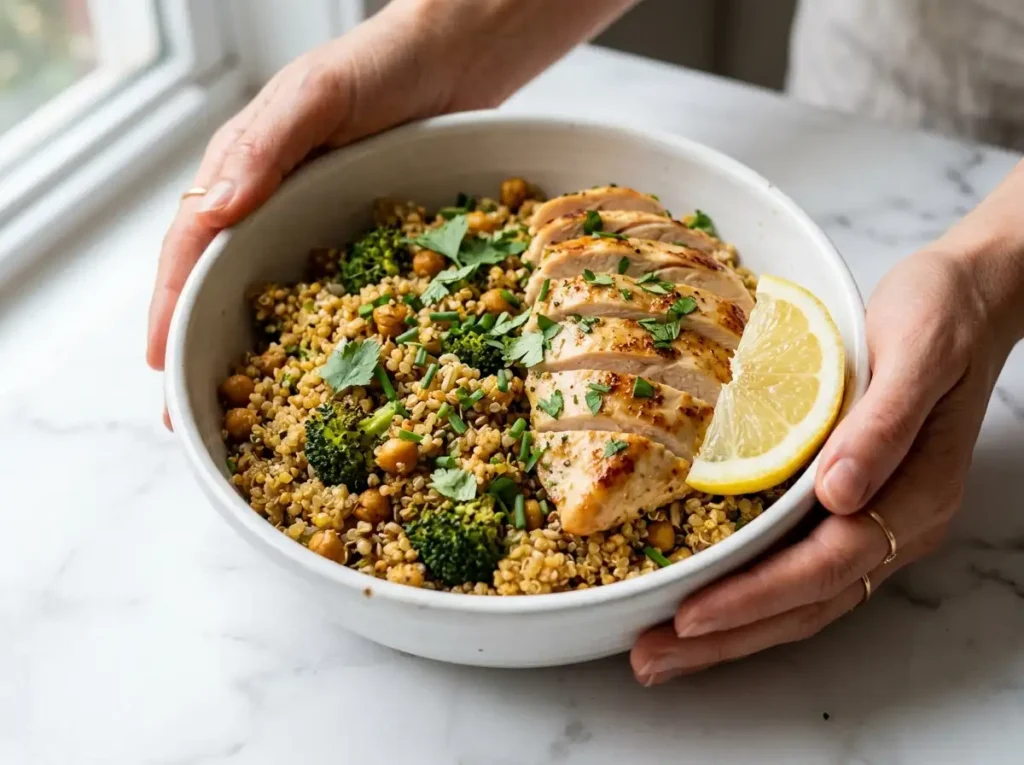
For a high-protein kibble diet plan approach targeting 45 to 50 grams of protein per meal, serve the gluten-free kibble base with 150g to 200g of grilled chicken breast, ground turkey, or canned tuna on top. The base provides 20 grams of plant protein, and the protein topping adds another 30 to 35 grams. This combination brings a single bowl to approximately 550 to 600 calories with a complete amino acid profile from both plant and animal sources. For active families tracking macros for weight management, this is the kibble diet plan weight loss version that performs best in practice.
Gluten-Free Quinoa Kibble (No Oats Version)
For families who need a fully grain-free, gluten-free quinoa kibble, replace the certified gluten-free oats with 300g of finely riced cauliflower folded in raw at the combining step. Cauliflower rice absorbs the surrounding moisture and flavors without changing the texture significantly, and it drops the carbohydrate total per serving from approximately 55 grams to 32 grams. This makes it a genuinely suitable option for low-carb households that still want the meal prep convenience and the protein density of the original recipe without the oat component.
Easy Human Kibble Gluten Free (20-Minute Speed Version)
When Sunday batch cooking is not possible, the easy human kibble recipe can be assembled in under 20 minutes using three shortcuts: a pre-cooked quinoa pouch (most major supermarkets stock them), two cans of drained lentils or chickpeas, and two cups of frozen vegetable mix microwaved for 4 minutes. Stir everything together in a large bowl with olive oil, sea salt, garlic powder, and lemon juice. It won’t have the depth of flavor of the full Sunday batch, but it delivers the same core macros at the same cost in a fraction of the time. For busy weeknights, it is the most practical version of a best human kibble recipe you will find.
Human Kibble Gluten Free Meal Prep Plan
The full gluten-free human kibble batch takes approximately 55 to 60 minutes of total active and passive cooking time on a Sunday and produces 8 to 10 complete servings. Here is the exact Sunday workflow that makes it genuinely effortless for the week ahead. Run all three cooking tasks simultaneously: quinoa and oats simmering in one pot, split peas in another, and vegetables sautéing in the skillet. All three finish within the same 30-minute window, and combining takes 5 minutes. Portioning and cooling takes the remaining 15 minutes.
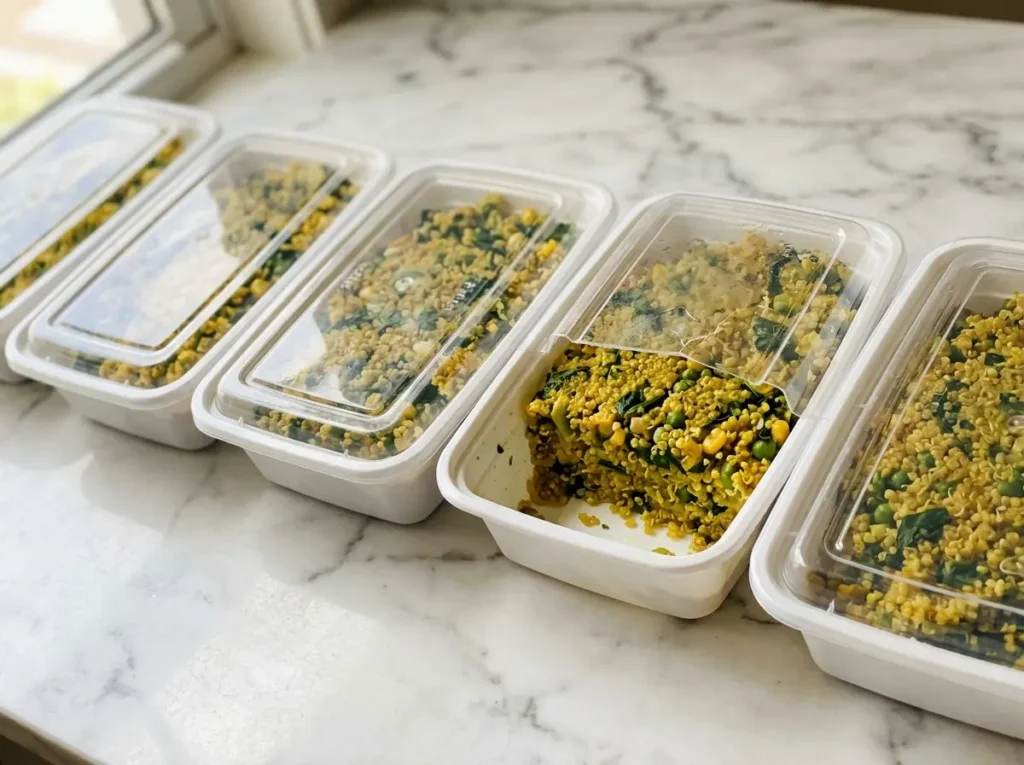
The kibble base stores beautifully for 5 days covered in the refrigerator. At each mealtime, scoop one portion into a bowl, add your protein topping cold or reheated, and the meal is ready in under 3 minutes. This is the entire value of the kibble system: the decision and the cooking both happen on Sunday, and the rest of the week is effortless. For an added satiety and gut health boost before each kibble meal, our 3-Ingredient Gelatin Recipe for Weight Loss takes 5 minutes to prepare and pairs perfectly with this high-fiber eating pattern.
For the most efficient Sunday prep, here are the full quantities to make 8 generous servings of gluten-free human kibble:
- 300g dry quinoa (rinsed)
- 150g certified gluten-free rolled oats
- 200g dry split peas
- 800g canned chickpeas (two 400g tins, drained and rinsed)
- 500g broccoli
- 300g carrots
- 250g zucchini
- 100g baby spinach or kale
- 200g cremini mushrooms
- 4 eggs (optional, for non-vegan version)
- 2 tablespoons olive oil
- 1 tablespoon lemon juice
- Sea salt, garlic powder, cumin, turmeric to taste
5 Mistakes to Avoid With Human Kibble Recipe Gluten Free
Mistake 1: Using Regular Oats Instead of Certified Gluten-Free Oats
Oats are naturally gluten-free but are almost always processed in facilities that also handle wheat, barley, and rye. This cross-contamination is significant enough to trigger reactions in people with celiac disease or serious gluten sensitivity. The only safe choice for a genuinely gluten-free human kibble recipe is oats that carry a certified gluten-free label. Brands like Bob’s Red Mill Gluten Free Rolled Oats or Quaker Gluten Free are widely available in supermarkets and online. This is not a label distinction worth skipping.
Mistake 2: Not Rinsing Quinoa Before Cooking
Quinoa is coated in a natural compound called saponin that creates a bitter, soapy flavor when cooked without rinsing. This single step is the most common reason people try quinoa once and decide they dislike it. Rinse dry quinoa under cold running water in a fine mesh strainer for at least 60 seconds, stirring with your hand, until the water runs clear. The flavor difference is significant enough that I consider this non-negotiable. Sixty seconds of rinsing separates bitter from genuinely delicious in every gluten-free quinoa kibble preparation.
Mistake 3: Undercooking the Split Peas
Split peas that are not fully cooked remain hard and chalky in the finished kibble, which ruins the texture entirely. They should be cooked until at least half of them have broken down into a thick paste. This takes 25 to 30 minutes at a steady simmer, not a rolling boil. Boiling aggressively causes the outside to break apart while the inside remains hard. Low and steady is the correct approach. If you are short on time, substitute canned green lentils instead. They are already fully cooked, require only rinsing, and deliver a nearly identical nutritional profile.
Mistake 4: Making the Kibble Too Dry or Too Wet
The ideal texture of a finished human kibble gluten free batch is thick and cohesive but not stiff or dry. If the mixture is too dry after combining all components, add 2 to 3 tablespoons of warm water or low-sodium vegetable broth and fold through. If it is too wet from excess vegetable moisture, spread the finished kibble on a wide tray for 10 minutes to let some steam escape before portioning. The right texture holds together when scooped with a spoon but does not clump into a solid block. It should look loose, golden, and appetizing not compressed or brick-like.
Mistake 5: Not Adding Enough Seasoning
A low protein kibble diet feels like punishment. A well-seasoned one feels like a meal you actually chose. The difference is almost always seasoning. The ingredients in this kibble are nutritionally extraordinary but flavor-neutral on their own. Salt is the most important seasoning: use at least 1.5 teaspoons of fine sea salt for a full 8-serving batch. Garlic powder, cumin, turmeric, and lemon juice each contribute a flavor layer that makes the bowl taste finished rather than utilitarian. Taste the finished mixture before portioning and adjust. A kibble that tastes good is a kibble you will actually eat for five days straight.
FAQ About Human Kibble Recipe Gluten Free
What is the best human kibble recipe for gluten-free families?
The best human kibble recipe gluten free for family use is built on rinsed quinoa, certified gluten-free oats, split peas, chickpeas, and a large volume of finely chopped mixed vegetables. This base delivers complete protein from quinoa, additional plant protein from legumes, and micronutrient density from the vegetables. For families with children, the flavor can be adjusted with more garlic and a touch of maple syrup for a sweeter profile that children tend to accept more easily alongside their usual meals.
Is human kibble good for weight loss?
Yes. The kibble diet plan weight loss approach works because each serving is high in fiber (10 to 14 grams), high in protein (18 to 25 grams from the plant base alone), and moderate in calories (approximately 380 to 420 per serving). Fiber and protein together are the two most well-supported dietary factors for appetite control and satiety. For an additional layer of pre-meal fullness support, try the Kelly Clarkson Gelatin Recipe 20 minutes before eating your kibble bowl.
How is gluten-free human kibble different from the original?
The original human kibble recipe uses white rice as the primary grain. White rice is naturally gluten-free, so strictly speaking the original is already gluten-free in most versions. The difference in this recipe is the replacement of white rice with quinoa plus certified gluten-free oats, which significantly increases both the protein content and the fiber content per serving. Quinoa delivers 8 grams of complete protein per cooked cup versus 4 grams from white rice. The fiber jump from oats adds beta-glucan that white rice does not contain. The gluten-free version is nutritionally superior to the original for most wellness goals.
Can I make a vegan human kibble recipe gluten free?
Yes, completely. Omit the eggs and replace with 3 tablespoons of hemp seeds per serving and an extra 200g of chickpeas in the batch. The base recipe is already plant-based; the eggs are optional. Vegan human kibble options that include hemp seeds, split peas, and quinoa together deliver a well-rounded amino acid profile without any animal products. The vegan version also stores and reheats identically to the egg version because there is no cooked egg structure to degrade during refrigeration.
How long does gluten-free human kibble last in the fridge?
Stored in sealed airtight containers in the refrigerator, the finished gluten-free kibble lasts 5 days without quality loss. Day 1 and Day 2 will have the best texture. By Day 4 and Day 5 the mixture may be slightly drier, which is easily fixed by stirring in 2 tablespoons of warm water before heating. Do not leave portions unrefrigerated for more than 2 hours after cooking. If you batch cook for a full week, freeze three to four portions immediately on Sunday and thaw them Wednesday evening for Thursday and Friday use.
What protein works best with gluten-free human kibble?
The most popular protein toppers for a high-protein kibble diet plan are grilled chicken breast (150g adds 35g protein), ground turkey (100g cooked adds 22g), canned tuna in water (100g adds 25g), and hard-boiled eggs (2 eggs add 12g). For a fully plant-based high protein kibble option, add 100g of firm tofu pan-fried until golden, which contributes an additional 10 to 12 grams of protein with a satisfying crispy texture that contrasts well with the soft kibble base.
Is quinoa better than rice for human kibble?
For nutritional purposes, yes. Quinoa contains twice the protein of white rice per cooked cup, delivers all nine essential amino acids making it a complete protein source, and provides significantly more fiber and minerals including magnesium and iron. For a gluten-free quinoa kibble recipe specifically designed for weight loss, gut health, or long-term family wellness, quinoa is the superior base. For pure affordability and calorie density, white rice has advantages. The gluten-free version of human kibble uses quinoa precisely because the nutritional upgrade justifies the slightly higher cost per batch.
Your Family Table Deserves Simple and Real
I still laugh a little every time I write the word kibble. It is not a glamorous name for a meal. But I genuinely believe this approach to weekly nourishment is one of the most practical, honest things you can do for your family’s health and your own sanity in the kitchen. One hour on Sunday. Real whole ingredients. A refrigerator stocked with something nourishing that takes two minutes to serve and keeps everyone satisfied for hours.
The gluten-free version makes this system accessible to every household, whether the reason is celiac disease, gluten sensitivity, personal preference, or simply wanting to use quinoa and certified oats as the cleanest, most nutrient-dense base available. The recipe is not precious. Swap the vegetables based on what’s in your refrigerator. Add the protein that fits your week. Season it the way your family eats.
Start with one Sunday batch. See how the week feels when the answer to “what’s for dinner” is already in the refrigerator waiting for you.
For more wholesome family meal prep recipes, explore our Easy Cottage Cheese Beef Bowl and our full Boy Kibble Recipe for the original high-protein beef-and-rice version that started this conversation on tasteourdish.com.
The content on TasteOurDish.com is for informational and educational purposes only and does not constitute medical or nutritional advice. Nutritional values are estimates only. Always consult a healthcare professional before making significant dietary changes. This post may contain affiliate links. If you click and purchase, we may receive a small commission at no extra cost to you.